Mom ignores “normal” pregnancy symptom, then her worst nightmare unfolds
What began as a seemingly ordinary pregnancy symptom turned into a terrifying medical emergency for one new mother. Just a day after giving birth, she found herself on the operating table—fighting for her life.
Anne Darlaa, 31, opted for an elective C-section after learning her son was measuring at 8 pounds. The next day, she faced something she never expected: open-heart surgery.
Darlaa told Newsweek: “The day after my surgery, the nurses came to help me walk to the toilet. As soon as I tried to stand, everything went black, I suddenly collapsed and couldn’t breathe.
“I remember gasping for air and begging the nurse for oxygen. I was completely terrified.”
Tests and a CT scan revealed a blood clot blocking a blood vessel in her heart —known as a pulmonary embolism.
“It was one of the most frightening moments of my life,” she recalled.
According to UT Southwestern Medical Center, pregnant women are five times more likely to develop blood clots than non-pregnant patients, as the body increases production of blood factors that promote normal clotting.
What Is a Pulmonary Embolism?
According to John Hopkin’s Medicine, a pulmonary embolism (PE) is a blood clot, often from the leg, that travels to the lungs and blocks blood flow. When a clot breaks free and moves through the bloodstream, it becomes an embolus; if it lodges in a vessel, the resulting blockage is called an embolism.
The circulatory system, made up of the heart, arteries, capillaries, and veins, moves blood throughout the body. Because blood flows more slowly in veins, clots are more likely to form there.
Ignoring the Warning Signs
Darlaa, from Kota Kinabalu, Malaysia, said: “I didn’t know anything was serious while pregnant.
“I just thought the breathlessness and discomfort were part of being heavily pregnant.
“Looking back, I now realize my body was already giving me warning signs, but I brushed them off because I thought they were normal.”
Symptoms of Pulmonary Embolism
Pulmonary embolism (PE) occurs when a blood clot travels to the lungs, creating a medical emergency.
The main symptoms include shortness of breath and a cough, which may produce bloody sputum—symptoms that can easily be mistaken for flu.
Additional signs, particularly during or after pregnancy, may include:
- Dizziness, fainting, or lightheadedness
- Increased heart rate
- Pain or swelling in one leg
- Unexplained anxiety
Severe cases involve large clots that can drastically cut off oxygen to the lungs, causing organ damage or even total cardiovascular collapse.
‘I Knew Something Was Off’
Darlaa welcomed her firstborn into the world on September 9. She recalls feeling overwhelmed and happy that her baby was delivered safely.
She told Newsweek: “I was scared because something didn’t feel right with my own body. I was short of breath and felt a strange heaviness in my chest, but I tried to convince myself it was just normal recovery pain.
“Deep down, though, I knew something was off. It was a mix of relief, exhaustion, and quiet fear that I couldn’t fully explain at the time.”
Sharing Her Story Online
On October 23, Darlaa shared her experience on Instagram Threads (@annedarlaa), earning 555,000 views at the time of writing. She noted how she could not pick up her baby—something that initially made her feel like a failure.
But now she handles her situation with care. She wrote: “my body went through something unthinkable, and it’s still healing so I can be here for him.”

“In the beginning, it was heartbreaking not being able to lift or care for my baby the way I dreamed to, but it also taught me patience, gratitude, and resilience. Every small moment with my baby feels like a miracle now,” she told Newsweek.
The post has 1,800 likes and many reassuring comments.
One user said: “You did not fail your child. You actually did the opposite, you lived, you survived! Hang in there mama, soon you’ll be strong enough to carry him, and one day he will tell you how lucky he is because you survived. Be gentle with yourself.”
“You’re still here mama and that’s what matters,” said another user.
A Long Road to Recovery
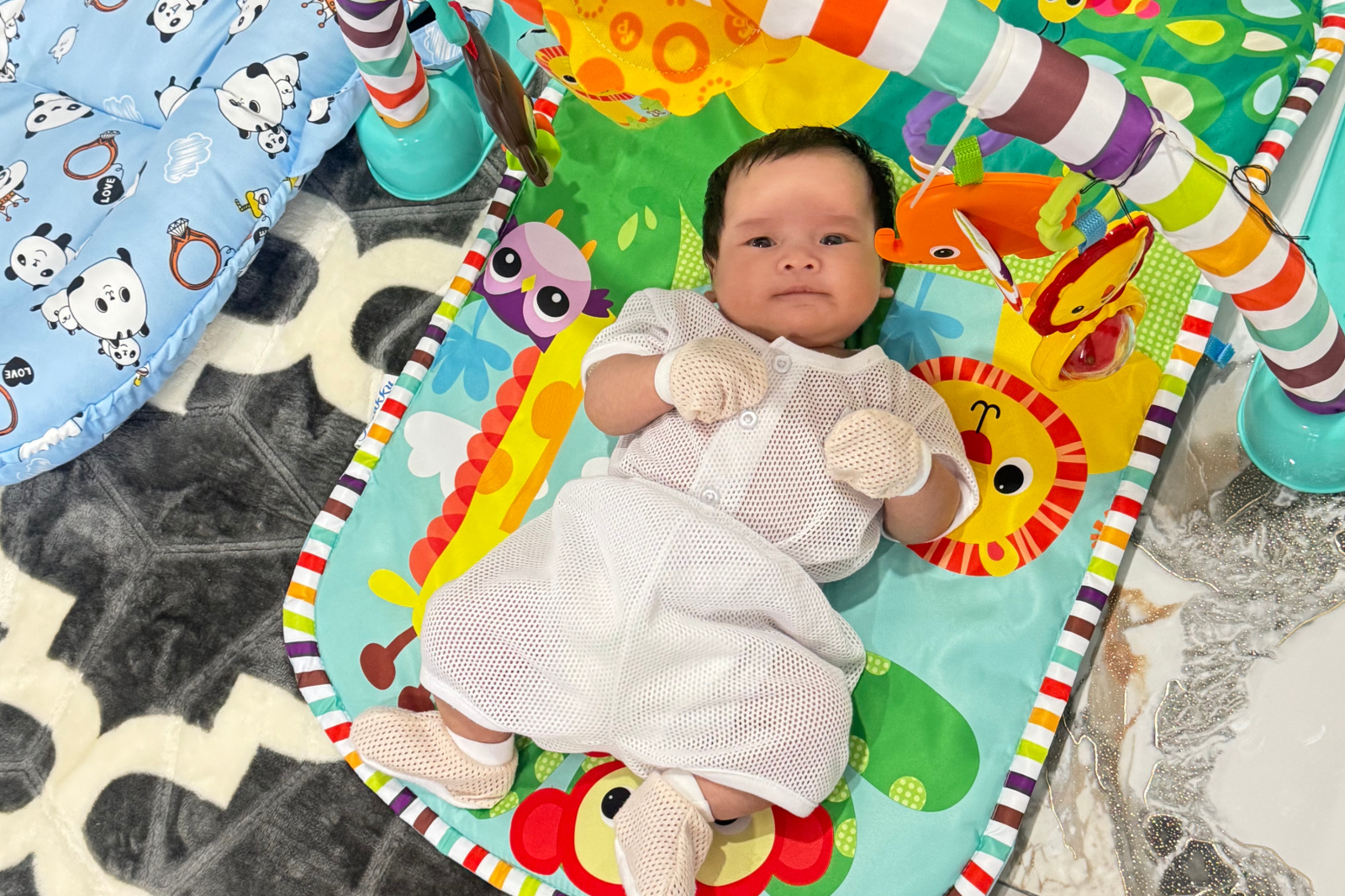
Darlaa explained that her journey to motherhood has been unexpected, but it has taught her “how fragile and precious life truly is.”
Recovery from open-heart surgery and a C-section combined could take months—or even a year.
“My recovery has been very delicate,” she told Newsweek. “I still have to be careful with my chest and stitches, so I can only hold my baby for a short time with support. It’s hard because all I want is to cuddle and carry him like any mother would, but I’ve learned to be patient and focus on healing.
“Every day I get a little stronger, and I know soon I’ll be able to hold him without fear or pain.”