

Trump’s Iran War Reshapes U.S. Alliances
- Trump troop withdrawal threats strained relations with key NATO allies.
- Pentagon ordered removal of 5,000 troops from Germany.
- European governments increased defense cooperation amid war tensions.
- Gulf and Asian allies questioned U.S. reliability during Iran conflict.
The United States has been at war with Iran since the fighting began on Feb. 28, 2026, when President Donald Trump joined Israel in a coordinated strike on Tehran, citing disputed and unverified claims that the latter was close to developing nuclear weapons.
Since then, the military campaign has generated a second, slower-moving conflict: a deepening rupture between Washington and nearly every major ally it entered the war without.
Former Director of Global Engagement at the White House Brett Bruen told Reuters, “Trump’s recklessness with respect to Iran is resulting in some dramatic shifts. U.S. credibility is at stake.”
The damage is accumulating on multiple fronts simultaneously, and former U.S. officials are now warning that the alliance strain may outlast the war itself.
Trump’s Germany Troop Withdrawal and the NATO Fracture
The most visible flashpoint came in early May 2026, when Trump announced the withdrawal of 5,000 U.S. troops from Germany. The move followed pointed public criticism from German Chancellor Friedrich Merz, who had questioned the strategic rationale of the Iran campaign. The withdrawal did not go unnoticed in European capitals. Leaders across the continent read it as a punitive signal, a demonstration that publicly disagreeing with Washington carries tangible military costs.
European officials have spent weeks attempting to persuade Trump to keep the United States anchored inside the North Atlantic Treaty Organization (NATO), the 32-member collective defense alliance that has underpinned Western security since 1949. Those efforts have grown increasingly strained. According to reporting by Oregon Public Broadcasting, European leaders are now seriously entertaining a NATO future without U.S. leadership, a scenario that would have been treated as fringe speculation as recently as two years ago.
X
Trump’s move had its impact in Asia when former Japanese Minister of Defense Takeshi Iwaya reacted saying, “What worries us most is that trust in, respect for, and expectations toward the United States, the core partner in the alliance Japan values most, have been shrinking. It could cast a long shadow over the entire region”.
The University of Chicago hosted a forum in which former U.S. officials warned explicitly that the Iran war is unraveling trust within NATO at a pace that formal diplomacy may not be able to reverse. Boise State University‘s analysis of the conflict added that Trump’s transactional approach to alliance management sits in fundamental tension with the expectation of mutual obligation that European governments have built their defense postures around.
Gulf States Signal Quiet Alarm Over American Reliability
The fracturing is not confined to Europe. Gulf Arab states, long among Washington’s most strategically important partners in the Middle East, have grown visibly uneasy. The specific trigger, according to reporting by MarketScreener, was Trump’s decision to publicly downplay Iranian missile and drone attacks on a Gulf partner state during the conflict. The episode sent a message that American protection in the region has conditions attached that had not previously been made explicit.
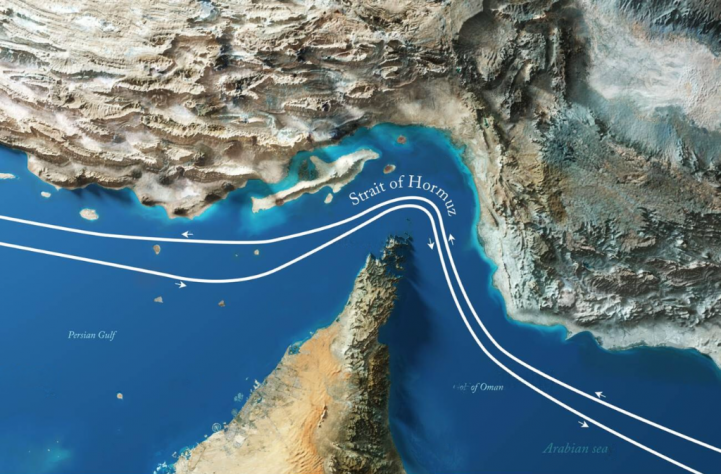
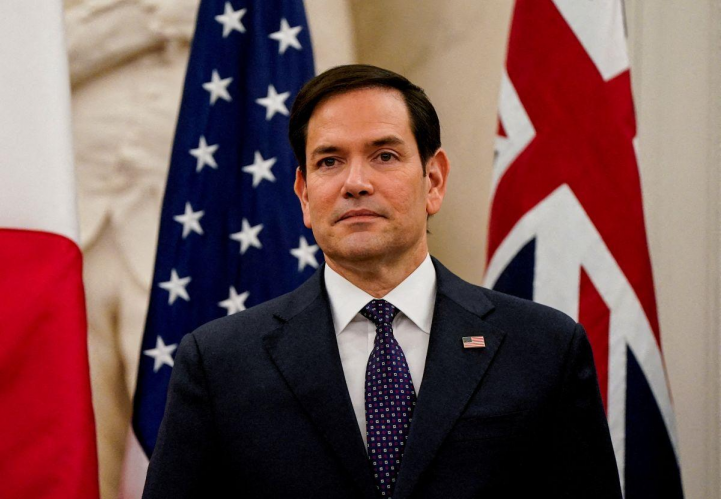
U.S. Secretary of State Marco Rubio, in remarks reported by Euractiv, acknowledged that Trump has not yet decided how to respond to allied governments that denied Washington the use of military bases during the Iran campaign. Rubio’s statement confirmed that the base-denial issue remains an open and unresolved dispute. Italy was among the countries whose posture drew pointed criticism from the secretary, who questioned the lack of allied support for efforts to reopen the Strait of Hormuz, the narrow waterway through which a significant share of global oil shipments pass.
IBT SG
The Gulf states’ concern carries particular weight given their geographic proximity to Iran and their dependence on U.S. security guarantees as the structural foundation of their defense arrangements. Their unease has not been expressed in formal diplomatic protests, but it has registered in the form of quiet consultations and, according to MarketScreener, a reassessment of the assumptions underlying their alignment with Washington.
The Naval Blockade Problem and the Limits of American Pressure
One of the central strategic questions hanging over the Iran campaign involves the viability of a naval blockade as a coercive tool. A Central Intelligence Agency (CIA) analysis assessed that Iran could withstand a naval blockade for approximately four months before the economic pressure became acute. If accurate, it suggests that a blockade strategy would require sustained allied participation and an extended timeline, two variables that the current state of alliance relations makes difficult to guarantee.
Secretary Rubio’s public questioning of allied support for Strait of Hormuz operations underscores the practical gap. A blockade of Iran’s oil exports through the strait requires, at minimum, the cooperation or at least the non-interference of states with naval presence in the region. The base-denial decisions by several allies complicate the logistics considerably.
IBT SG
Trump, for his part, expressed dissatisfaction with Iran’s most recent peace proposal while negotiations continued. The administration has not publicly outlined the specific terms it would accept to end the conflict, and the gap between Washington’s stated goals and Iran’s negotiating position remains publicly undefined.
The Lame-Duck Variable in U.S. Foreign Policy
European officials have raised a concern that adds a further dimension to the alliance calculus. Trump, constitutionally barred from seeking a third presidential term, is scheduled to leave office in January 2029. Several European governments, according to Investing.com, have privately expressed worry that a president facing no further electoral accountability may feel less constrained in foreign policy decisions than one with a re-election incentive. The fear is not that Trump will become more aggressive in every domain, but that the normal diplomatic friction generated by domestic political consequences has been removed from the equation.
That concern feeds directly into Europe’s accelerating push for strategic autonomy. The 5,000-troop withdrawal from Germany has become a reference point in European policy discussions, treated by multiple governments as confirmation that reliance on U.S. military presence cannot be treated as a fixed variable in long-term security planning. European leaders see the drawdown not merely as a bilateral dispute with Berlin, but as evidence that the architecture of post-World War II collective defense is being renegotiated in real time, on terms set unilaterally by Washington.
The European officials continue pressing for U.S. retention of its NATO commitments, but the framing of those conversations has shifted. Where the question was once whether Washington would honor its obligations, it is now whether European states can build the institutional capacity to function independently if it does not.
The Iran war, now in its eleventh week, has not resolved any of those questions. What it has done is force them into the open faster than most alliance managers on either side of the Atlantic anticipated. The fractures in the U.S.-Germany relationship, the Gulf states’ reassessment of American reliability, the CIA’s four-month blockade estimate, and the unresolved base-denial dispute with Italy and others represent a set of alliance-management challenges that will persist regardless of how and when the military campaign concludes.
