I was given months to live. I’m taking my treatment into my own hands
Before my diagnosis, my life was extremely busy. I was finishing up an MFA at New York University, and I was starting another branch of Southern Solidarity, a grassroots organization I helped create that distributes food to houseless people in New York City and New Orleans. I was having some unusual symptoms: night sweats, nightmares, some itchiness on my breast, and fevers. At the end of 2021, I felt a lump on my breast where the itchiness was. I was really scared. I thought, “Something is definitely not OK.” I went to my gynecologist. She saw that I had a fever and because COVID was still spreading at that time, she immediately said, “Why are you coming to my office with a fever? Who let you through the door?”
I showed her the lump I’d been feeling, and she was very dismissive. She said I was really young—I was 31 at the time—and that it probably wasn’t cancer. I insisted that we test it anyway, and she agreed. Imaging came back with a high probability that it was cancer, then a biopsy confirmed it. I had breast cancer.
When I got the diagnosis, I just started bawling, really intensely. The nurse who delivered the news was very helpful and told me, “It’s really small right now, they’ll just take it out right away.” What the doctors saw at the time was just a small mass, so she was hopeful.
That didn’t end up being the case.
After my diagnosis, a few people in my family told me not to feel pressured to rush into chemotherapy. So I considered my treatment options and began to look into what doctors were doing in other countries. My friends helped raise funds for me to go to Mexico and do a low-dose chemo to shrink the tumor, along with some other treatments that weren’t available to me in the U.S. They continue to raise funds for my ongoing treatment.
Before cancer, I was giving all my energy to organizing—I was taking calls from houseless people at all hours of the day, raising money for them and helping get some housed. I had started Southern Solidarity in New Orleans and now was bringing it to New York. At the time, it struck me that all the energy I’d poured into that was now being poured into me. My friends were giving me the same attention I’d given others, by raising money for treatments and starting a cancer support group chat for me. That was comforting—it still is, and I still have an amazingly wide and strong network.
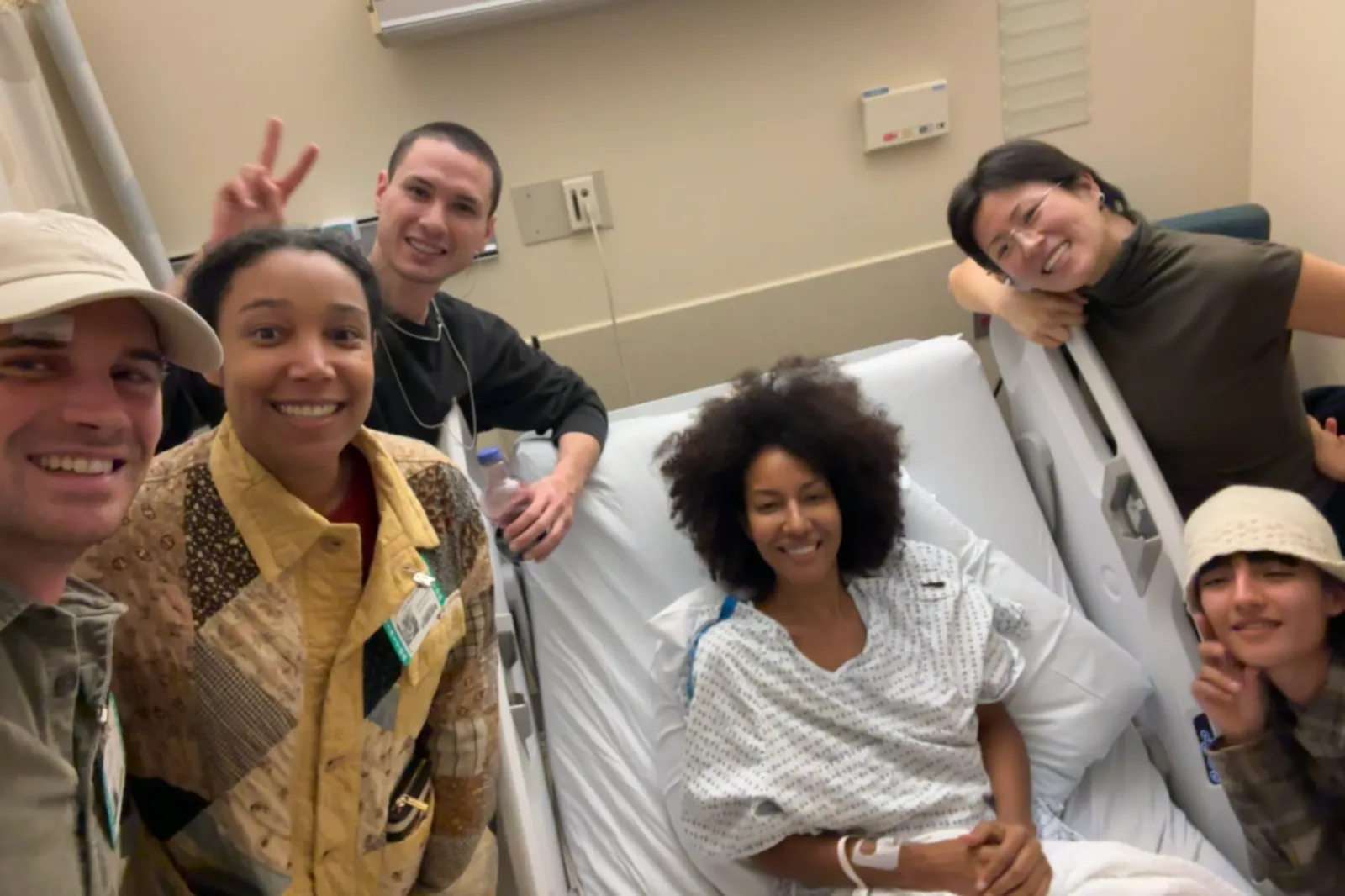
The treatment in Mexico shrunk the tumor; then I had surgery to remove it in the U.S. Afterward, the plan was radiation, but my pre-treatment scans showed a small mass in my lungs. My doctors went back to the very first scans I had done, and they saw the mass there as well. Five different doctors had seen my scans, and none of them had noticed that there was a tumor the size of a pencil eraser in my lungs. My doctors didn’t want to stage my cancer yet, though; they thought maybe the mass wasn’t going to grow. I went ahead with radiation, but midway through the treatment, I noticed I was coughing up blood after sessions. I was having a really hard time, but the doctor leading the radiation told me, “Just keep going.” I powered through six weeks of daily radiation.
After treatment, I learned that the cancer had spread to my liver and my bones, and that it had grown in my lungs significantly. That’s when my medical team and I discovered we’d been dealing with stage 4 cancer. The cancer has continued to progress over the years. This year has marked the first time that I don’t have the energy to be a part of the organization I helped create. I fractured my back due to bone progression. It’s difficult to walk and almost impossible to eat. Most of my time is devoted to researching clinical trials or new therapies and advocating to be considered in these treatments.
I remember several people who are also disabled advising me by saying, “You’re going to have to take your healing into your own hands.” I did not understand what that meant until maybe year two or three of this. Doctors are so hyper-focused on their own fields, or even just the little corner of their own fields, that they can miss so much information. Sometimes patients learn about new treatments before doctors do. For example, when the cancer spread after radiation, I told my doctor I wanted a liquid biopsy (instead of the more invasive surgical biopsy performed when I was first diagnosed), and he was against it. Now, liquid biopsies are commonly requested and considered an important tool at gathering information.
In April, my doctor said I had months to live, and that even if I did do a new therapy, it would only add some months. So that was very hard to hear, but there’s another side to that. There are always people who end up being able to do chemo for several years. So I’m trying to be incredibly optimistic and to remember that even doctors don’t have all the answers.
This interview has been edited.
All views expressed in this article are the author’s own.
Do you have a personal essay you want to share with Newsweek? Send your story to MyTurn@newsweek.com.