Aluminium’s war shock blunted by dark transits and Chinese supply
Smelters in Indonesia have also been instrumental in keeping the global market in check
THE Iran war caused one of the biggest supply shocks to ever hit the aluminium market, but the runaway price surge that many were bracing for has been blunted by the ingenuity of producers from the Middle East to China.
When the conflict began, market watchers warned that unless the Strait of Hormuz reopened quickly, smelters were likely to run out of raw materials within weeks, potentially forcing widespread shutdowns that would plunge the global market into crisis and send prices to record highs above US$4,000 a tonne.
Those fears escalated dramatically when Iran targeted smelters in the region in missile strikes, and there was broad agreement that aluminium looked set to be one of the worst-hit commodity markets outside of oil and gas.
However, in recent weeks, Middle Eastern smelters have carried out a series of complex logistical operations – including daring voyages through the strait – to replenish reserves of alumina and other raw materials.
This has helped to avert widespread closures in a region that accounts for nearly 10 per cent of global supply.
Outside the Gulf, smelters in China and Indonesia have been instrumental in keeping the global market in check as buyers wait for exports to rebound.
Iran said on Saturday (Jun 20) that it had closed the strait again.
Now, with analysts, traders and investors staking their bets on where prices are heading next, stark disagreements are emerging on how quickly the market will recover from the squeeze.
“A full-blown physical supply freeze has been averted thanks to a combination of rerouted Middle Eastern alumina imports, rising Chinese exports and ramping Indonesian production,” said Amelia Xiao Fu, head of commodities strategy at Bank of China International.
“While the market managed to survive the last few months by drawing down inventories, these operational buffers have now been decreased.”
Middle Eastern smelters have been forced to make heavy cuts to output, but the clandestine nature of their efforts to shore up their supply chains means the precise scale of the losses is tough to quantify.
Meanwhile, a regulatory cap on production in China and power constraints in Indonesia are only adding to the challenge of assessing how quickly supply and demand will rebalance.
Some of the market’s biggest bulls have trimmed their price forecasts in recent days, with JPMorgan Chase saying that a move to US$4,000 a tonne is taking longer than expected due to a strong supply response in Asia and an aggressive drawdown in the industry’s hidden inventories.
At the other end of the scale, Goldman Sachs sees prices moving towards US$3,000 a tonne over the coming year, even after raising forecasts it had made at the start of the conflict to reflect a slower rebound in Middle Eastern supplies than anticipated.
Futures in London are currently trading around US$3,400.
Differences in estimates for aluminium’s underlying supply balance are even starker, with Citigroup expecting the biggest supply shock in more than 50 years, while Bank of America expects supply and demand in the 76-million-ton market to be more or less balanced.
Alumina flows
Part of the discrepancy stems from expectations that raw-material shortages have inflicted deeper supply losses on Persian Gulf smelters than they have publicly disclosed.
But for Ben Ayre, an analyst at ship-tracking firm Kpler, a growing stream of alumina flows into the region signals that, even with Hormuz closed, smelters have made strides in replenishing their reserves.
In recent weeks, a handful of vessels have shown an appetite to move in alumina directly through the strait, switching off their tracking systems to undertake the kind of dark transits that have kept a trickle of oil flowing to global markets through the crisis, Kpler’s analysis showed.
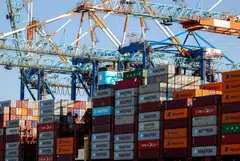
Even greater volumes of alumina have been unloaded in ports in Oman and dispatched to smelters via trucks, in a major test of the region’s logistical capabilities.
Thanks to those efforts, imports of the raw material into the Persian Gulf returned to pre-war levels in May, data from the firm showed.
“It has resulted in some really novel solutions, and we’ve had to work quite hard to keep up,” Ayre said in an interview. “It’s not unique, but it is somewhat exceptional in terms of its reflection of the value of keeping these operations running.”
Shadow stocks
The challenge in assessing the scale of the supply squeeze does not end in the Gulf; JPMorgan said that the market impact of global shortages has also been blunted by an aggressive drawdown in privately held inventories that are notoriously hard to monitor.
“When we speak with clients, there’s a clear sense that it is tight out there, but the first port of call is those invisible stocks,” said Greg Shearer, the bank’s head of base and precious metals research.
Still, he believes that it is only a matter of time before those reserves are depleted and exchange stocks will start being drawn too, driving prices higher. “It’s taking longer than expected, but there are significant deficits that need to be covered.”
China shock
The behaviour of Chinese smelters has added another analytical headache.
Before the conflict, a bullish mood had swept through the aluminium industry, as smelters in China started to bump up against a regulatory cap on production that looks set to bring a long era of oversupply to an end.
Since the war started, however, official statistics have suggested that Chinese smelters are producing comfortably above that cap of 45 million tonnes, with April figures pointing to an annualised run-rate of 47 million tonnes.
With exports surging, some analysts are betting that Chinese smelters could solve the global shortage single-handedly if they keep their plants running in overdrive.
In assessing whether they will, analysts need to take a view on how strictly China will enforce the cap, and how far engineers can go in feeding plants with more power than they are designed to handle. The process is one that an industry veteran likens to trying to balance an elephant on a finger.
Indonesia wildcard
A final wildcard is a prospective wave of new supply in Indonesia.
A surge in Indonesian aluminium exports has sharpened the industry’s focus on its emerging role as a major global supplier, and there is a growing expectation that producers there will divert scarce power to aluminium plants at the expense of less-profitable nickel operations.
“We always knew there would be capacity additions, but the view up to now was that production would lag because power wasn’t available,” said Amy Gower, head of metals and mining strategy at Morgan Stanley.
“We haven’t changed our models yet, but the risk now, with power being reallocated from nickel, is that new supply could come even quicker.”
Taken together, the combination of rebounding Middle Eastern supply, elevated Chinese production and skyrocketing Indonesian output is creating a consensus in the industry that prices will head lower in the long term.
But as the US and Iran negotiate a deal to end the war permanently, a debate is still raging about whether the market will face a final squeeze as inventories run dry before the new supply arrives.
“I think if it was going to happen, it would have happened by now,” said Helen Amos, head of commodities research at BMO Capital Markets. “It’s likely that aluminium is past the peak point of the deficit.” BLOOMBERG