The 1 thing I did to help ease the pain of my mother’s Alzheimer’s for both of us
Hearing my mother’s plaintive cries as she told me she felt she lived in a haunted house was jarring. She didn’t remember turning on the television and would startle at the artwork on the walls that had once hung in her home. Sometimes she feared her trusted nurse had been sent to harm her. The woman who once chased away my childhood boogeymen now needed me to quiet hers.
If navigating the slippery territory of a stroke on top of her newly diagnosed lung cancer felt like a double whammy we weren’t prepared for, the Alzheimer’s brought us to the edge.
“Do you think Grandma will remember me?” my 26-year-old daughter asked about my 87-year-old mother. Every two weeks my sister and I took turns visiting our mom to help with her mail, bills, groceries, doctor’s appointments, wheelchair repairs and whatever else needed tending until she took her afternoon nap. And each time she seemed to slip away more.
Each visit became more difficult. “I don’t want to do the bills now,” she’d say, overwhelmed at the pile in front of her. But she didn’t want me to tend to them without her. I would get some done and then it would be time for me to leave. Both of us exhausted. And me, often on the verge of tears as I summoned all the patience I had in me. Sometimes it wasn’t the easiest relationship, but when she told you she loved you, she meant it. There was refuge in that you always knew where you stood.
Two Mother’s Days ago she had seemed as sharp, feisty and unfiltered as ever. Dodging one of her cringe-worthy observations was entertainment. Her favorite lines: “She’s not the sharpest pencil,” “He likes hearing the sound of his own voice,” and, my personal favorite, “She’s lost her virginity more times than she can count.” Alzheimer’s didn’t stand a chance, we’d laugh. Or so we thought. But we were wrong.
Her Alzheimer’s progressed like a tsunami during COVID’s crushing isolation and quarantine. The restrictions made it almost impossible to see her, which spared my adult children from witnessing their grandmother’s decline. Their grandmother didn’t like video calls. Seeing anyone’s face on a phone confounded her.
I learned the hard way what worked. The witching hour, “sundowning,” which strikes in the late afternoon or early evening, was a nightmare for both of us. The in-between of day and night caused confusion and disorientation that frightened or irritated my mother. Nothing I could say or do could mitigate her fear or calm her irrational thoughts. Trying to reason with her, or correct her, only served to rile her even more.
One time she was furious, accusing me of not inviting her to Thanksgiving dinner the week before. It was April. When I made the mistake of explaining we were in spring and I would never celebrate Thanksgiving without her, she became irate. In the end, I begged for her forgiveness for something I didn’t do. Her anguish broke me. After that heart-wrenching episode I scheduled most of my calls before noon.
As I navigated this new reality, I searched online, as many of us do, for guidance. The Alzheimer’s Association compared the disease to a blackboard, a life story slowly erased from the present moment backward. As I saw this happening in real time, I began to learn how to meet my mother where she was.
If I approached too quickly, she got scared. So I began walking slowly, while making eye contact and saying, “Hi Mom, it’s your daughter, Linda.” Short sentences worked best. Familiar routines helped too. Sometimes we would sit together and look at old photographs.
What she liked the most was listening to music. When the voices of Barbara Streisand and the Bee Gees filled the room from her CD player, the past was suddenly clearer to her than the room we were sitting in.
As my mother’s speech faded, I learned that even when words disappear, she could still enjoy my company. She reacted to my tone before she reacted to my sentences.
When it was my birthday, my mother’s thoughtful caregiver posted “Happy Birthday” signs on the mirror that faced my mother’s bed to remind her. She also reintroduced me every time I came to visit, and on those days, my mom studied my face, my eyes, my voice. I could see how hard she was trying to remember.
One day I saw a video on YouTube where a daughter was lying next to her mom. The daughter asked her mom if she knew who she was, and her mom replied, “I don’t know who you are, but I know that I love you.” That sentiment became my compass. As long as love survived, that was what mattered most.
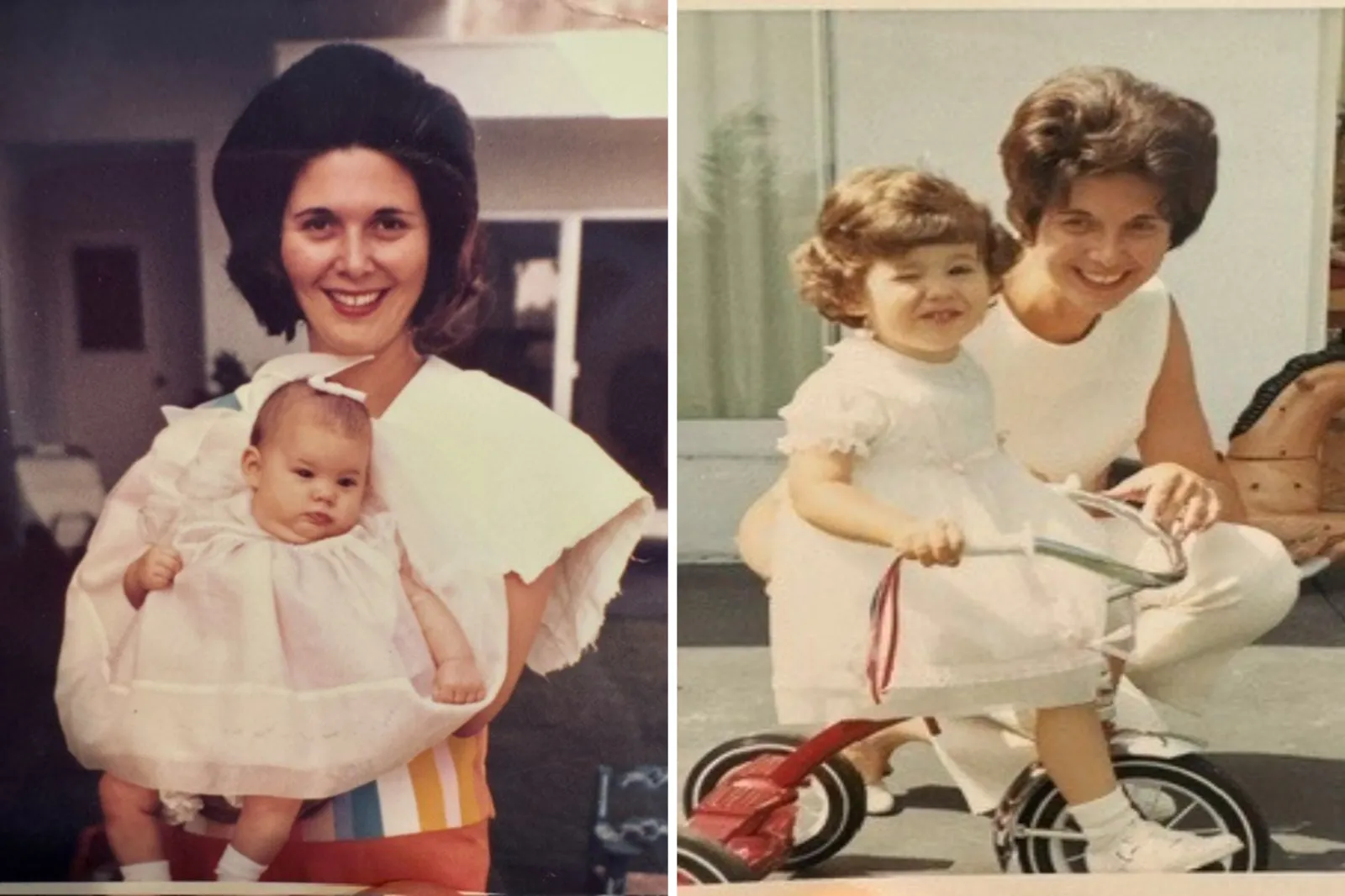
Now that my mom is gone, I dream of her often. In my dreams, she is young again. Her dark hair is glossy, her brown eyes are clear, and her voice vibrant. Alzheimer’s may have dimmed her memory, but in those dreams nothing—including her love-—is erased.
Linda Wolff is a Los Angeles-based essayist and humor writer. Her work has appeared in The Boston Globe, The Washington Post, Los Angeles Times, Good Housekeeping, Cosmopolitan, McSweeney’s and more. You can find her on Instagram @carpoolgoddess when she’s not playing with her Goldendoodle.
All views expressed in this article are the author’s own.
Do you have a personal essay you want to share with Newsweek? Send your story to MyTurn@newsweek.com.