Elon Musk’s ‘Chainsaw for Bureaucracy’ Just Left an $11 Billion Budget Hole as Trump Rehires Staff
Elon Musk’s radical cost‑cutting experiment in Washington officially ended in Washington on Saturday, when the Department of Government Efficiency he helped design was shut down on 4 July 2026, leaving behind an $11 billion gap in the US federal budget and a government now scrambling to rehire staff across key agencies.
More than a year of turmoil triggered by Musk’s entry into President Donald Trump’s second administration as an unpaid ‘Special Government Employee,’ armed with wide latitude to slash payrolls and root out what he branded waste and ‘wokeness.’ The Musk‑inspired Department of Government Efficiency, widely referred to by its acronym DOGE, was created by executive order with a built‑in expiry date. It has now disappeared right on schedule, but its legacy is proving much harder to erase.
Elon Musk, DOGE and the $11 Billion Hole
At the heart of DOGE was a scheme Musk dubbed the ‘Fork in the Road’ offer. Hundreds of thousands of civil servants were reportedly presented with a stark choice: accept nine months of doing no work on full salary and benefits, then resign, or risk ending up on the wrong side of a brutal restructuring drive. Many took the money. Others were sacked outright during what officials themselves described as a rampage through the federal workforce.
The cost of this show of ‘efficiency’ is now being tallied. The ‘Fork in the Road‘ payouts alone have left an estimated $11 billion hole in the federal budget. That figure does not include the knock‑on effects of hollowed‑out departments or shuttered programmes, which are still playing out far from Washington’s political theatre.
The most dramatic damage, by the government’s own account, has fallen overseas. The US Agency for International Development was gutted during DOGE’s peak, with key foreign aid programmes shut down entirely. Officials and aid groups have blamed those closures for contributing to the deaths of millions of people worldwide, although precise counts remain contested and nothing has been independently confirmed, so those estimates should be treated with caution.
Inside the capital, Musk’s tenure was both theatrical and chaotic. He occupied a suite of offices in the Eisenhower Executive Office Building, just next door to the White House, and frequently sat in on cabinet meetings. His ‘Chainsaw for Bureaucracy’ prop, brandished on stage at last year’s Conservative Political Action Conference, became a kind of mascot for the administration’s war on the civil service.
Behind the theatrics there was a more familiar Washington story: turf battles. Musk clashed with cabinet secretaries who bridled at payroll cuts imposed without their input. Even within Trump’s circle, the tech billionaire’s influence waxed and waned. He would eventually fall out of favour with the president, and as that relationship cooled, the practical case for DOGE weakened as well.
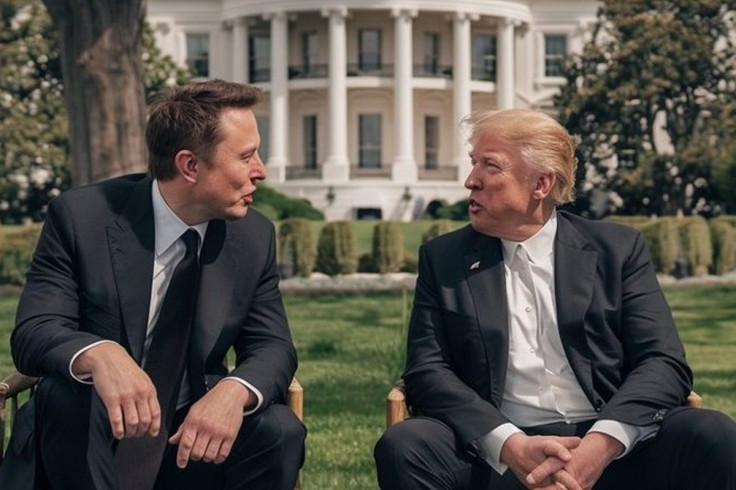
Trump Rehires Staff as Elon Musk Era Recedes
Many of the same departments that had boasted of deep staff reductions during Musk’s heyday are now quietly reversing course. The Office of Personnel Management’s own jobs portal, USA Jobs, listed more than 104,000 new federal positions in the first five months of this year, compared with 68,900 over the final five months of 2025. That is a striking swing for an administration that spent its opening months celebrating headcount cuts.
Scott Kupor, director of the Office of Personnel Management, framed the shift as a pragmatic reset rather than an ideological U‑turn. He said his agency was overseeing a ‘reshaping’ of the federal workforce, with Musk’s numeric targets no longer in play. ‘Do we have the right headcount for the priorities of the administration? And where we don’t, let’s make sure we go figure out how to fill those gaps,’ Kupor said.
The Internal Revenue Service, which lost roughly a quarter of its staff under DOGE, has now been granted special authority to fast‑track the hiring of up to 8,000 workers. The State Department, which let go hundreds of seasoned Foreign Service officers during the purge, is back to recruiting and training new diplomats. The National Endowment for the Humanities has been contacting former employees and inviting them to reapply for roles now posted on USA Jobs.
Kupor also signalled a deliberate move away from the contractor‑heavy approach that has often followed previous rounds of mass federal lay‑offs. Rather than outsourcing en masse, agencies are being encouraged to bring on permanent civil servants. ‘We’re very supportive of that activity,’ he said.
What the administration is not doing, at least publicly, is dwelling on Musk’s part in the debacle. The White House has not launched any formal review of DOGE’s impact, and there is no sign of an effort to claw back the ‘Fork in the Road’ payouts. Musk, for his part, has not offered any detailed public defence of the project’s outcomes.
His supporters still insist the cuts were necessary to shock a bloated system. For those now racing to refill the desks he helped empty, the priority is less philosophical: find people, train them and try to restore basic capacity before the next crisis tests what is left of the American state.
Originally published on IBTimes UK