Putin can’t stop Russians peeking behind the curtain forever
In an age of social media, next-day delivery and mobile banking, it’s easy to forget that we humans are still just animals.
Not in the sense that we’re brutal, uncivilized creatures—though any Ukrainian or Russian soldier camped out in a trench in Donetsk may have something to say about that—but because we are organic beings whose senses and autonomic nervous system are designed to help us avoid danger and survive.
Our bodies tell us when we’re thirsty and hungry. When it’s cold, we shiver to keep warm. And sometimes, even when everything appears fine, we get a gut feeling that something just isn’t right.
Now, as the specter of war continues to slowly transform Russian society for the worse, it is these fundamental instincts that President Vladimir Putin and the Kremlin are trying, and failing, to fool.
With each passing day, Russian citizens are forced to confront the feeling that all is not well, and no amount of media propaganda or crackdowns on internet freedom to maintain the veil of normalcy can cover it up.
The Luxury of Ignorance
For the past four and a half years, the wartime experience of your average Russian and Ukrainian civilian has been very different.
Beyond the simple fact that people in a fifth of Ukrainian territory are now living under Russian occupation, ballistic missiles and jet-powered drones batter Ukrainian cities on almost a nightly basis. Nearly 1,500 civilians were killed in such strikes just in the first six months of this year, according to United Nations figures, 37 percent more than in the same period last year.
Now, as summer turns to autumn, the weary public must prepare to survive another winter with no power or heating to combat bitter temperatures.
At this point of the war, not a single one of Ukraine’s 15 thermal power plants has managed to escape the reach of Moscow’s weapons; the nation’s thermal capacity plunged to just 10 percent last winter, and its available power generation capacity from all sources was less than half of prewar levels, according to International Energy Agency (IEA) and UNICEF figures, triggering rolling blackouts of up to 12 hours per day.
The scale of their suffering is considerable. But Ukrainians never thought this was anything other than a full-scale war.
At 5 a.m. on February 24, 2022, residents of Kyiv were jolted from their beds by air raid sirens, the rumble of explosions in the distance and the sound of Russian military jet engines screaming overhead. Almost immediately, the population understood they were locked in a battle for their statehood and survival.
The Russian public was sold something very different: a lightning offensive so precise and effective it was not classed as war, but merely a special military operation. Within weeks, if not days, Ukraine would be conquered, the troops welcomed as heroes, and Russia’s status as a great power restored.
That has not transpired. Instead, Russian expectations of an easy victory were steadily eroded. By December 2022, Putin had publicly referred to the “special military operation” as a war, and the public came to understand its armed forces were in Ukraine for a long time, not a good time.
The Curtains Are Fraying
Now, there’s a creeping anxiety that the worst is yet to come.
Cash
To fight a war, you need money. Russians are keeping more of theirs close. Russia’s Central Bank found that there was some 20.4 trillion rubles ($241 billion) worth of cash in circulation on August 1—a 20 percent increase year-on-year—while Sberbank reported Russians withdrew 580 billion rubles ($7 billion) from its banks in July alone.
It’s hardly a run on the banks; Russians withdrew more money in March 2020 as the COVID-19 pandemic restrictions took hold. This time, though, the motivation is very different. Last month, the deputy governor of the central bank, Alexei Zabotkin, was forced to declare that there were no conditions under which the Kremlin would freeze citizens’ bank deposits or raid household savings amid concerns over financing the war, dismissing the rumor as “absurd.”
Sweeping VAT rises and plunging tax thresholds for Russian businesses implemented at the start of the year hardly give Russians cause for comfort.
Gas
Russia is one of the world’s biggest petrostates, with hydrocarbon sales forming the backbone of the economy. So when Moscow is forced to import fuel instead of exporting it, something is wrong.
In the past four months, the Kremlin has introduced temporary bans on exporting jet fuel, gasoline and diesel, extending the latter two restrictions until January 2027. Data compiled by Reuters from various sources suggests Moscow is importing some 270,000 tonnes (297,624 tons) of refined fuels from Asian nations, primarily India, as queues at the pump continue to grow.
This is because gasoline production in Russia was down roughly one-third in June and July versus the same time last year thanks to a Ukrainian strike campaign on oil refineries, according to an analysis of trading data by the New Eurasian Strategies Center (NEST), meaning the country is now consuming more gasoline than it can produce.
Russians are now paying between 17 and 19 percent more for gasoline and diesel at the pump than they were in January, based on federal statistics—if they can find any, that is.
A Russian app called GdeBENZ, which tracks public reports of fuel shortages across the country, found that less than a third of all gas stations in Russia had both gasoline and diesel available on August 16, Izvestia reported. Other navigation apps like Yandex Map and 2GIS have recently introduced a feature that lets users search for the nearest gas station with supplies.
Strikes
Even in peacetime, keeping a bit of cash under your mattress and some spare cans of gas in the garage might be considered good sense, if a little overly cautious. When drones are soaring overhead, and the local retail warehouse is burning, war becomes impossible to ignore.
Beyond Ukraine’s impressive campaign against Russia’s oil and gas infrastructure and military assets, Kyiv’s drones this summer have damaged or destroyed large swathes of some two dozen facilities used by Wildberries, Russia’s answer to Amazon. The attrition has been so great that Putin himself declared the state will intervene to help rebuild logistics warehouses in comments to business leaders this week.
Amid such stress, perhaps what Russians need is a nice holiday by the beach; a chance to leave the daily grind behind and get away from it all. For many, including Putin, the destination of choice is the Black Sea resort town of Sochi.
Ukraine’s drone operators are working hard to ensure that’s not an option, either. Hotel occupancy on the Sochi coast fell 19.4 percent year-on-year in the first half of 2026, while revenue per room dropped 27 percent, based on data provided to Russian outlet Vedomosti by a regional hospitality consultancy.
On July 8 alone, Sochi airport was forced to halt its operations on four separate occasions as air raid warnings sounded across the city. Even Putin, who typically makes dozens of visits to the region every year, has not visited since October.
Keeping Up Appearances
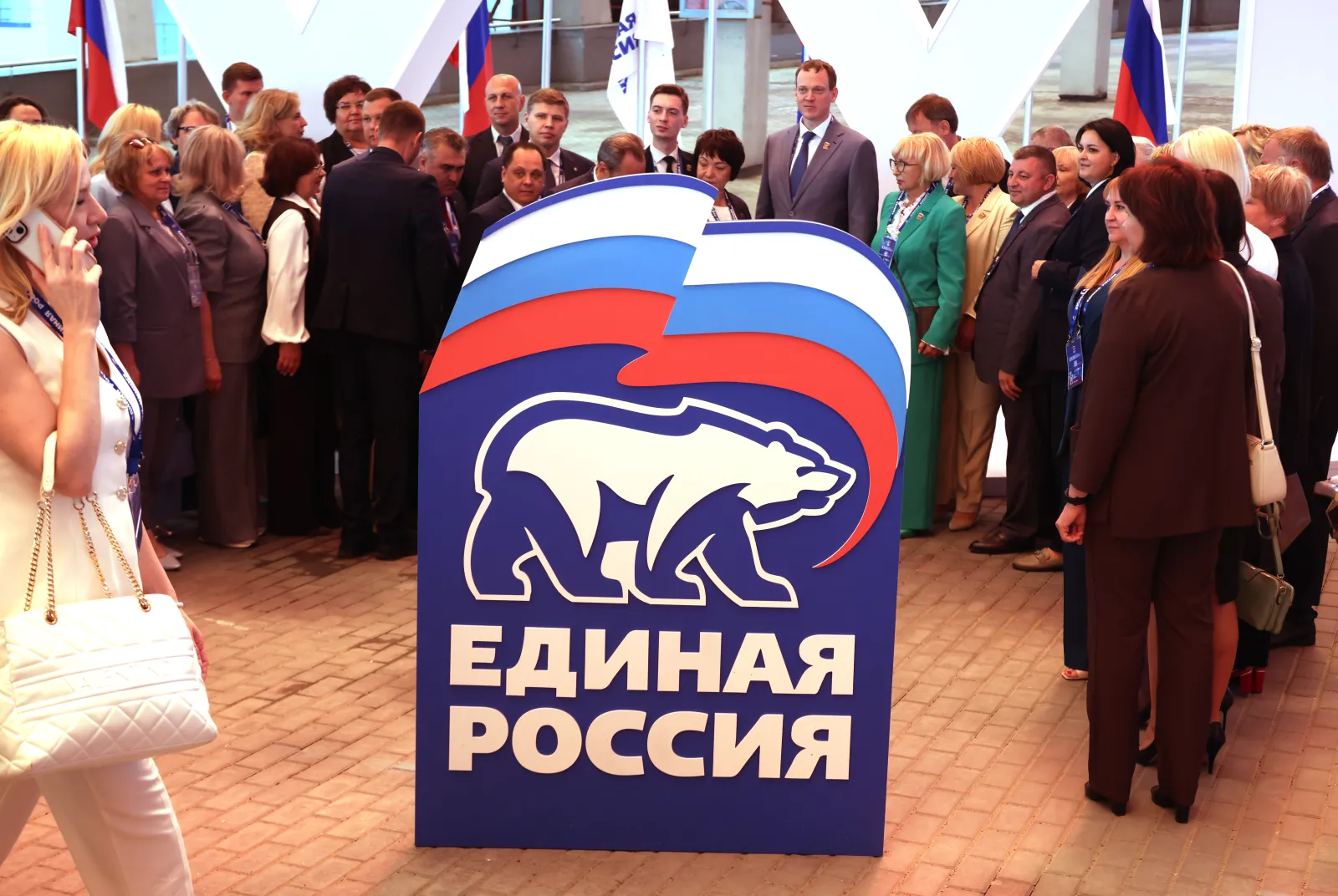
Russians go to the polls next month for the first parliamentary elections since Putin ordered the armed forces across the border and into Ukraine.
His party, United Russia, currently controls more than 300 seats in the 450-seat Duma, well above the supermajority needed to pass any legislation it pleases. Putin can comfortably lose a few seats with no material effect on his ability to govern—but Russia’s heavily stage-managed election process will likely ensure even that does not happen.
“Russian public opinion shows significant frustration among certain groups, mainly pro-war constituencies and the more independent parts of the urban working class and small business owners,” Ella Paneyakh, a senior research fellow and head of Sociology at NEST, told Newsweek.
“The key question, however, is whether this frustration will translate into any form of electoral behavior. Given the very short time frame and the lack of organization, I think this is unlikely.”
There will come a time, though, even for Putin, at which the economic and military realities of war are impossible to keep under wraps. Andrei Klepach, the former chief economist of Russia’s state development bank (VEB) and one of the country’s most respected voices, said as much in a scathing report delivered in a closed-door Moscow meeting of top economists and scientists in May.
In his report, “The Russian Economy and Geopolitical Challenges,” he predicted Russia’s economy would continue to decline, that Moscow would lose the technological and economic battle against a Ukraine backed by Western powers, and that it would hand control of large parts of its economy to China in the process.
All this, he said, could lead to an unexpected but sudden “social crisis,” in which the public understands the state has created a hopeless future for them—unless the government is willing to change course. When Russian media got their hands on a copy of the report last week, the economist’s glittering career came to an abrupt end.
With each passing day, more and more Russians are getting a glimpse at the mess behind the curtain, and the gut feeling that something’s not OK will get stronger and harder to ignore. Putin will eventually have to decide how far he wants to go in Ukraine, because if he waits forever, the survival instinct of the Russian people—and their economic and political elite—may kick in and make the decision for him.