Local coffee shops a vital part of America’s business backbone
Coffee shops are more than just a staple stopover on Americans’ way to work. They’re a massive part of the U.S. economy, contributing over $300 billion annually, approximately 1.3% of the total GDP, according to the National Coffee Association Economic Impact data summary.
That’s more than the economic impact of the motion picture industry and the video game sector.
Despite Starbucks and Dunkin’ dominating the conversation, there are nearly as many independently owned coffee shops in the U.S. as there are coffee chain stores.
Data from Statista shows that in 1990 there were 1,650 specialty shops. That number reached 31,490 by 2015 as coffee drinking was adopted by 73 million Americans during that time. Today, there is nearly double that number, out of a total of approximately 125,000 total shops.
Local coffee shops aren’t just operating in today’s challenging economic conditions, they’re operating without the large financial safety net that large corporations have. While those corporations add structure and sameness that is appealing to some, smaller operations are able to be agile and deliver a more personalized experience for their customers.
After two decades in business, Ike Escava, the owner of The Bean coffee shop in New York City has seen it all. “The first few years I was operating, my goal was to try to open another location. I was operating, making some money and using whatever money I was making to open another location and it was wasn’t going that smoothly. I opened and closed two locations over a course of about five or six years,” he told Newsweek.
Toward the end of his 10-year lease at his original East Village location, he alleges that he was mislead by the business’ then-landlord into thinking that the Manhattan location of his shop on was the permanent home of The Bean. He says that he offered to pay his landlord a year’s rent in advance to ensure that he was able to continue operating out of that space, but despite consistent reassurances from the landlord, something felt off so he began looking at other possible locations.
“We were on the corner of First Avenue and East Third Street, and I must have walked around the block during those nine years 1000 times. There’s this store on the corner of First Avenue and Second Street, boarded up, and there’s a sign on the boards that says ‘Call Crazy Landlord,’ and I never called because I never had any reasons. But that day, I felt like maybe I had a reason. So, I called the number, and the crazy landlord picks up and he says, ‘Yeah, this is the crazy landlord,’” Escava said.
After some back and forth, Escava and the so-called crazy landlord made a contingent deal to move The Bean to the boarded-up storefront. Escava’s intuition paid off. Three months later, a contractor came in to measure The Bean and that’s when he found out that two years prior, the landlord had made a deal with Starbucks to rent the storefront to them.
After an article ran in The New York Times featuring the David versus Goliath story, patrons from the five boroughs threw their support behind Excava and The Bean. “We did more business then than we did in any full year since that time,” Escava said.
“It felt like out-of-body experience a little bit because when you see all that support, it’s very emotional. I felt like George Bailey, in ‘It’s a Wonderful Life’… It turns out that even though it felt like the sky was falling, it wasn’t. It was a positive for us in the end.”
Today, The Bean operates at 54 Second Avenue, between Third and Fourth Streets. While the location still has good business, its model has had to adapt in recent years.
Escava said: “I have seen a big change since the pandemic—traffic patterns have changed a lot… When the pandemic came around, people got used to staying in their own neighborhoods. Maybe some people got used to making their coffee at home. Where Manhattan used to be a destination at night and on the weekends for people to come and hang out, it’s less of that because people got used to being in their own neighborhood. And, if you want to drive into the city now, you have to pay a fee. Plus, there’s more competition, it’s definitely not been easy. Conditions haven’t been ideal, but we keep going.”
The Bean, like other eateries, is learning how to work food delivery apps like DoorDash, Postmates and UberEats, despite each order that comes through there lessening the eatery’s profit margin when compared to dine-in or traditional take-out orders.
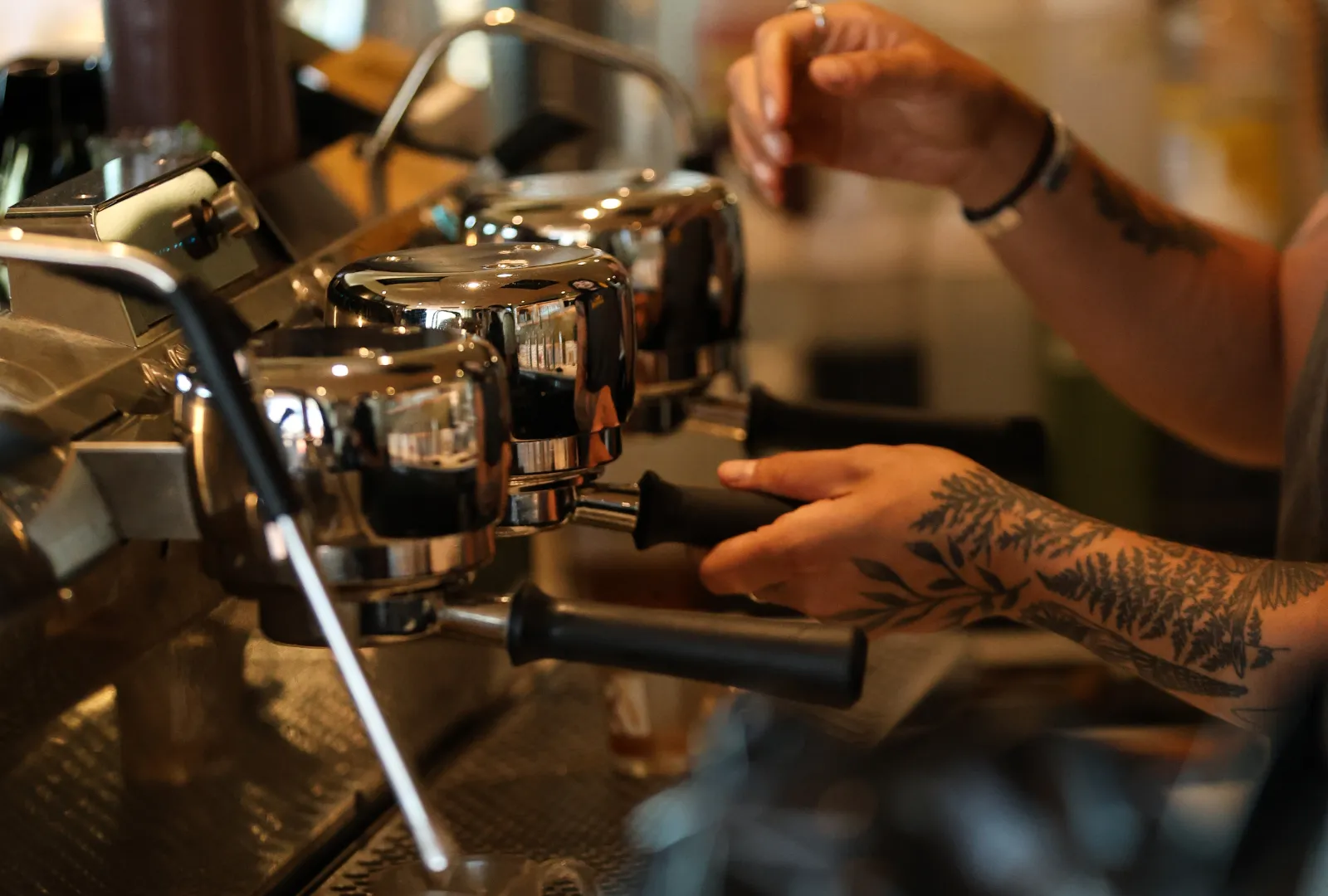
The conundrum is the same all the way across the country in Seattle. “We’ve been in business for nearly 30 years so we’ve seen a lot of change. But, the acceleration of change and rising costs has been really intensified after the pandemic,” Jeff Babcock, founder of Zoka Coffee Company, told Newsweek.
“Coffee prices went up drastically, but so did everything else in our business. Gas prices went up, agricultural prices for our farmers went up, production costs, shipping went up, tariffs were an issue, our rents all went up, labor costs rose 31% in Seattle within four years. So, we had to raise prices. People complained, but we didn’t have a choice, especially since we weren’t willing to compromise our quality,”
The same is true at Boon Boona Coffee, an independent shop with a few locations across the Greater Seattle Area. “We’ve adapted to the post-pandemic environment by diversifying beyond our cafés through e-commerce, grocery and wholesale partnerships and creating more ways for customers to experience specialty coffee. At the same time, coffee consumers are increasingly curious about where their coffee comes from, how it’s processed, and how best to brew it – creating opportunities for us to educate and build deeper connections around each cup,” the company’s founder and CEO Efrem Fesaha told Newsweek.
While Starbucks famously wants to be customers’ third place, independent coffee shops are naturally better able to integrate into their communities to serve as just that.
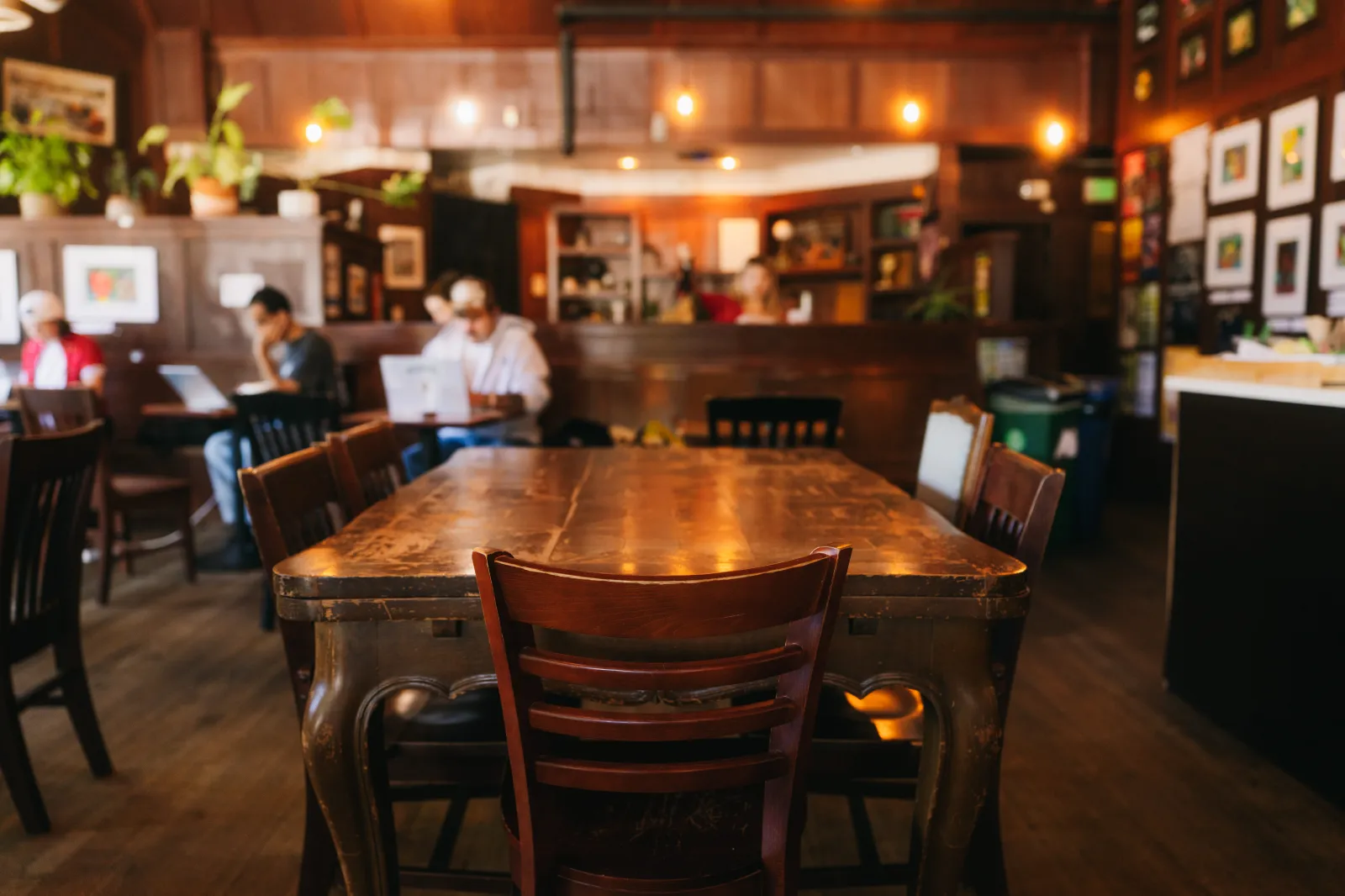
“We’ve been around a long time and we’ve been in our same cafe locations for a long time. We grow with the neighborhoods. Not losing sense of who Zoka is, is important… We made serious upgrades to our Wi-Fi. We want people to come hang out; that’s still popular and important, especially as the working world has evolved post pandemic. People more than ever need that third place to come post up [to] now for work or socialization,” Babcock said.
The founder continued, saying, “After nearly 30 years, our goal isn’t to become everything to everyone, it’s to remain a really good local coffee company that gives people a reason to choose us—and to come back.”
Voting is ongoing for Newsweek’s Readers’ Choice Awards Best Seattle Coffee Shop. Vote here, once per day through August 26 to make your voice heard.