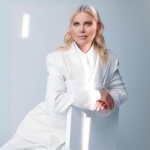
Collector Emma Menell Is Rethinking How African Artists Are Supported Abroad
In 2015, South African collector Emma Menell founded Tyburn Gallery in London to provide a platform for artists from Africa and its diaspora to show their work. When the gallery closed just four years later, it had built a reputation as a nurturing space for young artists, some of whom have since attained global acclaim, including Kudzanai-Violet Hwami and Moffat Takadiwa (a 2026 Toyota Tsusho CFAO African Art Award winner).
Some six years later, Menell founded the nonprofit Tyburn Foundation with a similar mission but greater zeal. “I wanted to continue working closely with emerging and mid-career artists from Africa in a less commercial context that prioritized slow, sustainable growth through curatorial engagements, residencies and meaningful patronage,” she told Observer. “The Foundation emerged from a desire to create a structure that supports artists’ practices over time free from the pressures of the market, with space for deeper reflection, experimentation and exchange. The present challenges facing galleries have further strengthened my commitment to the Tyburn model.”
Tyburn Foundation, which is headquartered in Umbria, Italy, builds on the legacy of the gallery with an artist-focused program of fellowships, residencies and exhibitions. Its priority is the long-term support of artists making work in a community-driven environment through collaboration, research, exchange and experimentation across Europe and Africa. Its current residencies are La Foce, located in the Niconne Valley, and Civitella Ranieri, housed in a 15th-century castle, both in Umbria, and the Bridge Visual Arts Residency in Zimbabwe, in collaboration with the Animal Farm Artist Residency, founded by Zimbabwean artist Admire Kamudzengerere.

This approach lets the foundation “bridge geographies and offer visibility and validation outside traditional Western-centric circuits while still engaging critically within them,” according to Menell, while highlighting “the multiplicity of creative voices shaping the contemporary moment and to engage in the reframing of how artistic excellence is understood.”
Following his residency at La Foce in May 2025, Zimbabwean South African artist Michele Mathison spent an extended period engaging with the landscape, local materials and craftspeople and the history of the site. The result is Verso il Cielo, an installation of 55 travertine pillars in an ancient forest clearing, which explores themes such as materiality, memory and the cultural exchange between southern Africa and Italy. The work opened to the public a year later, coinciding with the 2026 Venice Biennale, reflecting the foundation’s slow and deadline-free approach to artistic production.

In mid-October of 2025, Tyburn Foundation hosted its debut exhibition, “Quiet Grounds,” featuring work by Mathison, Zimbabwean artist Primrose Panashe Chingandu, South African artist Driaan Claassen and South African artist Mbali Tshabalala, drawn from their residencies in spring and summer 2025. The work was on view at PIASA, located in an 18th-century mansion on Rue du Faubourg Saint-Honoré in Paris, and coincided with that year’s Art Basel Paris.
This year’s residents are Ghanaian artist Gideon Appah, Zimbabwean artist Option Dzikamai Nyahunzvi and Tunisian-French artist Mouna Karray.

“Founding and running Tyburn Gallery heightened my understanding of the pressures faced by artists in the commercial art world and the challenges of forging a career, challenges which have grown as result of the current structural, economic and cultural shifts and have underlined the fragility of traditional gallery models,” Menell said when asked how lessons learned in the gallery era have been useful in leading the foundation, whose advisory board includes Kami Gahiga, Art Basel’s VIP representative for Africa Regions, and Azu Nwagbogu, the founder and director of LagosPhoto Festival and African Artists Foundation. “Tyburn [Foundation]’s understanding of the commercial art world helps us to mentor and support artists in their practices. At the core of our ethos is a commitment to international partnerships, collaboration and the fostering of community networks.”
Menell left South Africa in 1988 for the United Kingdom, where she earned a doctorate in International Relations from the Inns of Court School of Law at the University of Oxford and qualified as a barrister. She returned to her home country in the late 1990s to a “fascinating and vibrant time,” during which she was exposed to the work of artists like William Kentridge and David Koloane. They were making art that wasn’t only in opposition to apartheid (a government system that segregated whites and Blacks) but also other societal issues. “The period as a whole characterized a movement from protest art at the start of the decade into more complex reflections on memory, identity, trauma and nation-building in the later years,” she recalled.
At the time, Menell was working as a lawyer in Johannesburg, and a new constitution addressing a more equitable society with human rights at the forefront had been formulated. It tied into her interests in geopolitics, power structures and how societies are organized—themes explored by contemporary African artists—and she began her collecting journey in the early 2000s by buying a piece by Kentridge. Her collection has since expanded to more than 200 works by artists such as Zanele Muholi, Kudzanai-Violet Hwami, Amy Sherald, Alberta Whittle and Lynette Yiadom-Boakye, as well as former Tyburn Foundation residents Chingandu, Claassen, Mathison and Tshabalala.

“Running the foundation is primarily about facilitation, creating the conditions for dialogue and growth, bridging continents, fostering networks and encouraging artists to think expansively about their practices within a global context,” said Menell, who is also a patron of the Zeitz Museum of Contemporary African Art. “Residencies provide the rare gift of time and space, conditions that allow artists to take risks without fear of failure. Stepping outside one’s established medium can open up unexpected pathways. This kind of experimentation is often where the most profound developments occur. The foundation exists to hold space for that kind of growth, encouraging artists to push boundaries in ways that might not be possible within the constraints of commercial or institutional frameworks.”
As for what’s next, she said Tyburn Foundation is actively exploring new partnerships within Africa, and she is excited by the idea of creating a residency program spanning further geographies.
More art collector interviews