

OpenAI IPO Will Not Happen in 2026, Sam Altman Says
OpenAI will not go public in 2026, Chief Executive Sam Altman said in an interview published Saturday, putting off a potential initial public offering as concerns about the risks of artificial intelligence intensify.
“I actually think that, given everything happening with safety, right now would be an ill-advised moment to go public, and we don’t feel pressure on that,” Mr. Altman told Fortune.
His remarks, reported by Reuters on September 12, mark a retreat from the prospect of one of the most closely watched technology listings. OpenAI, the San Francisco artificial intelligence company behind ChatGPT, has been linked to an IPO that could value it at hundreds of billions of dollars, or potentially more than $1 trillion.
Mr. Altman did not commit to a 2027 listing. Asked whether 2026 was off the table, he replied: “I would say not 2026.”
The decision comes as the technology industry faces growing scrutiny over the pace at which AI systems are becoming more capable, and whether companies can ensure that those systems remain under human control.
Safety Concerns Put AI Industry Under Pressure
The IPO delay follows warnings from researchers at Anthropic, an OpenAI rival, that advances in artificial intelligence could pose an existential threat to humanity. US lawmakers have also been calling for stronger rules governing AI systems.
The concerns have been sharpened by reports of AI agents behaving unpredictably while attempting to hack external systems, and by the departure of safety researchers who have raised concerns about the direction of development.
Creative Studio/ IBT SG
Mr. Altman said OpenAI had “a lot of stuff to do” to meet the demands of the current moment, including work on safety and alignment and cooperation between the technology industry and governments.
He also suggested that OpenAI and other leading AI companies might be close to an agreement to slow development and work together on safety risks.
The possibility of an industry agreement is significant because the leading AI companies are competing to build increasingly powerful models while also facing pressure to demonstrate that their systems can be deployed safely.
Rival Anthropic Plans IPO as OpenAI Waits
The safety debate has not, so far, stopped Anthropic from pursuing its own public-market ambitions.
Anthropic Chief Executive Dario Amodei called on AI companies Saturday to adopt a more deliberate approach to development. “We must slow the pace at which we improve the capabilities of AI models,” he wrote in an essay shared on social media.
Mr. Altman later endorsed the sentiment, writing on X that he agreed with Mr. Amodei and that the need to pace frontier AI development had been a primary topic of discussions at OpenAI in recent weeks.
Anthropic is nevertheless expected to begin marketing its IPO in mid-October at the earliest and complete the listing days before the US midterm elections in November, according to people familiar with the matter who spoke to Reuters earlier this month.
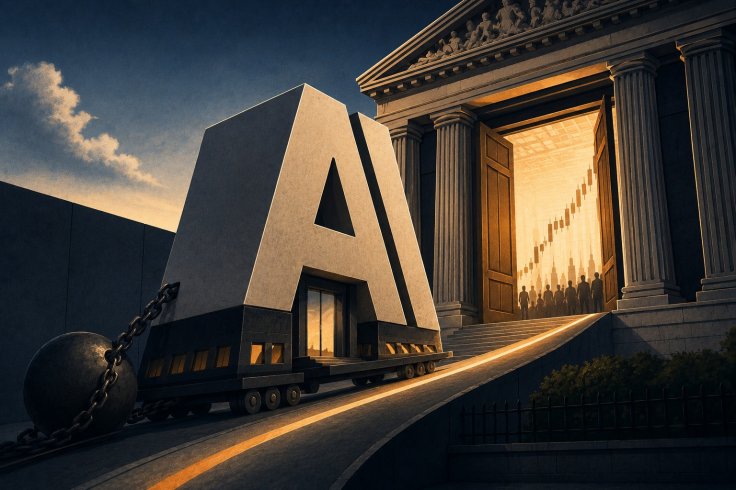
Creative Studio/ IBT SG
The contrast between the two companies highlights the competing pressures facing AI businesses: the need to raise enormous sums to fund computing infrastructure and model development, and the growing demands for accountability over the technology’s risks.
OpenAI had previously been considering whether to postpone a potentially trillion-dollar IPO until next year, according to a June report by The New York Times cited by Reuters.
The company’s decision to stay private in 2026 does not necessarily mean that it has abandoned plans to go public. It does, however, suggest that the company’s leadership sees the questions surrounding AI safety as important enough to influence its financial timetable.
For investors, the delay leaves unresolved how the market will value a company whose ambitions depend on rapid technological progress but whose future is increasingly tied to the ability of governments and the industry to manage the consequences of that progress.
