Brother of slain Fort Hood soldier urges Trump to stop livestream execution
The brothers of a solider who was killed in the Fort Hood shooting is urging President Donald Trump to reconsider the plan to livestream the firing squad execution of Fort Hood shooter Nidal Malik Hasan.
A Pentagon official told Newsweek on Friday that Hasan’s execution would be livestreamed, after Defense Secretary Pete Hegseth earlier said that it would be “public.” Hasan was convicted of killing 13 people and injuring 32 others in a shooting spree at the military base in November 2009.
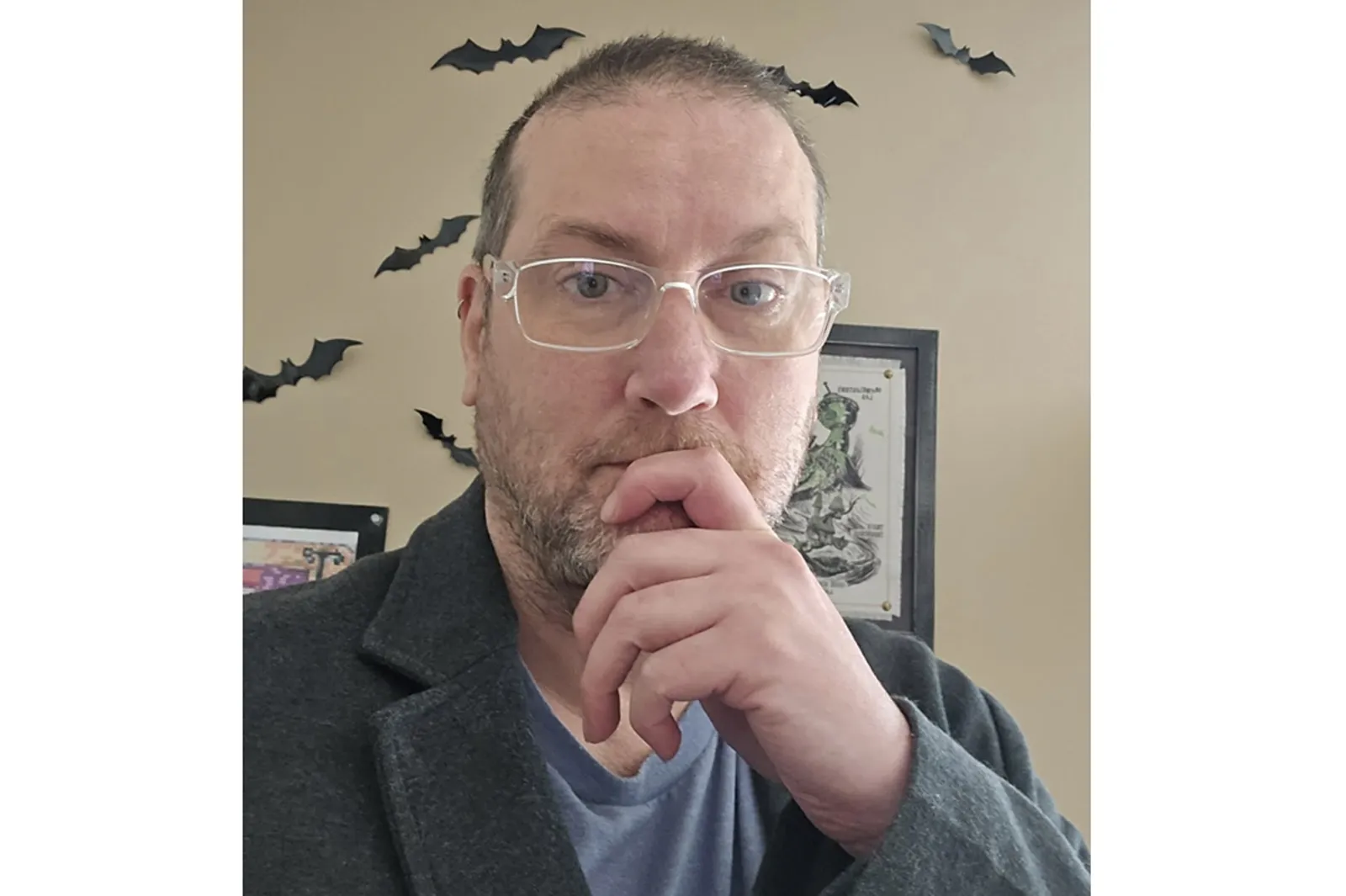
Kristopher Craig, an Army veteran whose 22-year-old brother Army Pfc. Michael Pearson was among the 13 killed, told Newsweek that he began drafting a letter to send to Trump and Hegseth after hearing the news that Hasan’s execution would be livestreamed.
He said he plans to submit the letter via the White House’s online contact form and send physical copies to Trump and Hegseth by mail.
Trump told reporters on Friday that he had personally authorized the proposal to livestream Hasan’s execution.
A Pentagon spokesperson declined to comment when contacted by Newsweek about Craig’s letter. “We have nothing to provide,” the spokesperson said in response to a request. The White House has been contacted for comment via email.
‘Thinking About Grief, Anger, Forgiveness, Justice’
“I am writing to ask you to reconsider the decision to livestream the execution of Nidal Hasan,” Craig, 48, wrote in his letter, which he provided to Newsweek.
“For nearly seventeen years, I have lived with the consequences of what happened that day. I have spent those years thinking about grief, anger, forgiveness, justice, and what it means to lose someone you love to an act of violence that becomes part of our nation’s history,” he wrote.
“Now, after all this time, I find myself confronting something I never expected to confront: the possibility that my brother’s death will become part of another public spectacle.”
His brother, he wrote, was “a good kid” and “one of the best people I have ever known.”
“He was young and still trying to figure out his place in the world. He joined the Army because he wanted opportunities and a better future for himself. He was trying to make something of his life, as millions of young Americans do,” he wrote.
“He was not trying to become a symbol or a political statement. He was trying to live, and he never got the chance.
“When you speak about justice for the victims of Fort Hood, I ask you to remember that you are speaking about people whose lives were much larger than the circumstances of their deaths.”
Craig wrote that he does not want his brother’s memory “tied to the public broadcast of another human being’s death.
“I want him remembered for the person he was, for his goodness, his hopes, the life he was trying to build, and everything he might have become if he had been allowed to grow older. I want the other twelve people who were killed that day to be remembered as people, too, not merely as names invoked to explain or defend a government decision.”
Opposition to the Death Penalty
Craig opposes the death penalty, but wrote in the letter that he respects the feelings of those who support Hasan’s execution.
“I understand that Hasan was convicted of terrible crimes and sentenced to death,” he wrote.
“I also understand that many people, including some of the families affected by that day, believe his execution represents justice. I respect their feelings and would never presume to speak for them. However, I am asking you to respect mine as well.”
The Consequences of Broadcasting Live
Craig directed a section of his letter at Hegseth, who said in a recent interview that the plan to make the execution “public” was because “people need to understand that there are serious consequences for these types of things.”
“Secretary Hegseth, I understand the message you are trying to send,” he wrote.
“You want people who might contemplate committing an atrocity like the one at Fort Hood to understand that there will be consequences. But I ask you to consider whether broadcasting an execution actually accomplishes that. Does witnessing another person’s death make someone less likely to commit violence? Does it make our communities safer? Or does it simply give the public another act of violence to watch, this time carried out by the government?”
Craig also wrote that he was “deeply troubled” by the idea that the government “would deliberately turn an execution into something people can gather to witness on their televisions, phones, or computers.”
“We have a history of public executions in this country. We also have a history of moving away from them, in part because of what happens when the taking of a human life becomes an event for an audience.”
‘A Difference Between Accountability and Spectacle’
He added: “There is a difference between accountability and spectacle, and there is a difference between honoring the dead and inviting the public to watch someone else die in their name.”
He said he was not writing in defense of Hasan, but because he believes the government “has a responsibility to uphold human dignity, even when dealing with someone who committed an act of profound cruelty.”
He wrote: “I cannot help but wonder what purpose this broadcast is intended to serve. Will it bring my brother back? Will it restore the futures that were stolen from thirteen people? Will it ease the grief of families who have lived with this loss for nearly seventeen years?
“Some may believe it will bring closure, and I respect their right to feel that way. But for me, the prospect brings no comfort. It brings sadness, anger, and the painful feeling that my brother’s death is being used to justify something I find deeply wrong.”
‘Do Not Livestream This Execution’
Craig concluded his letter by again urging Trump and Hegseth to reconsider the plan to livestream Hasan’s execution.
“Do not livestream this execution. Do not make the deaths of our loved ones the justification for turning another death into a public event. Whatever happens to Nidal Hasan, let it happen without an audience assembled by the government to witness his final moments,” he wrote.
“I have lived long enough with the knowledge of what violence took from my family. I do not want my brother’s memory used to give violence an audience.
“Michael deserved the chance to live a full life, and he was denied that chance. The least we can do now is remember that his life was worth more than the way it ended. We should not have to watch another human being die to remember the value of the lives we lost.”
Trump Says He Approved Livestream Plan
Trump, a strong supporter of capital punishment, told reporters on Friday that he had personally approved the decision to livestream Hasan’s execution.
“Did I approve? Absolutely,” he said.
The president was repeatedly asked about his role in the decision to livestream the execution as he left the White House on Friday.
Asked if he wanted the execution livestreamed and whether he was concerned the video could be used as propaganda, he said: “Well, they’re making a determination about that, but he will be killed.
“He will be through firing squad… I really don’t care how he goes, as long as he goes. And I think that the death penalty is a very worthy way of going for him.”
JD Vance Has Doubts
Trump did not answer questions about whether he planned to watch the livestream.
Vice President JD Vance on Friday cast doubt about whether the Pentagon would livestream the execution.
“I don’t know that that’s actually going to happen,” Vance told reporters on Friday when asked about the plans. He sought to set aside the controversy by noting Hasan’s crimes.
“So whatever the controversy is about the method of the execution, I hope that people don’t forget that this is a guy who brutally murdered a lot of innocent people,” he said.
“Now, that said, I mean, look, if it’s ultimately livestreamed, I’m not going to be watching it.”
The vice president is a convert to the Catholic Church, which has long opposed capital punishment.
His comments came after earlier on Friday, Archbishop Paul S. Coakley, the president of the U.S. Conference of Catholic Bishops, condemned the decision to livestream Hasan’s execution as “a barbaric promotion of a culture of death and must be reconsidered.”
Lawmakers from both parties, Republicans and Democrats, have also condemned the decision to livestream the execution and urged the Pentagon to reverse course.
When Is Hasan’s Execution?
The Army announced this week that Hasan’s execution will take place at Fort Hood, Texas, at 1p.m. on December 3.
“It’s going to be soldiers with rifles executing the firing squad,” Hegseth said in an interview with Jack Posobiec of the conservative outlet Real America’s Voice aboard the USS Abraham Lincoln on Wednesday.
“And we’ll make sure that people are able to watch it, that it’s public, because people need to understand that there’s serious consequences for these types of things.”
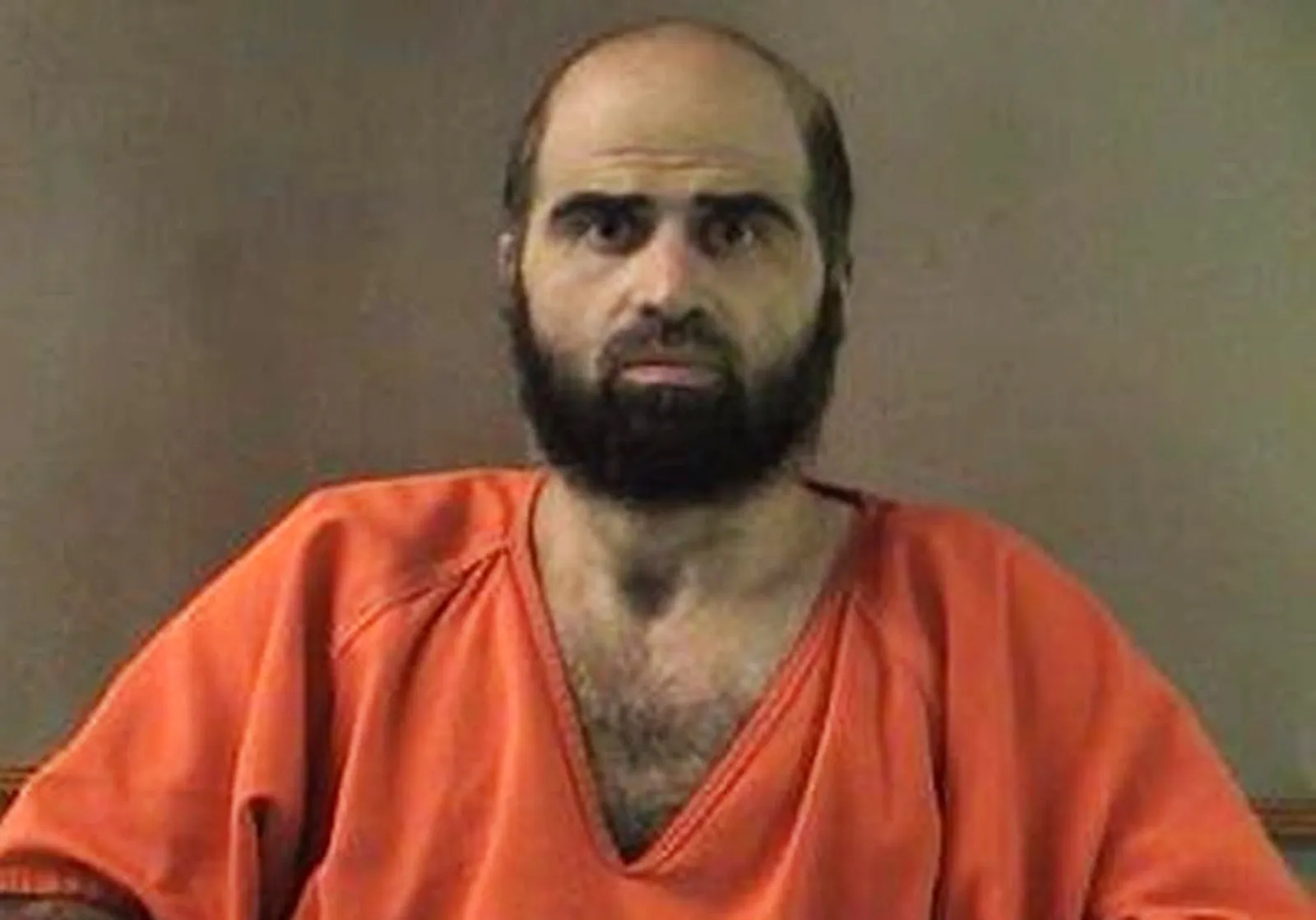
Hasan, an Army psychiatrist who held the rank of major, walked into a medical building on November 5, 2009, where soldiers at Fort Hood were waiting to receive medical clearance for deployment.
He shouted “Allahu akbar” — Arabic for “God is great!” — and opened fire and also shot at the backs of soldiers fleeing toward the parking lot. Hasan said it was an effort to stop them from going to Afghanistan and killing his fellow Muslims. He is paralyzed from the waist down after being shot in the back by law enforcement, and he now uses a wheelchair.
A military jury convicted Hasan of all 42 counts brought against him in 2013 and sentenced him to death. He acknowledged during his court-martial that he was the shooter and said he had “switched sides.” The Army said Hasan’s appellate process was completed after the U.S. Supreme Court denied his request for review in March 2025.
Trump approved the execution by firing squad on October 2, giving the Army authority to set the date. That came days after Tennessee’s failed attempt to execute Christa Pike brought fresh scrutiny on how states carry out the death penalty, particularly when using lethal injection.
Hegseth said the military hasn’t executed a service member by firing squad since World War II. The last military execution took place on April 13, 1961, when Army Pvt. John Bennett was executed by hanging.
An Unprecedented Move
If the plan goes ahead, it would be the first time the government has broadcast or livestreamed an execution in U.S. history.
Robin Maher, executive director of the Death Penalty Information Center (DPIC), told Newsweek that the center has no record of any execution in the U.S. being livestreamed.
“Our records indicate the last public execution was in the 1930s. We have no record of any execution being live streamed,” she said in an email.
“We are not aware of any regulation or precedent for a military execution to be livestreamed on the internet or otherwise made widely available to the public.”
Austin Sarat, a professor at Amherst College who has written extensively about the death penalty, told Newsweek that while death by firing squad is “always brutal,” livestreaming the execution “will turn that brutality into a spectacle of cruelty.”
Sarat added: “Livestreaming will not educate. It will terrorize, and is beneath the dignity that we owe to anyone, even those who commit the kind of horrific crime that Nidal Hasan did.”