El-Sayed scores boost with conservative pollster as Trump escalates attacks
Democrat Abdul El-Sayed leads Republican Mike Rogers by 46 percent to 44 percent in a new Rasmussen Reports poll of Michigan’s Senate race.
The result places the Democrat narrowly ahead with less than three weeks remaining before the November 3 midterm election, despite an increasingly personal campaign against him, with President Donald Trump intensifying his attacks during the final stretch.
At a Dalton, Georgia rally on Friday, Trump called El-Sayed “Muhammad,” mocked the candidate’s full name and asserted presidential license to address him however he wanted.
Journalist Mehdi Hasan condemned those comments as “naked racism and bigotry,” drawing attention to their potential effect on children with Muslim names.
Newsweek emailed the White House for a response to Hasan’s remarks on Saturday morning.
Michigan voters will decide who succeeds retiring Democratic Senator Gary Peters in a contest that could influence control of the Senate.
El-Sayed has framed the campaign around affordability and economic power, promising to “get money out of politics, put money in your pocket, and pass Medicare for All,” while also emphasizing housing costs and corporate influence.
Rogers is campaigning on an “America and Michigan first” message centered on manufacturing, lower household and prescription-drug costs, and protecting Social Security and Medicare; more recently, he has called for an end to the U.S.-Canada tariff dispute and the war with Iran as economic pressures dominate the race.
Newsweek contacted the El-Sayed and Rogers campaigns for comment on Saturday morning outside of regular working hours.
By The Numbers
- Five percent of respondents in the new poll said they remained undecided, a potentially decisive bloc in a close election.
- Libertarian Lydia Christensen and U.S. Taxpayers Party candidate Tim Long each received 2 percent, while Green Party nominee Douglas P. Marsh drew 1 percent.
- Rasmussen’s two-point difference is smaller than the poll’s sampling error, leaving the contest statistically unresolved.
- RealClearPolitics classifies the race as a toss-up and gives El-Sayed a 2.6-point polling-average lead.
- Prediction markets Polymarket and Kalshi make El-Sayed the favorite over Rogers, at 71 percent and 68 percent respectively; prediction markets can aggregate new information quickly but represent traders risking money, not a scientific sample of voters, and may be affected by liquidity or an unrepresentative participant pool.
Rasmussen Finds A Competitive Race
Rasmussen Reports published its Michigan survey on October 16 after interviewing 798 likely voters by telephone and online from October 12 to 14.
El-Sayed registered 46 percent support against 44 percent for Rogers.
The margin of sampling error was plus or minus 3 percentage points at the 95 percent confidence level, and Pulse Opinion Research conducted the fieldwork.
That means the Democrat’s advantage cannot establish who is leading across the broader electorate.
Still, the result is politically useful because Rasmussen is commonly included among Republican-aligned pollsters.
The wider polling picture points in the same direction without showing a commanding Democratic position.
RealClearPolitics’ October 17 average put El-Sayed at 48.1 percent and Rogers at 45.5 percent.
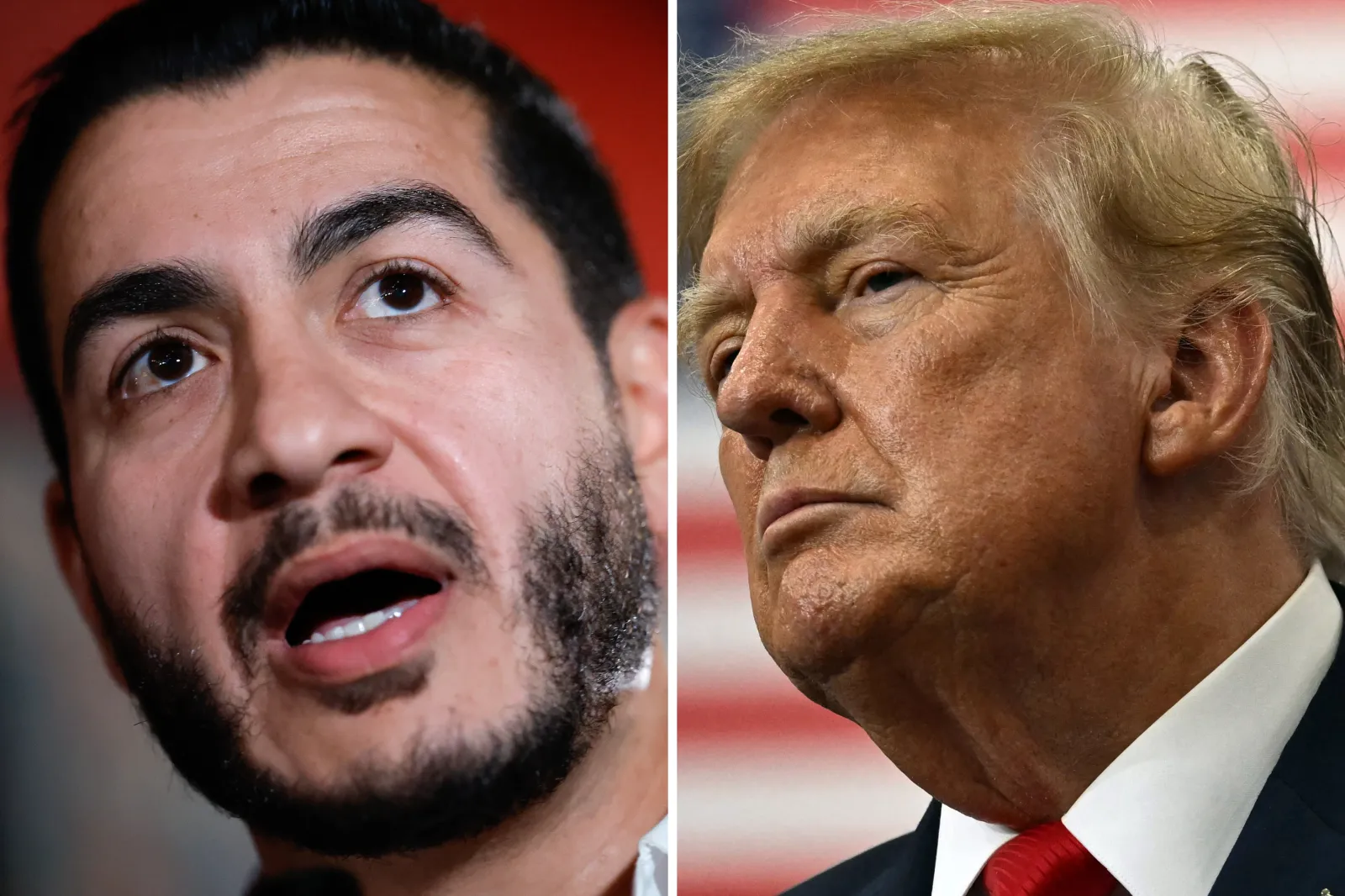
Trump Targets El-Sayed
The latest numbers arrived alongside a more personal intervention by Trump.
“I’m the president. I can call you whatever the hell I want, Muhammad,” Trump said during a rally in Georgia before ridiculing the pronunciation of the candidate’s first name.
He then noted that ‘Muhammad’ is El-Sayed’s middle name and added: “I was right… almost.”
Trump also used the name Mohammad as the basis of a separate joke while discussing Iran.
“If you’re in doubt about somebody’s name from the Middle East, just say ‘Mohammad,’” he told the crowd at Dalton Municipal Airport. “You have about a 65 percent chance.”
Turning to Iran’s leadership, Trump said: “Iran is the only country where nobody wants to be president,” before pretending to ask several people named Mohammad whether they wanted the job.
Mohammad is one of the most common male names among Muslims, who often name their sons after the Prophet Mohammad, the founder of Islam.
Masoud Pezeshkian has served as Iran’s president since 2024. The Georgia audience gave that joke a muted response, Reuters reported.
Trump also alleged that El-Sayed was a radical connected to the Muslim Brotherhood. El-Sayed has denied such ties.
Rights and Muslim advocacy organizations have repeatedly criticized the president’s rhetoric toward Muslims, immigrants and ethnic minorities.
His midterm targets have also included Muslim Minnesota Representative Ilhan Omar.
At an Ohio rally this week, Trump called Omar a “disaster,” questioned the naturalized U.S. citizen’s attachment to the country and invoked her Somali origins; earlier this year, he said she “should be in jail” and “sent back to Somalia.”
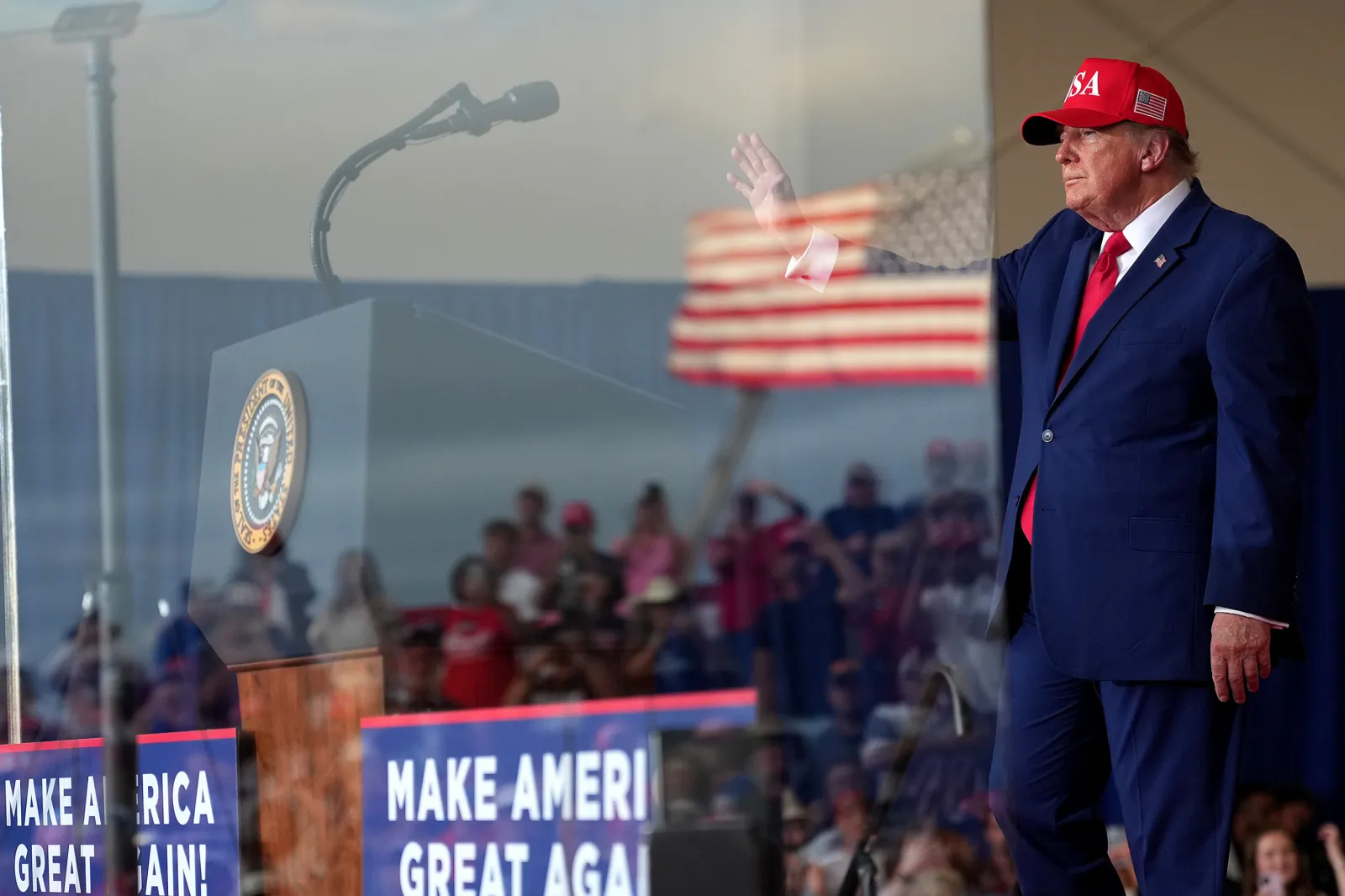
Michigan’s Narrow Electoral Divide
Michigan offers little room for either campaign to miscalculate.
Trump carried the state by about 1.5 percentage points in 2024, while Democrat Elissa Slotkin defeated Rogers in that year’s Senate election by roughly one-third of a point.
El-Sayed now has to turn a modest polling edge into votes while keeping his campaign message from being displaced by arguments about his faith and background.
Rogers needs late deciders to move toward the Republican ticket in sufficient numbers to erase the gap.
The poll supplies a snapshot, not a prediction. With 5 percent yet to choose and several minor candidates on the ballot, Michigan remains capable of producing another close finish.
What Happens Next
The decisive evidence will arrive on November 3, when Michigan voters determine whether the state sends a public-health official or a former Republican congressman to Washington.
Newsweek’s reporters and editors used Martyn, our AI assistant, to produce this story. Learn more about Martyn here.
Contact Newsweek editor on this story: Edward Pearcey.