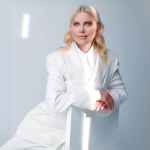
L’Oréal CEO Nicolas Hieronimus’ $4.5B Deal Turns Fashion’s Cachet into Beauty Revenue
L’Oréal CEO Nicolas Hieronimus is buying half a century at the perfume counter.
His March 31 deal with Kering carried an upfront price of 4 billion euros ($4.5 billion). It brought Creed into L’Oréal and secured 50-year licenses to develop fragrances and cosmetics for Bottega Veneta and Balenciaga. A separate 50-year license for Gucci is scheduled to take effect July 1, 2027, subject to regulatory approvals. That is a considerable stretch of time to spend selling the pleasure of a designer name.
Hieronimus is applying the model to a company that generated roughly $40.1 billion in sales during the first nine months of 2026. Its Oct. 22 sales report recorded 6.9 percent like-for-like growth, which excludes currency movements and changes in the businesses being counted.
He has spent most of his working life learning how that operation sells. Hieronimus joined L’Oréal in 1987, ran its luxury division from 2011 through 2018 and became CEO in May 2021. His 2023 deal for Aesop, which valued the business at approximately $2.5 billion, put another distinctive beauty brand in the portfolio.
A fragrance lets a customer buy into a fashion house at a fraction of the price of its clothes or handbags. Hieronimus wants more of those purchases flowing through L’Oréal, which supplies the laboratories, manufacturing and distribution that can turn a coveted name into a much larger beauty business.
Stephan Kanlian, professor and associate chair of Cosmetics and Fragrance Marketing and Management at the Fashion Institute of Technology, cautions against explaining L’Oréal’s performance entirely through the appeal of its categories. He developed FIT’s graduate program for emerging beauty executives, which opened in 2000.
“I would not discount the level to which the company L’Oréal is incredibly well run,” Kanlian tells Observer. “Having worked with all the major firms in industry over the last 25 years, L’Oréal consistently outperforms.”
The price of a fashion name
Hieronimus’ agreements give L’Oréal different kinds of control. Creed is an acquisition. Gucci, Bottega Veneta and Balenciaga remain Kering fashion houses whose beauty businesses L’Oréal will develop under licenses, paying royalties for the use of their names.
He is extending a model L’Oréal already uses with Yves Saint Laurent, Prada, Valentino and Giorgio Armani, whose names appear on fragrances and cosmetics sold through its global operation.
Kanlian describes the company as having a “long history of translating the DNA of a brand into a global beauty franchise.”
Getting the Gucci business a year early carries another substantial bill. Coty’s July securities filing says it is due approximately $400 million for the early termination. It received $250 million when the agreement was signed, with the remaining payment subject to a potential holdback of up to $30 million. Inventory is being sold separately.
Coty’s license is scheduled to end June 30, 2027, with an option for Kering to extend the termination date. L’Oréal will reimburse Kering for approximately 70 percent of its early redemption and inventory costs.
Hieronimus is securing those rights while Gucci works through a slowdown. Kering’s Oct. 22 revenue update reported that Gucci’s sales fell 6 percent on a comparable basis in the three months ending Sept. 30.
For shoppers, beauty offers a more approachable introduction to those names.
“Beauty is really still, by far, the most affordable category in terms of individual product price point,” Kanlian says. “I don’t want to discount the fact that that is a huge competitive advantage for beauty over the other categories.”
U.S. sales figures support that appeal, though some of the extra spending reflects higher prices. Circana reported that prestige beauty sales rose 7 percent to $17.1 billion in the first half of 2026. Mass-market beauty sales also increased 7 percent.
Prestige fragrance sales grew 6 percent, but unit sales were flat, and average prices rose 5 percent. Shoppers were spending more on scent without buying more units overall.
Luxury fragrances performed better in both dollars and units, while mass-market fragrance sales rose 15 percent. The appetite for scent reaches well beyond the designer labels Hieronimus is collecting.
The factories behind the fragrance
A handsome bottle is the most visible part of a much larger undertaking. L’Oréal’s 2025 annual filing describes a network of 37 factories and 160 distribution centers, with more than 7 billion products distributed that year.
Its research operation employed more than 4,300 people. The company spent approximately $1.6 billion on research and innovation in 2025 and filed 725 patents. A fashion house can gain access to that operation through a beauty license without assembling it itself.
The scientific side falls under Barbara Lavernos, L’Oréal’s deputy CEO in charge of research, innovation and technology. In April, the company announced a partnership with Institut Pasteur to study skin biomarkers and the microbiome—the community of microorganisms living on the skin—with the aim of identifying new targets and ingredients for skincare.
The selling operation is changing, too. As Observer previously reported on Hieronimus, the company is pursuing beauty sales through A.I. assistants. Its June agreement establishing a partnership with OpenAI calls for bringing Maybelline New York’s virtual makeup try-on technology into ChatGPT, alongside work on product discovery, research and marketing.
L’Oréal reported approximately 17 percent growth in e-commerce sales in the first nine months. Its measure includes brand websites and online sales through retailers.
LVMH has beauty, too
LVMH participates in the same beauty demand that Hieronimus is pursuing.
The luxury group’s revenue through Sept. 30 totaled approximately $64.9 billion, considerably more than L’Oréal’s. Its Fashion and Leather Goods division, which includes Louis Vuitton and Dior, declined 2 percent organically over nine months and 5 percent in the three months ending September. Organic growth, like L’Oréal’s like-for-like measure, excludes currency movements and changes in the businesses being counted.
Yet LVMH’s Perfumes and Cosmetics business was flat organically over nine months and returned to 1 percent growth in the three months ending September. Selective Retailing grew 6 percent organically over nine months, and LVMH reported that Sephora gained market share in several countries. The group, facing pressure in expensive fashion, also owns a retailer benefiting from beauty demand.
L’Oréal’s growth also extends well beyond luxury. Luxe generated approximately $13.8 billion in nine-month sales, about a third of the group’s revenue, and grew 5.7 percent like-for-like.
Professional Products, its professional haircare business, grew 12.4 percent, while Dermatological Beauty grew 11.6 percent. The fastest expansion in Hieronimus’ portfolio came from businesses beyond the designer fragrance counter.
In the first half, L’Oréal Luxe’s operating margin slipped from 22.3 percent to 22.1 percent. The group’s overall operating margin improved to 21.3 percent, while Dermatological Beauty delivered 28.4 percent.
“The fashion category, and especially high fashion couture, is a very, very high-cost sector,” Kanlian says.
Licensed beauty gives fashion houses another way to earn from the desirability those expensive collections create. Hieronimus is committing billions to the laboratories, factories and sales channels that can collect on it.
His agreements give L’Oréal decades to sell fashion’s names long after this season’s clothes leave the runway. The cost includes royalties, the Gucci transition payments and a $4.5 billion opening bill.
Dollar conversions for euro-denominated figures use the Sept. 30 rate of one euro to $1.1355 cited in L’Oréal’s sales release.