Empty offices, ties to blacklisted firms: Inside the Chinese companies the US cleared for Nvidia chips
Approvals raise questions about how rigorously the Trump administration is policing who can get their hands on the chips
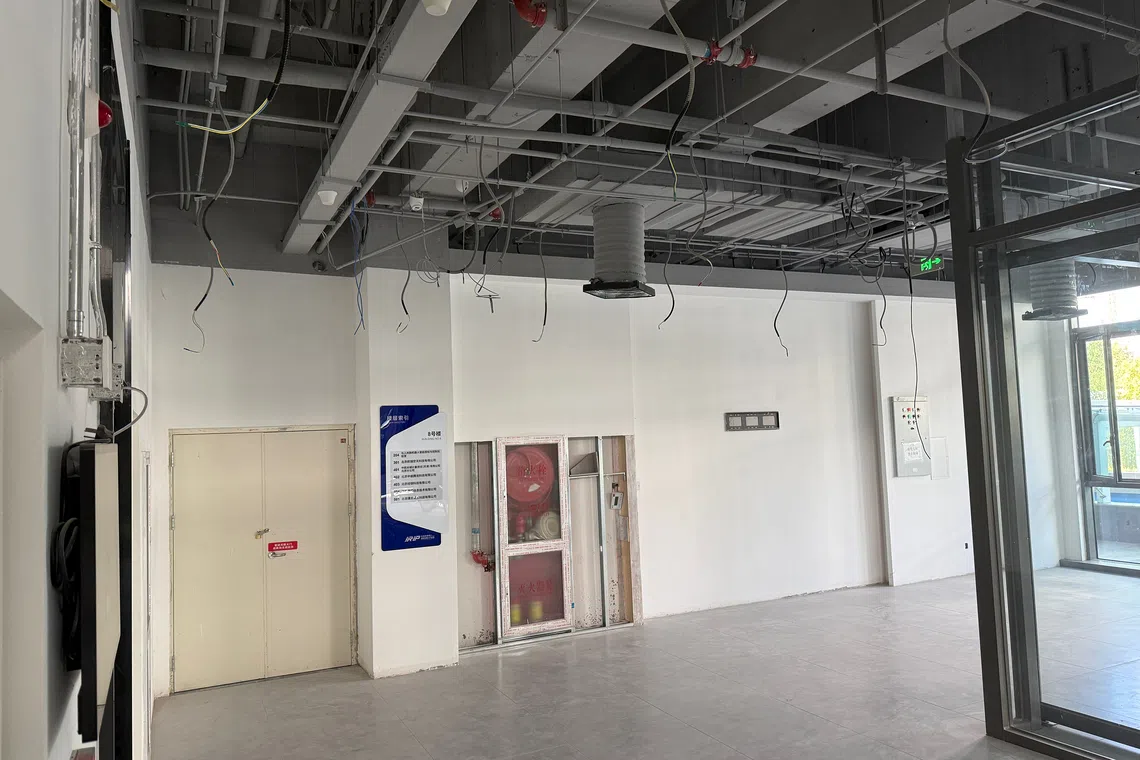
[WASHINGTON] In a recently built industrial park on the north-west fringe of Beijing, the listed address of a company called New Matrix stands empty, a hollow grey shell with wires dangling from the ceiling where lights should be.
Earlier in 2026, the Trump administration approved this Chinese firm to assemble Nvidia’s advanced chips into the computers that create artificial intelligence. US President Donald Trump allowed the sale of the chips, called the H200, to China late in 2025. But before they could be sold, the US Commerce Department was required to review the companies involved for national security risks.
New Matrix passed that review. Yet recent checks by The New York Times found that, within China, there is little evidence the firm actually exists, raising questions about who in China is behind the company.
Only scant information can be found online about New Matrix, which was created 17 months ago. At the building that New Matrix lists as its address, a company directory does not include the firm. At the nearby property management agency for the industrial park, a receptionist and a manager both said they had no record of the company.
According to Chinese corporate records, New Matrix’s owners have ties to a prominent Chinese private equity fund that the US government placed on a trade blacklist in 2024. Two analysts who examined the corporate records and other Chinese-language information said they believed New Matrix may be a front for firms associated with that fund.
The sale of chips to New Matrix appears to be part of a pattern that has concerned technology experts inside and outside the government: The Commerce Department is giving clearance to buy and handle Nvidia’s chips to Chinese companies with ties to firms that have been subject to national-security-related trade restrictions.
Nvidia’s chips are the crucial technology in AI data centres and now one of the world’s most coveted commodities. They are also at the heart of the economic and geopolitical competition between the United States and China.
Corporate records show that several other Chinese companies approved to purchase H200 chips or assemble them into servers have ties to firms that have been blacklisted by the US government, or that work as military contractors in China.
Liza Tobin, the former China director for the White House National Security Council in the first Trump and Biden administrations, said the approvals raised questions about how rigorously the Trump administration is policing who can get their hands on Nvidia’s chips.
“I have a tonne of concerns that neither the Commerce Department or Nvidia is doing the due diligence needed to ensure that the licensing terms are being followed,” she said.
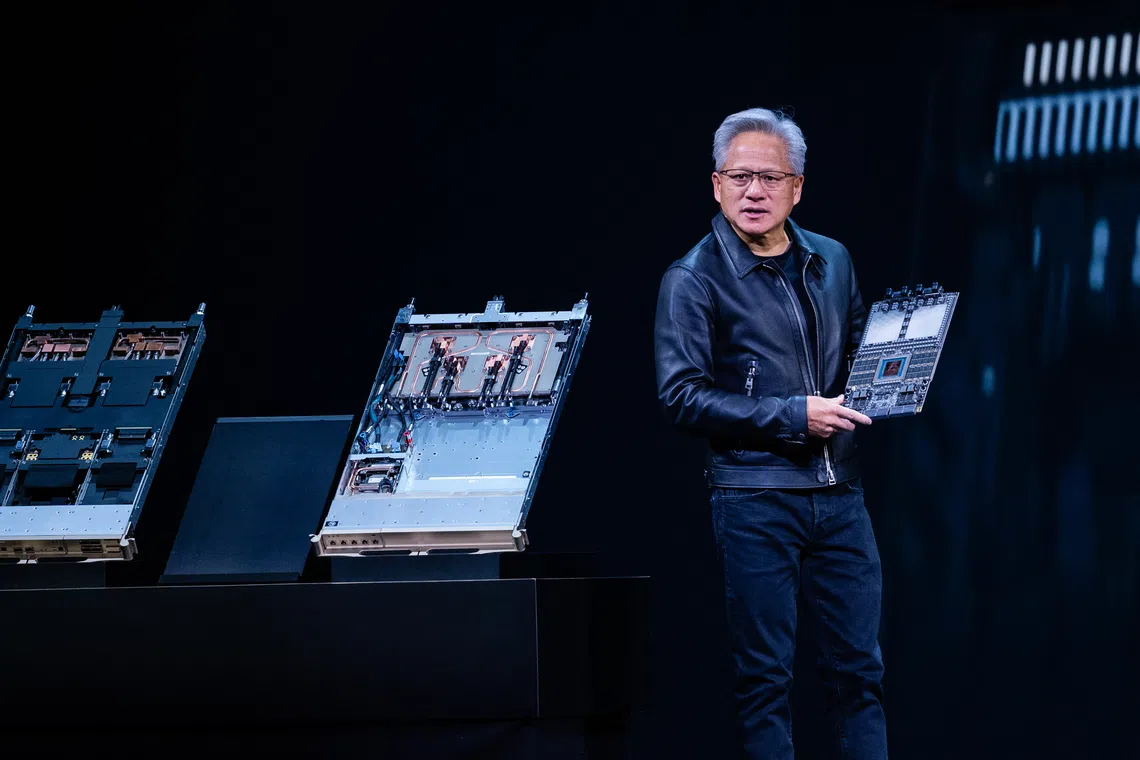
During the Biden administration, the United States began more broadly restricting sales of AI chips to China out of concern the technology would help China advance militarily. But Trump eased some of those limits after lobbying by Nvidia’s CEO, Jensen Huang, with whom he has grown close during his second term.
In December 2025, Trump gave Nvidia permission to sell the H200, an older but still powerful AI chip, to China, as long as the US government was given a cut of the sales.
In an unusual arrangement, Trump is requiring these chips, which are assembled in Taiwan, to be routed through the United States on their way to China, so that the government can collect a 25 per cent tariff on their value.
Nvidia is now selling only small amounts of H200 chips to China. The Chinese government has been slow to approve its companies for the purchases, partly because it is trying to promote domestically made chips.
Although China is a potentially huge market for AI technology, sales directly to the country currently account for only a tiny percentage of Nvidia’s revenue. In the quarter that ended in July, H200 shipments to customers based in China made up less than 1 per cent of Nvidia’s revenue from data centres. The company also said in August that it was not assuming any sales to China in its estimate for data centre revenue for the current quarter.
But many Chinese companies are gaining access to Nvidia chips through data centres in South-east Asia, and the chips still appear to be a critical focus for Beijing. The Times reported in October that Huang of Nvidia had a close relationship with a woman who American spy agencies concluded was an intelligence asset for China. The company she worked at, Megaspeed, operated data centres in South-east Asia that served Chinese clients and was being investigated for smuggling some chips into China.
Another empty office
When the Commerce Department granted its approval to New Matrix this year, the company’s registered address was at a compound on the outskirts of Beijing used for corporate registrations, where thousands of other firms are also registered on paper, according to the Chinese corporate information site Qichacha. But this fall, New Matrix’s address changed to the empty office in the industrial park visited by the Times.
New Matrix’s website does not name any staff members, advertise any jobs or include information about its history, as of Nov 6. But two of its primary owners appear in the records of companies connected to a Chinese private equity firm under sanctions and its founder, a man named Li Bin, according to WireScreen, a data platform.
In 2024, the US government added the private equity firm, Wise Road, to the Commerce Department’s “entity list,” which restricts companies from doing business with the United States. The department said Wise Road had helped the Chinese government acquire strategically sensitive companies with chip technology.
Li is also the chair of Tsinghua Unigroup, a technology conglomerate with government ownership. In 2021, one of Tsinghua Unigroup’s subsidiaries, New H3C Semiconductor Technologies, was added to the entity list for working with the Chinese military.
New Matrix is the second Chinese company approved to handle Nvidia’s H200 chips that does not seem to have any physical presence at its listed address.
In September, the Times reported that another recently created Chinese firm called Maginfra had also received a licence for H200s. Like New Matrix, Maginfra appears to have been approved not as the ultimate buyer of the chips, but as a company that would assemble them into AI servers for another customer.
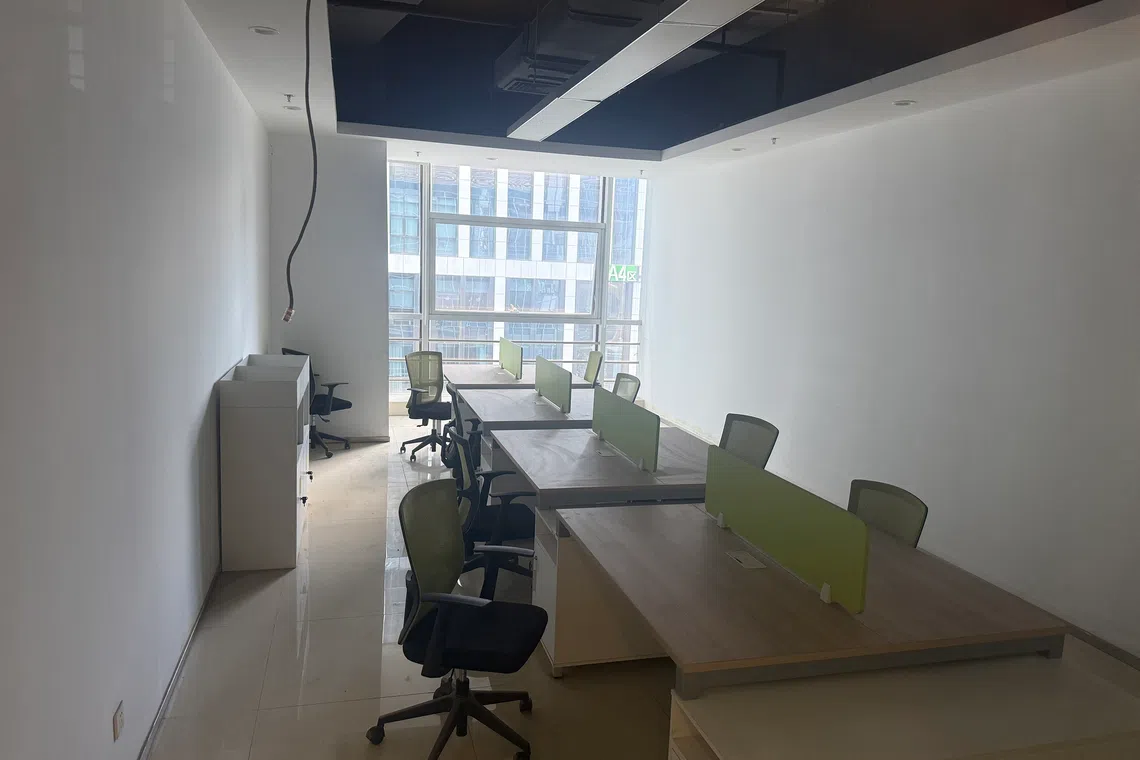
But when a Times reporter visited Maginfra’s listed address in China in September, it also appeared deserted. A few chairs and empty desks sat inside a small locked room with no signs. Workers on the floor said they had not seen anyone use the office, and building receptionists said they had not heard of Maginfra.
Analysts said they believed Maginfra was an offshoot of Inspur, a company whose headquarters were near Maginfra’s listed address. The US government has added Inspur to the entity list for working with the Chinese military. Maginfra and Inspur share personnel and patents, and both have government ownership.
Military ties
Other Chinese companies that have been approved for licences to buy Nvidia’s H200 chips also have ties through their corporate owners to military suppliers, according to people familiar with the approvals and documents viewed by the Times.
One, called Zhejiang Yindun Cloud Technology, has ties to a cloud computing giant that has sold services to military contractors, called Range Intelligent Computing Technology Group. Yindun is partly operated from a data centre owned by Range, and several of its executives are family members of Range’s founder.
Range serves as the cloud computing provider for a satellite programme run by the defence bureau of Hebei province, which it has described on its website as serving the strategic needs of “national defence development.” It also started a subsidiary in 2016 to focus on quantum communications for the Chinese government and military. Part of the subsidiary is owned by a firm that the United States added to the entity list in 2021 for acquiring American items for the Chinese military.
Another company licensed to purchase H200 chips, Shanghai Jiatang, grew out of a state-owned enterprise called Datang Telecom, a chipmaker that provides technology to the Chinese military. Datang is controlled by the China Academy of Telecommunications Technology, a state-owned enterprise that has developed cryptography for the Chinese military.
Shanghai Jiatang, Yindun Cloud and Maginfra did not respond to requests for comment. NYTIMES