

Danantara’s US$1.4 billion Garuda play emerges as key reform test
The 76-year-old airline is a major employer and a key mode of transport for the country
[JAKARTA] Indonesian sovereign wealth fund Danantara’s growing momentum in state-firm restructuring is putting fresh focus on its US$1.4 billion bet on Garuda Indonesia, a key test of its ability to revive other troubled companies.
The distressed carrier’s full-year results due to be published in March will offer the first clues on whether the bailout is gaining traction, with investors watching for signs that Garuda has begun to erase years of capital deficit. The financial support is Danantara’s largest deployment to date, adding pressure for the rescue plan to deliver results.
“All eyes will be on Garuda’s prospective turnaround,” said Harry Su, managing director of research at Samuel Sekuritas Indonesia. “This will set the base for investors to gauge other potential state-owned enterprises (SOEs) success stories by Indonesia’s sovereign wealth fund going forward.”
Danantara is in discussion for US$500 million in support for steelmaker Krakatau Steel and is poised to restructure US$5 billion of debt owed by the consortium which operates Whoosh, the country’s first high-speed rail, by the end of the year. Construction firms Waskita Karya and Wijaya Karya are among the companies that also need restructuring.
The stakes are high for Danantara to get Garuda back on solid footing amid the fund’s broader ambitions to overhaul roughly 900 state-owned firms under its umbrella. A successful turnaround would bolster the fund’s credibility and signal to investors that it can drive reforms across Indonesia’s state holdings.
The rescue package for Garuda is expected to bring its assets back above its liabilities by US$183 million by the end of the year, the carrier said in a stock exchange filing. Its deficit would have stood at US$65 million in June, after taking the capital injection into account, compared to an actual deficit of US$1.5 billion, it said.
In a sign of improving investor sentiment, the company’s shares have climbed 51 per cent since late June, when Danantara first aided the carrier with a US$405 million loan. Its US dollar-denominated sukuk maturing in 2031 has gained 42 per cent as well to trade at around 90 cents on a dollar, underscoring firmer recovery expectations.
Still, some analysts have raised doubts about the sustainability of Danantara’s support for Garuda, noting limitations on the use of the capital injection and that the carrier is operating with only about half the fleet it had before the pandemic. Rising leasing costs for new planes and the absence of a longer-term plan also pose headwinds.
“The US$1.4 billion won’t be enough to put the airline on a stable footing,” said Shukor Yusof, founder of aviation consultancy Endau Analytics. “Garuda needs to get rid of all the excesses, fix the years of mismanagement and someone in the government or Danantara has to drive the changes to turn the airline around.”
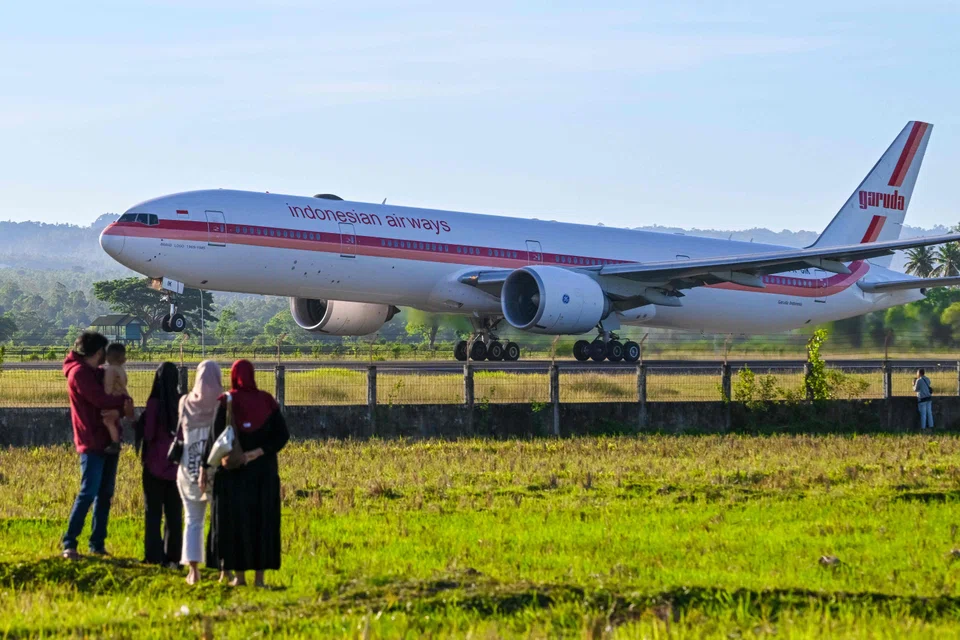
Garuda’s recovery will be key, not just as a validation of the fund’s model but also due to the carrier’s national importance. The 76-year-old airline is a major employer and a key mode of transport for the country, made up of 17,000 islands over an area spanning the distance from New York to London. It is also set to play a role in the trade deal between Indonesia and the US with aircraft purchases.
“Danantara seems to be taking things a lot faster with all these mergers and streamlining of the state-owned enterprises,” said Rain Yin, sovereign analyst at S&P Global Ratings. “That is one efficiency that we do seem to be observing in this process and also in supporting the SOEs under it.”
The restructuring of Garuda will provide proof of concept on how Danantara can turn around other state companies and allow them to grow in a sustainable way. The outcome will shape the fund’s plan to consolidate the state sector into roughly 200 competitive, globally focused companies and support President Prabowo Subianto’s target of 8 per cent annual economic growth.
“Danantara is a big bet” for Indonesia, said Alessandro Gazzini, managing director at Alvarez & Marsal in Jakarta. “This will be a test case for long-term solution of troubled state-owned companies and whether Danantara can find a way to introduce more business and market-oriented solutions to solve some of these problems.” BLOOMBERG
Decoding Asia newsletter: your guide to navigating Asia in a new global order. Sign up here to get Decoding Asia newsletter. Delivered to your inbox. Free.
