AI tracking, no-burn policies: How SGX-listed plantation firms are responding to haze
[SINGAPORE] Singapore-listed agribusinesses have sought to distance themselves from the forest fires in Indonesia and their contribution to transboundary haze.
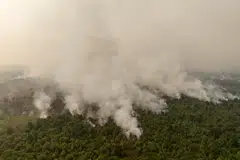
While some acknowledged that hotspots had been detected within their operational areas, all maintained that they do not use fire to clear land.
The statements were issued within a week of the Singapore Exchange Regulation (SGX RegCo) querying eight companies over their links to the haze. They are Wilmar International, First Resources, Golden Agri-Resources, Olam, TSH Resources, Bumitama Agri, Indofood Agri Resources and Kencana Agri.
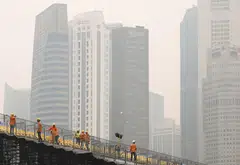
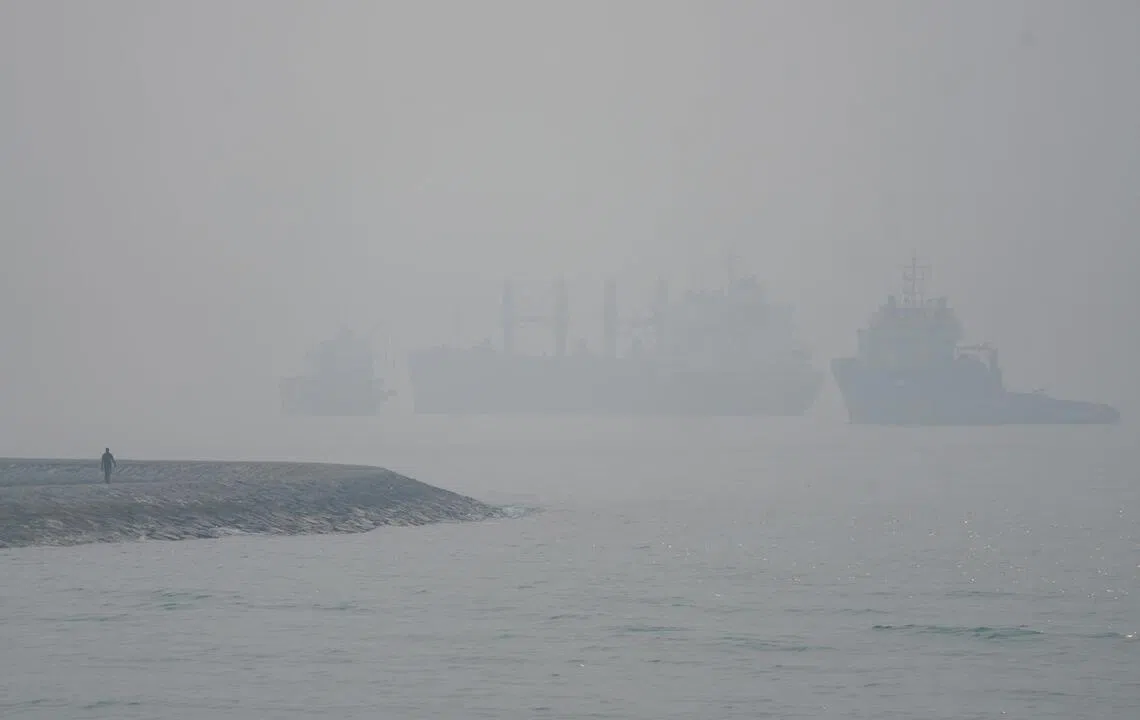
Their responses come as Singapore grapples with haze that began affecting the country in early October, prompting further efforts to identify companies linked to fires and smoke sources in Indonesia.
First Resources and Bumitama Agri were among the companies named by Senior Minister K Shanmugam on Monday (Oct 19) as being associated with some fire or smoke-source locations.
The Business Times rounds up what the eight companies have said about their links to the fires.
1. Wilmar International : The largest agribusiness among the eight companies said it had not undertaken any new oil palm planting on its Indonesian plantations since 2013. Since then, its field activities in Indonesia have been limited to replanting existing planted areas, which is carried out mechanically and “without the use of fire”.
In its Oct 16 statement, Wilmar said it maintained a “strict” no-burning policy since 2006. The company has also implemented a comprehensive fire prevention and management framework across its operations.
Wilmar shares are down about 3.7 per cent since Oct 5, when the haze began affecting Singapore.
SEE ALSO
2. First Resources : The palm oil producer was named in a Greenpeace report linking plantation concessions – which are land parcels allocated by the government for agricultural use – to areas affected by fires and smoke. On Tuesday, the company said it was confident that an “objective review” of the evidence would establish that it does not use fire to clear land.
In an earlier statement on Oct 15, First Resources said hot spots had been detected around its concessions in West Kalimantan. However, many of these hot spots were subsequently found to be outside the company’s operating boundaries. Some fires had also spread into areas it managed after starting elsewhere.
Shares of First Resources have fallen more than 14 per cent since Oct 5.
3. Golden Agri-Resources : The palm oil producer said it was “not aware of information” indicating that it had contributed to the haze. The group added that it, along with its suppliers, has been subject to its “zero burning policy” since 1997 and “no peat policy” since 2010.
In its response on Oct 16, Golden Agri said “to the best of (its) knowledge”, there had been no reports alleging that its operational activities had contributed to the recent fires and haze in Indonesia. The group also said it had not received any formal notice from the authorities in relation to the haze.
Golden Agri’s parent, Indonesian conglomerate Sinar Mas, also owns Asia Pulp & Paper, whose wood-fibre suppliers have been linked to the haze.
Shares of Golden Agri have fallen nearly 10 per cent since Oct 5.
4. Olam : The group said it has “no direct plantation operational exposure” to the fires. It noted that neither the group, nor its former subsidiary Olam Agri (which is now owned by a Saudi fund) owns or operates oil palm plantations or concessions in Indonesia.
Olam Group added it was not aware of any formal regulatory inquiries, notices or notifications relating to the recent fires.
Shares of Olam are down about 3.8 per cent since Oct 5.
5. Bumitama Agri : The company, which was also identified in the Greenpeace report, said that preliminary investigations found no evidence linking the group to the fires.
In an Oct 16 SGX filing, the palm oil producer said that detecting a hot spot within a plantation concession was not sufficient to determine the origin of a fire or establish responsibility.
The company said it maintains a strict zero-burning policy, supported by satellite monitoring, round-the-clock field surveillance, artificial intelligence-enabled monitoring and thermal imaging drones.
Bumitama Agri shares have fallen more than 15 per cent since Oct 5.
6. TSH Resources : The Malaysia company was the last to respond to SGX RegCo’s queries. It said that it had detected 274 hot spots within its estate boundaries in Indonesia between Jan 1 and Oct 21. However, it maintained that none of the fires occurred within its planted or operational areas.
TSH, which has a primary listing on Bursa Malaysia and a secondary listing on SGX, said all the hot spots were located in community enclaves outside areas directly managed by the company.
Out of the eight companies, TSH’s shares have seen the biggest losses, with the counter down about 21.5 per cent since Oct 5.
7. Indofood Agri Resources : The company said it had detected hot spots “on a small scale” within the plantation areas of its subsidiary, Simp Group, and addressed them immediately.
In a separate statement, Simp said it enforced a zero-burning policy for land clearance and continuously monitored its plantation areas for hot spots.
Indofood shares have risen about 3.1 per cent since Oct 5.
8. Kencana Agri : The company reported fires within concession areas operated by its subsidiaries in North and East Kalimantan. The fires have affected about 62 hectares, or 0.09 per cent of its total planted area of 67,862 hectares.
Preliminary investigations indicated that the fires had spread from adjacent areas rather than originating within its operations, Kencana said.
The group added that it enforced a strict zero-burning policy. However, Indonesian authorities were continuing to investigate suspected land clearing by burning in the affected area in North Kalimantan.
Shares of Kencana Agri are down about 13.1 per cent since Oct 5.