An Art-Lover’s Guide to Tunis’ Ground-Up Contemporary Scene
There is an organic quality to the art scene in Tunis, where art grows out of the bustling, lively, chaotic energy that agitates the city’s streets and animates individuals trying to channel it into an art system. That’s not an easy feat for a scene that can’t rely on any kind of government master plan, but solely on a handful of people who have set out on a mission to build something durable.
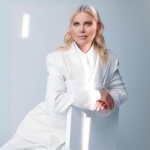
Among those in the cultural trenches, the most visible internationally is without a doubt Selma Feriani, whose new gallery in industrial El Kram, close to the port of La Goulette, opened in January 2024. The three-story space has operated since its opening with a scale and seriousness that holds its own in any European city. “I decided to build this knowing that in North Africa, most gallery spaces have been pre-existing and refurbished,” Feriani tells Observer. “For the gallery, I wanted it purpose-built, with all the conditions that are required for it to be an exhibition space.”
It took two years and a partnership with architect Chacha Atallah, whose fingerprints are visible in every decision: the exterior references a hand-application technique traditionally used in southern Tunisia, rendered in concrete; the garden is planted with olive trees, palms and orange trees.
Rebuilding a country’s cultural narrative
The current program makes that argument with two simultaneous shows. Nadia Ayari’s paintings occupy the main hall: large canvases in which plants and flowers take on a menacing quality through repetition, appearing like weapons of sorts. In an indirect way, the canvases speak to the contemporary world’s state of alert and anxiety.
Running alongside in the mezzanine is Nidhal Chamekh’s “Frictions,” an extension of his project “Et si Carthage…,” a far-reaching historical investigation of the power dynamics across the two sides of the Mediterranean and its archetypes. Through the show, it’s clear Feriani’s aim is to set the stage for Tunisian artists to begin a set of conversations that resonate internationally but are deeply anchored here in Tunisia.
And how could it be otherwise? Feriani grew up in the cobblestoned blue-and-white town of Sidi Bou Said, and she is the daughter of gallerist Essia Hamdi, whose Le Violon Bleu represented the painters of the École de Tunis, the country’s main modernist movement. “I grew up around artists like Ali Balera, Ali Ben Salem and Rafiq El Kamel. For our family, it was normal to be exposed to art or visit artists in their homes.”

She developed an international outlook after leaving at 21 to study finance in London, then worked in banking for four years before opening the gallery in Mayfair in 2009. “The motivation was the fact that none of the artists I liked, coming from the region, were enough represented in London.”
Her return to Tunisia came in the aftermath of the Revolution, and, like many young Tunisians, she felt she had to take part in the country’s cultural renaissance. She initially established her space in a converted convent in her native Sidi Bou Said. “I understood that having the gallery in London but not having a platform in Tunisia was something missing from the puzzle,” she says. “It’s important to have a strong link to where I come from, and from there try to reconnect with the rest of the world.”
“We don’t ignore the market”
Because of her previous finance background, Feriani remains very direct about business logic. “We don’t ignore the market,” she says, “because what we do here is fully funded from what we sell.” The gallery is a regular at Frieze, 1-54, Art Basel Paris, Abu Dhabi Art and Art Basel Miami Beach.
The Middle East was the first international market she looked at. “When I started, the first international market was the UAE. The fairs in Dubai and Abu Dhabi became essential parts of our growth.” Asia followed as a longer game. “When you come from North Africa and go all the way east to Hong Kong to tell them your story, it takes time. You’re not going there to make money very quickly. You’re going there to build a relationship.” The United States is her next move, something she’ll no doubt approach with her characteristic deliberateness.
To look for other markets is not only a cultural mission but a necessity, as the local collector base in Tunisia is, as she readily admits, small. However, its character is shifting. The younger generation of collectors, many of them from finance backgrounds similar to Feriani’s own, approaches collecting with a different logic. They track emerging artists early and understand the market mechanics. “They like to do what their parents did: buy this artist and see how things evolve with time.”
The gallery’s residency program at L’Atelier by Selma Feriani exists partly to serve this relationship. The current artist in residence is Finnish-Tunisian painter Dora Dalila Cheffi, whose vivid canvases reminiscent of the Fauves and Munch parse the experience of being what Tunisians call nus-nus—half-half, between cultures. “For this new series of paintings, I’m really looking at the archetypes,” the artist tells Observer. “I drew figures that I saw at the Bardo museum, but then made them my own.”
La Boîte and 32Bis
The logic of reaching new audiences rather than serving existing ones is something Fatma Kilani has pursued since 2007 with La Boîte Centre d’Art et d’Architecture. The center began in 25 square meters on the second floor of an industrially zoned building in La Charguia, originally a meeting room. “At the time, there were no art centers,” recounts Kilani. “There were only commercial galleries. Media like video, installation, and performance were absolutely not visible in Tunisia.” The inaugural exhibition was a Fluxus-style performance: employees from the host company climbed the stairs, carrying clay objects they had shaped, arranged them on shelves and received a “certificate of free creator” from the artist. “The DNA of La Boîte is the company: this capacity for each person to produce art.”
What grew out of that first performance now spans a main exhibition space, a studio floor, a dedicated video and film festival in Gabès and satellite programs in chapels and universities. La Boîte’s current exhibition, “My House Is a Le Corbusier (Villa Baizeau)” by Italian artist Cristian Chironi, fits into the center’s longer fascination with Tunisia’s modernist architectural heritage.
Another pivotal building in the development of the contemporary art scene in Tunisia is located in the center of town, in a former Philips building dating from 1953. The art space 32Bis operates as the city’s most explicitly experimental institution, committed to process, residency and the kind of thinking that precedes any object.
“The center-ville was really the center of all cultural activities until the 2000s, when galleries moved north to the suburbs. After the revolution, there was a return, and now there’s a real transition happening.” Hela Djobbi, curator and director of 32Bis, explains. The space is part of that transition, privately funded by its founder and a circle of patrons who have chosen to receive no foreign funding. “It gives us a lot of freedom.”
Djobbi describes a space that generates its programming organically, through encounters, through questions raised by one exhibition that open into the next, through the particular quality of attention that comes from being embedded in a working neighborhood. The current resident, Liên Hoàng-Xuân, is an artist of Vietnamese and Tunisian origins whose practice builds a fictional composite city she calls the “South of Nowhere”: a blend of Tunis, Saigon and Beirut—where she lived for a few years—rendered in painting, print and video, shot through with elegiac themes and gold-leaf woodcut technique.
What Djobbi describes as the center’s core mission is worth dwelling on: to give artists a freedom that the gallery format, by its nature, makes difficult. “The galleries that exist operate in a certain format, and artists end up producing within that logic of sale. A space like 32Bis gives more freedom at the level of production, of reflection, of creation.”

Yosr Ben Ammar and the Phosphor District
Elsewhere in the same coastal corridor, Phosphor Creative District in Bhar Lazreg represents the self-organization principle at its most legible. It began, in the words of Yosr Ben Ammar, whose gallery anchors it, “in a very organic way. We were different people who set up here spontaneously and found there was a very interesting potential between us.”
The name emerged from the streets themselves: the Rue du Phosphate running alongside the Rue de l’Or. The district now hosts around 20 spaces combining galleries, design studios, architecture practices and the Nine, Tunisia’s first lifestyle hotel, born to accommodate the digital nomad population that transits through Tunis.
Yosr Ben Ammar Gallery is, in its own trajectory, a compressed history of how the Tunisian contemporary scene has been built by individuals. Originally opened in 2006 with a founding logic Ben Ammar describes as explicitly ecosystem-driven: “My goal was to work with established artists who would act as locomotives for younger, lesser-known artists. The known artists pulling the others upward.”
At a time when Tunisia had no public museum for contemporary art, the gallery was doing the work of education and institution simultaneously: “It was the work of a museum, of an exhibition commissioner and a gallerist at the same time.”

She is also watching, with clear-eyed frustration, a structural gap that separates Tunis from markets like Dubai or Casablanca: the expatriate community in Tunisia is present but not yet buying. “In Dubai, in France, in Morocco, there are large communities of foreign collectors who are installed and investing,” she observes. “In Tunis, the foreigners who come are here for work, often transient. They’re not yet collectors. But that has to change; we need more investors in culture.”
The challenges Ben Ammar names—from visa difficulties that prevent Tunisian artists from attending their own openings abroad, to the absence of a Tunisian art magazine, plus an economy that tests everyone’s stamina—are structural and unglamorous. But they do not give in to resignation. “There is a real effervescence here. We have to keep pushing, because this scene exists, it is alive, and it deserves to be seen.”
Both Ben Ammar and Feriani believe that building a scene is viable only as a collective project. “We all know that it’s very fragile,” concludes Feriani. “We’re working in a difficult environment, promoting artists in a place where things are not easy and not accessible, and it’s all privately supported. But we understand that we can only exist, all of us, if we are stronger together.”
More Art Travel Guides