Branching out: Digital brokerages in Singapore expanding offline, legacy firms hitting heartlands
Amid an online push, firms are scaling their physical footprints to forge deeper ties with clients
[SINGAPORE] Amid the digital push, some online brokerages and financial services firms are bucking the trend.
Fintech players such as uSMART, Moomoo and Longbridge have scaled up their physical footprints to forge deeper ties with clients and build trust.
uSMART was the first fintech player to break with the mould by opening a physical outlet in Robinson Road in July 2025, followed by a second outlet near Somerset MRT station three months later, in October 2025.
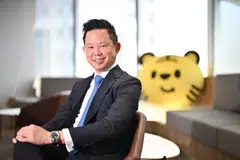
Eng Thiam Choon, the firm’s executive director, said uSMART saw physical branches as a way to differentiate itself in a crowded online space.
“Clients ask us, ‘Where are your branches? Can we visit you to ask something?’ In Singapore, we are still very cautious when it comes to finance-related issues,” Eng said.
Face-to-face contact builds a level of trust that an app cannot replicate.
When a customer walks in and talks to a staff member, there is “two-way communication and sharing”, instead of just a cold exchange of information online, he said. This open sharing makes the whole investment journey much more comfortable.
Eng added that having a physical branch gives people the confidence that the brokerage will not “suddenly disappear”.
Riding on the success of these two physical outlets, uSMART will open two more branches – in Bugis and Chinatown – by the end of 2026.
SEE ALSO

Eng said the four locations will capture different market segments.
The current Somerset branch, together with the upcoming Bugis outlet, will cater to the young demographic and the after-office shopping crowd.
Meanwhile, the branch in the Raffles Place area serves the office crowd, while the upcoming Chinatown outlet will focus on the seniors who hang out around the area.
“Both Bugis and Chinatown have good footfall and traffic,” Eng noted.
While expanding into these premium locations will cost more, he said uSMART is confident it will capture a new segment of customers.
Eng plans to utilise the physical spaces within each outlet more fully and is exploring a few ideas.
Among them: hosting small-scale conferences and training events, offering refreshments through F&B partnerships, and creating shared spaces for investors to network and exchange ideas.
Despite launching its offline strategy slightly later, uSMART’s peer Moomoo already boasts four physical storefronts.
The online brokerage opened two outlets at Jem in Jurong East and 313@Somerset in Orchard on Nov 8, 2025, followed by a pop-up concept store at Parkway Parade in the east of Singapore on Nov 20.
Most recently, on Mar 6, Moomoo opened its largest physical store in South-east Asia. The two-storey store in Bugis features an in-house cafe and serves as the brokerage’s financial education hub.
Separately, another fintech brokerage Longbridge opened Longbridge Cafe in Tanjong Pagar on Oct 21, as a place for retail investors to network, learn and share perspectives over a cup of coffee.
The heartland strategy
Meanwhile, among the brick-and-mortar brokerages, PhillipCapital stands out as one player that is holding onto its physical presence even as it grows its digital capabilities.
In contrast, most of its peers – including OCBC Securities, Maybank Securities, UOB Kay Hian and Lim & Tan Securities – have streamlined their operations by consolidating their physical presence into a single central office or corporate hub.
Phillip Securities, which pioneered online trading in Singapore with its POEMS – or Phillip’s Online Electronic Mart System – platform in 1996, now has eight company-managed Investor Centres throughout Singapore.
This includes its main Raffles City headquarters and heartland locations like Toa Payoh, Bukit Batok, Yishun and Boon Keng.
Luke Lim, managing director at Phillip Securities, the brokerage arm of PhillipCapital, said having more touchpoints within the community makes it easier for financial advisers to have regular conversations and build trust with clients.
These investor centres are evolving from pure transactional hubs into community spaces for discussion and financial education.
The Marine Parade branch, for instance, is being renovated to include a community cafe and a dedicated space for financial literacy initiatives and retirement-planning talks.
Phillip Securities is also the only brokerage with branches owned and managed by self-employed financial advisers under a Phillip Investor Centre Lite franchise model.
These “lite” branches complement the company’s own network of centres, bringing financial advice directly to where clients live and work. There are now three such centres in Bukit Timah, Jurong East, and Tai Seng.
This approach also gives financial advisers “greater ownership of their client relationships”, as they have the freedom to run their own business and manage their own clients, Lim said.
Louis Koay, a senior financial services director at Phillip Securities, started the newest “lite” branch in Jurong East on Sep 3.
It is strategically located near the MRT and public transport network, and residents can walk in and speak with a financial adviser anytime, even on weekends and public holidays – no formal appointments or travelling all the way to the financial district are needed.
This open-door approach is yielding results. The centre welcomed an average of seven walk-ins per day in October.
Koay said more than 60 financial advisers from his team are rostered to provide financial planning services to walk-in customers in areas ranging from investments to insurance coverage, retirement planning, cash flow and overall wealth planning.
He likens the concept to a clinic in the heartlands. Just as people consult a doctor when they feel unwell, he hopes Jurong East residents will visit his “financial clinic” for regular financial health check-ups.
He noted that the digital space is flooded with an enormous amount of financial content, but more information does not necessarily mean more clarity.
Sometimes what people really need is “a real conversation with someone who understands their situation”, he added.
To keep the conversation going, the team started to host weekly in-person seminars in October.
The sessions are held every Monday, Wednesday and Friday during lunch hours or in the evenings and cover investment and financial planning topics.
Having a physical presence does not negate the need for an online presence, said Koay, who markets his latest venture through targeted Facebook campaigns.
He also hopes that word-of-mouth marketing, including “more referrals and reviews online” by customers, will attract others to visit the outlet.
Staying purely digital
Not all digital brokerages are dialling into the physical storefront narrative though.
Webull Singapore, for one, intends to stick to its digital-first playbook, even as it engages offline with clients through investor education sessions and community events.
“As a digital-first brokerage, our priority remains delivering a seamless and accessible investing experience through our digital platform,” said Jonathan Man, CEO of Webull Singapore.
This allows the brokerage to avoid the overheads of operating a network of branches – costs which competitors with a physical presence may pass on to customers through higher fees, commissions or other charges, Man noted.
Eng, who has been in the finance sector for more than 20 years, said the industry is constantly evolving.
He observed that while many traditional players have closed down physical branches, some online brokerages have realised they need one or two brick-and-mortar locations to engage clients offline.
Traditional and online brokerages are converging, he noted.
“It is just like the mobile phone industry: first, phones shrank to tiny devices, and now they are getting bigger again.” THE STRAITS TIMES