

China’s Moon Mission Will Hunt for Ice in Craters Where Sunlight Never Reaches
China is preparing to send its most ambitious robotic lunar mission yet toward the Moon’s south pole, with the Chang’e-7 mission scheduled for launch from the Wenchang Space Launch Site on Aug. 24, as per the schedule provided by RocketLaunch.org.
The launch window is expected to run from Aug. 24 through Aug. 31. The mission will send an orbiter, lander, rover and a small hopping spacecraft toward one of the Moon’s most difficult regions to explore.
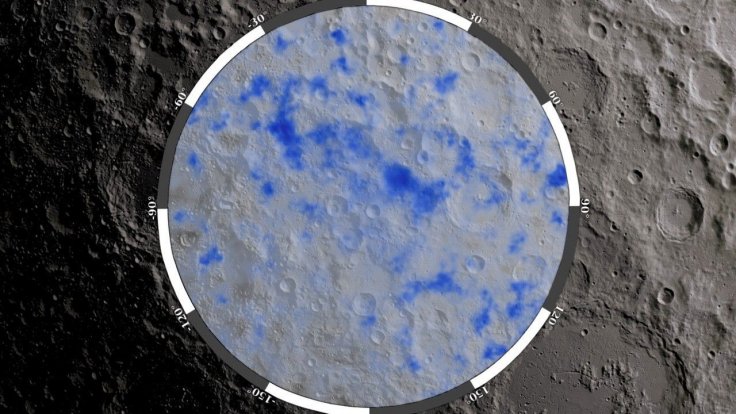
The mission is designed to investigate water ice in permanently shadowed craters near the lunar south pole. Scientists already know that water exists on the Moon, but they still need to determine where the ice is located, how deeply it is buried, and whether it could realistically be accessed by future lunar missions.
That makes Chang’e-7 more than another search for water on the Moon. The mission is aimed at understanding whether a resource already detected by spacecraft could eventually support longer-term exploration, including future crewed missions. Its instruments will study the lunar surface and subsurface while the hopping spacecraft is designed to reach areas that conventional rovers may struggle to enter.
Why the Moon’s south pole is so important
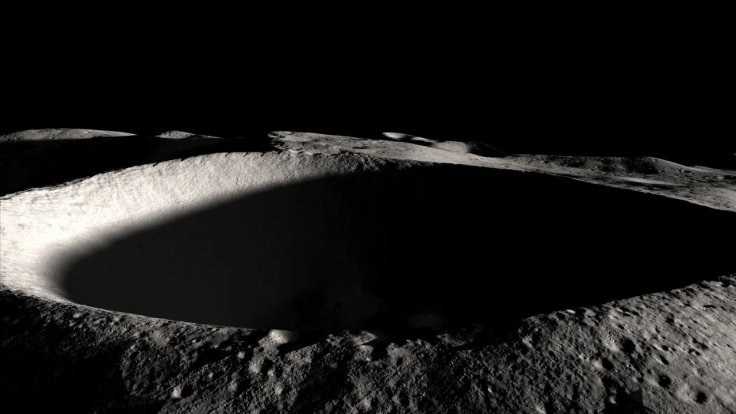
The lunar south pole contains craters whose interiors never receive direct sunlight. These permanently shadowed regions can remain in darkness for extremely long periods, creating some of the coldest environments on the Moon.
NASA says temperatures in some permanently shadowed polar craters can fall below -410 degrees Fahrenheit (-246 degrees Celsius). Unlike Earth, the Moon has almost no atmosphere to spread heat across its surface, so areas exposed to sunlight and areas hidden from it can have vastly different temperatures.
NASA
The extreme cold is one reason scientists are interested in these craters. Water and other volatile substances can survive there because sunlight does not reach the crater floors.
The Shackleton crater is one of the key areas being considered for the mission. The crater is about 21 kilometers (13 miles) wide and lies close to the lunar south pole. Its location is particularly useful because parts of the surrounding terrain receive sunlight while nearby areas remain permanently shadowed.
That combination could allow Chang’e-7 to study both illuminated terrain and the dark regions where water ice may be preserved.
Chang’e-7 has an unusual way to explore the darkness
The mission will use four main spacecraft elements, each with a different role.
The orbiter will circle the Moon, mapping the surface, taking images and helping maintain communication between the lunar spacecraft and Earth. The lander will descend to the surface and deploy scientific instruments. The rover will travel across the lunar terrain to examine the soil, rocks and local environment.
The most unusual part of the mission is the hopper.
The small robotic spacecraft is designed to make short flights across the lunar surface rather than depending entirely on wheels. That could allow it to enter deep, permanently shadowed craters and investigate locations that would be difficult for a conventional rover to reach.
The hopper will carry a water-molecule analyzer. It is designed to enter dark, cold areas, examine material, and then move back toward illuminated terrain so it can continue receiving solar power.
This design addresses one of the biggest problems at the lunar south pole. The areas containing potentially valuable ice are also among the hardest places for solar-powered machines to operate.
Chang’e-7 therefore has to solve two problems at once: reaching the difficult terrain and keeping the spacecraft operating while it explores it.
Scientists already know there is water on the Moon
The idea of water on the Moon has changed dramatically over the past several decades.
During the Apollo era, lunar samples appeared extremely dry, strengthening the belief that the Moon had little or no water. Later missions began finding evidence that challenged that view.
NASA’s Clementine mission in 1994 produced early indications that ice could exist inside permanently shadowed lunar craters. Lunar Prospector later detected high concentrations of hydrogen around the lunar poles, providing further evidence that water ice could be present.
NASA
In 2009, NASA’s LCROSS mission deliberately crashed an impactor into a permanently shadowed crater. Scientists analyzed the material thrown up by the collision and found evidence of water ice in the debris.
India’s Chandrayaan-1 mission also played an important role. Data from an instrument on the spacecraft helped scientists identify confirmed locations of water ice in permanently shadowed regions.
NASA later found evidence of water on sunlit parts of the Moon as well. In 2020, observations from the SOFIA airborne observatory confirmed water molecules in a sunlit lunar region.
The discoveries show that lunar water is not limited to one type of terrain. But they have not answered a practical question: how much of that water is actually accessible?
The real question is whether the ice can be used
Detecting water from orbit is very different from extracting it.
Future lunar explorers would need to know how much ice exists, where it is concentrated, how deep it is buried, and what condition it is in. They would also need to determine whether equipment could reach the deposits and operate in the extreme conditions around them.
Chang’e-7 is designed to help answer those questions.
If lunar ice is sufficiently concentrated and accessible, it could become an important resource for future missions. Water could be used directly for drinking and other life-support needs. It could also potentially be separated into hydrogen and oxygen.
Oxygen could support astronauts, while hydrogen and oxygen could be used as rocket propellants. That could eventually reduce the amount of water and fuel that future missions would need to transport from Earth.
The potential importance extends beyond basic survival. A reliable local water supply could help make longer lunar stays more practical and could support missions that travel farther into space.
NASA
But Chang’e-7 will not be mining the Moon for an operational water supply. Its role is to gather the scientific information needed to determine whether such future use is realistic.
China’s mission comes as the lunar south pole becomes a major target
The mission is part of a broader Chinese lunar exploration program that has become increasingly ambitious over the past two decades.
China’s Chang’e program began with Chang’e-1 in 2007. Chang’e-5 returned lunar samples to Earth in 2020, while Chang’e-6 successfully returned samples from the Moon’s far side in 2024.
Chang’e-7 moves the program toward more complex exploration of the lunar south pole. The Planetary Society describes it as part of a new phase of China’s lunar exploration effort that could eventually support a sustained human presence on the Moon.
China is also planning Chang’e-8, which is expected to explore ways of using lunar resources. Together, the missions are part of a longer-term effort to understand the lunar environment and prepare for future operations.
Other space agencies are pursuing similar goals through different approaches.
NASA’s Artemis program is focused on establishing a sustained human presence around the Moon and eventually supporting broader exploration. NASA is also using its Commercial Lunar Payload Services program to work with private companies on lunar missions.
One of those efforts has already tested some technologies relevant to difficult lunar terrain. Intuitive Machines’ IM-2 mission carried a drill, a mass spectrometer and a small hopping vehicle intended to explore the lunar surface. The mission’s lander, however, fell over after reaching the Moon and was powered down roughly a day later.
The different approaches reflect the same underlying challenge: reaching the Moon is no longer the only objective. Space agencies increasingly want to learn how to operate there for longer periods and use resources found on the lunar surface.
Chang’e-7 must also overcome a launch challenge
China’s lunar mission is approaching its launch window after a separate Long March 7A rocket suffered a catastrophic failure shortly after liftoff on Aug. 10.
SpaceNews reported that the failure initially raised concerns about possible effects on Chang’e-7 because several Chinese launch vehicles use related engine technology. Later analysis suggested the incident may have involved a structural problem higher on the rocket rather than an issue with the engine family itself.
Chang’e-7 is scheduled to use a Long March 5, not the Long March 7A.
Current launch information points to Aug. 24 as the target date, with the broader launch window extending through Aug. 31. The mission’s eventual departure will determine when China can begin its attempt to explore the lunar south pole in greater detail.
If successful, Chang’e-7 could provide some of the clearest information yet about the nature and location of water ice in the Moon’s permanently shadowed regions.
The bigger significance is not simply finding another deposit of lunar water. The mission could help answer whether the Moon’s frozen resources are something future explorers can actually reach and use, turning lunar ice from a scientific discovery into a potential building block for sustained exploration.
