Doctors said daughter “won’t live a normal kid life,” parents disagreed
When doctors told a Colorado mom and dad their daughter “won’t live a normal kid life” following a shocking diagnosis, they were determined to prove them wrong.
Morgan Gaertner and her husband, Ryan, live in Grand Junction with their two children, Madilynn and Connor. Originally from Phoenix, the family enjoys nothing more than heading off the beaten path in search of adventure.
“Our family loves the outdoors and enjoys getting outside as much as possible,” Gaertner told Newsweek. “Ryan has been the driving force behind our adventure and off-road lifestyle, and we camp often throughout the year.”
Encouraging children to stay active and enjoy the outdoors has been shown to significantly benefit their overall development.
A review published in the International Journal of Behavioral Nutrition and Physical Activity found that active outdoor play and access to playgrounds contribute positively to children’s health and development. Researchers also noted that playgrounds encourage physical activity while supporting social interaction and well-being.
The outdoor lifestyle the Gaertners have fostered for their family is a natural extension of this. But it hasn’t been without its challenges. Madilynn was born with infantile-onset Spinocerebellar Ataxia Type 5 (SCA5), an extremely rare inherited neurological disorder caused by mutations in the SPTBN2 gene that leads to the gradual degeneration of the cerebellum.
The condition can cause poor balance and coordination, an unsteady gait, difficulty with hand and arm movements, and slurred speech. It typically progresses slowly and can eventually result in significant mobility and movement impairments.
“Most cases present when people are adults or after they grow up, but in rarer cases like Madilynn’s, it presents at birth,” Gaertner said. “We noticed that she wasn’t hitting milestones pretty quickly when she was a baby, and she was still very much newborn-like at around 5 to 6 months old.”
Though they consulted a neurologist and developmental specialist when Madilynn was around 2 years old, Gaertner said her daughter’s case was so rare that “doctors didn’t actually tell us much.” Their own research, meanwhile, yielded worrying information.
“We saw a few scientific articles online that basically said she would deteriorate and pass away within a few years, and we were obviously very upset,” Gaertner said. “But we were determined not to let that happen as quickly as those articles said, and to do everything in our power to make her life the best possible.”
Gaertner is an avid hiker, while Ryan is a runner and mountain biker. Together, they began devising ways to include Madilynn.
“While she was young, it was much easier to just strap her to us and bring her along, but we have been able to figure out ways to continue leading an active lifestyle even without her walking independently at 9 years old,” she said.
In a video posted to her TikTok account, @overlandfambam, Gaertner shared a glimpse of the results and how they responded when doctors essentially said “she won’t live a normal kid life.” The video shows the family embracing the outdoor lifestyle, with Madilynn joining hikes, swimming, and activities such as skiing and running with the aid of a walker.
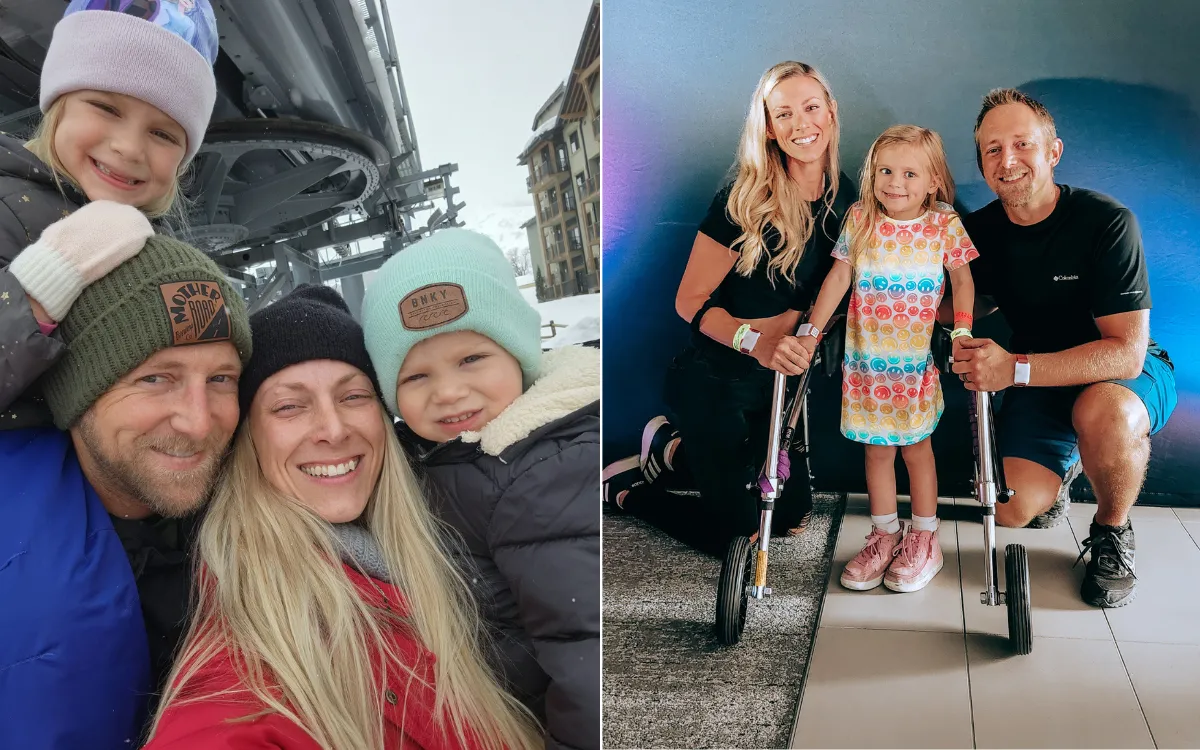
Though the family has to pick and choose which activities they can do, that’s a challenge they’ve clearly risen to.
“She is smaller than most of her peers, so we have been able to carry her in most situations, but we have also purchased equipment over the years to help us,” Gaertner said. “Until she was about 4 years old, we used regular hiking backpacks because she could still fit, but since then we have purchased a Kinderpack designed for larger children.”
She added: “We also really try to pick the most accessible locations based on pictures, reviews, and recommendations from the disability community. We haven’t been able to hike as much because we don’t want her to be hot or uncomfortable in her carrier, so we’re pretty picky about which trails we’ll do.”
Gaertner believes more could be done to make public trails and outdoor spaces accessible to people like Madilynn. For now, though, the focus is on making the most of the opportunities available to them and creating memories along the way. Thankfully, there is already no shortage of those.
“One of my favorite memories was our 2025 summer overland trip from Colorado to Washington and back. We traveled through Utah, Idaho, Oregon, Washington, Montana, and Wyoming,” she said.
“One memory that stands out from that trip is being able to hike to a waterfall in Big Sky, Montana, and then find a really great campsite outside Yellowstone National Park’s west entrance. That hike was one of the only ones Madilynn has been able to do using her walker.”
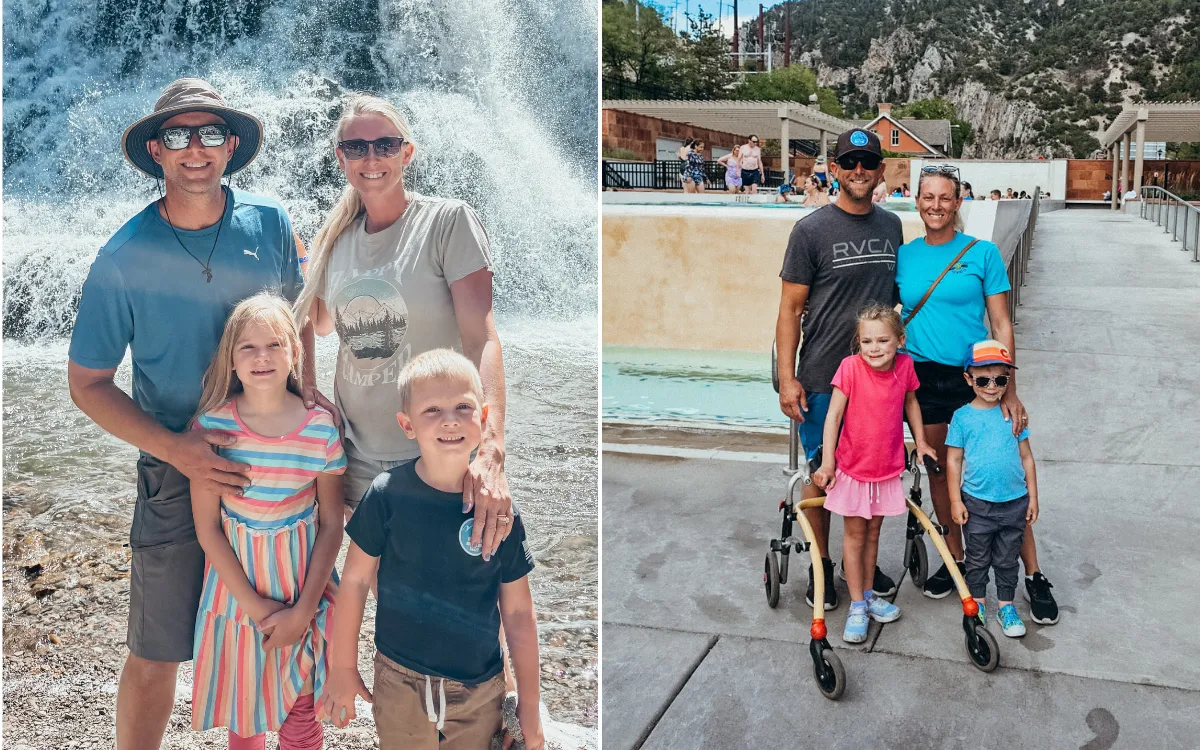
Gaertner doesn’t know what the future holds for Madilynn. Above all else, the hope is that she has many more years to show the world that “being disabled doesn’t mean you need to stop living.”
“A lot of our life is about saying ‘yes’ to every opportunity life presents and figuring out a way to make it happen,” she said. “We hope people take away from our story that every day can be a challenge you rise to or one that’s working against you. We all have issues going on, but taking it one step at a time and working hard today to make tomorrow better is what our life is all about.”
Contact Newsweek editors on this story: Rebecca Flood and Emma Lee-Sang