Ebola Death Toll Reaches 600 as Suspected Cases Spread Beyond Congo’s Outbreak Zone
Health authorities in the Democratic Republic of Congo said Thursday that the country’s Ebola death toll has risen to 600, while new suspected cases have emerged in two provinces previously unaffected by the outbreak, raising concerns that the virus may be spreading beyond its original epicenter in the country’s east.
The Congolese Ministry of Health said suspected infections have been reported in Tshopo and Haut-Uele provinces. A government situation report released late Wednesday said two suspected cases were identified in Kisangani, the capital of Tshopo.
One case has been linked to the Nia-Nia health zone in Ituri province, where the outbreak began, while the other has no apparent connection to any known transmission chain and remains under investigation. Officials said the country has now recorded 1,759 confirmed Ebola cases.
The latest developments come as the outbreak, officially declared on May 15, continues to challenge health authorities amid armed conflict, attacks on medical facilities, and funding shortages.
The epidemic is caused by the rare Bundibugyo strain of Ebola, which has no approved vaccine or targeted treatment. The Africa Centers for Disease Control and Prevention (Africa CDC) has described it as the continent’s fastest-growing Ebola outbreak.
Virus Appears Beyond Original Epicenter
The emergence of suspected cases outside Ituri province has heightened concerns among health officials working to contain the outbreak.
While one of the suspected cases in Kisangani appears connected to the outbreak’s original transmission chain, the second has no known geographical link to previously identified infections, prompting an investigation into whether community transmission may have occurred elsewhere.
Flickr
Authorities did not specify how many suspected cases had been detected in Haut-Uele, but confirmed that surveillance and contact tracing efforts have been expanded.
Health officials are now working to determine whether the suspected infections represent isolated cases or evidence that the virus has spread into new regions.
Rare Ebola Strain Leaves Few Treatment Options
The current outbreak is caused by the Bundibugyo virus, one of the least common Ebola species.
Unlike outbreaks caused by the more familiar Zaire strain, there is currently no approved vaccine or targeted treatment specifically designed for Bundibugyo Ebola, making containment efforts more challenging.
X @Mamaurwagasabo1
However, researchers launched clinical trials last week at the Evangelical Medical Center in Bunia to evaluate experimental treatments that could improve patient outcomes.
Scientists hope the study will identify effective therapies for the virus while the outbreak is still ongoing.
Conflict and Funding Shortages Complicate Response
Public health officials say the response continues to face significant obstacles.
Eastern Congo has long been affected by armed conflict, making it difficult for healthcare workers to reach affected communities, monitor contacts, and safely transport patients.
Attacks on healthcare facilities have further disrupted surveillance and treatment efforts, while international agencies have warned that funding shortages are limiting response operations.
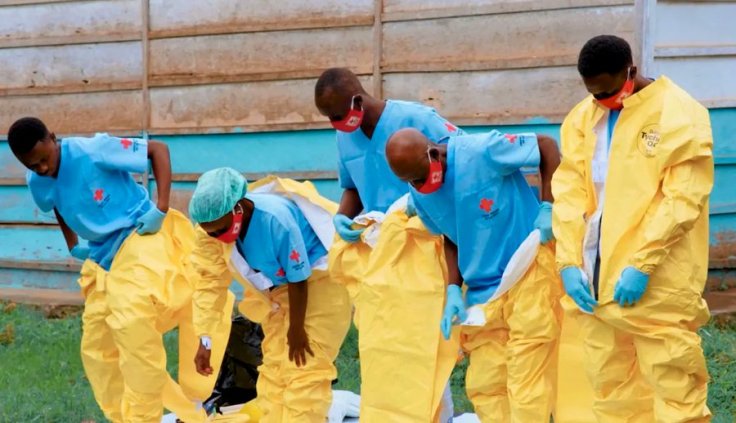
The World Health Organization and partner organizations continue supporting case detection, laboratory testing, contact tracing, and community education to prevent additional infections.
Why Experts Are Concerned
Ebola spreads through direct contact with the bodily fluids of infected people or contaminated materials and can cause severe fever, vomiting, diarrhea, and, in some cases, internal bleeding.
Rapid identification of cases and tracing of close contacts are considered essential to stopping outbreaks before they spread more widely.
Although previous Ebola epidemics have been contained through vaccination campaigns and aggressive public health measures, the absence of a licensed vaccine for the Bundibugyo strain makes the current outbreak more difficult to control now.
Health officials stressed that the newly reported infections in Tshopo and Haut-Uele remain suspected pending laboratory confirmation. Even so, the appearance of possible cases beyond Ituri has intensified surveillance across neighboring provinces.
With 1,759 confirmed cases and 600 deaths, Congolese authorities and international health agencies are racing to contain what Africa CDC has described as the continent’s fastest-growing Ebola outbreak while researchers work on therapies can help combat the virus’s rare strain.