Fed split on rate hikes deepens as five years of high inflation tests patience
A minority see a case for raising rates after the US central bank held its July benchmark rate steady, policymakers suggest
[NEW YORK] Five years of high inflation is testing the patience of US Federal Reserve officials and showcasing a split between those willing to wait before hiking interest rates and those who say time is running out.
Recent comments from policymakers suggest there is a broader minority who see a case for raising rates soon after the Fed held its benchmark rate steady in July.
Some non-voting members of the Federal Open Market Committee (FOMC) sided with three dissenters who preferred a modest increase.
Others across the majority say it is still possible the inflation will cool on its own – though their patience to look through price shocks is wearing thin.
It is an all familiar crossroads for central bankers: hike too soon at the risk of weakening the labour market, or wait too long and see price pressures becoming entrenched.
The surprise decline in July payrolls in Friday’s jobs report did little to clear up the debate.
“The data has been ambiguous on which one of these stories is actually playing out,” said James Egelhof, chief US economist at BNP Paribas.
There is “increasing pressure” for the Fed to act, he added, in liht of the lack of significant progress on inflation.
Employment declined in July and hiring was lower than previously thought in the prior two months, renewing concerns about potential softness in the labour market.
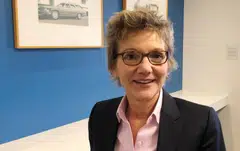
Speaking after the report, Richmond Fed president Tom Barkin said the labour market appears to remains in “weak balance”, similar to where it has been over the past year and a half.
The attention is now turning to inflation data to be released ahead of the Fed’s September gathering, including a consumer price report due next week.
Officials see inflation easing back to their 2 per cent target by 2028, according to projections released in June.
Yet, with the consumer price index at 3.5 per cent in June and the central bank’s preferred measure of inflation at 3.3 per cent, excluding food and energy, concerns around officials’ ability to get there are mounting.
The discussion among policymakers, already on full display, will be fleshed out in the weeks leading into the Fed’s annual economic symposium at Jackson Hole, Wyoming.
Chairman Kevin Warsh will then take the main stage, with investors carefully looking into his speech for clues he has so far refused to give on the future path for interest rates.
To hold, to hike
Fed officials have chosen to hold their benchmark rate steady in 2026 even after import costs spiked from changes in trade policy and energy prices soared due to the war in Iran.
Some have suggested rate hikes might not be the right way to respond to what are likely temporary price shocks, given the time it takes monetary policy to affect the economy.
Claudia Sahm, chief economist at New Century Advisors and a former Fed economist, said that is the tension Fed officials are facing right now as they struggle to distinguish the cyclical factors influencing inflation and employment – which can be addressed through interest rates – from the structural shifts they have little control over.
“The Fed’s tools are best suited for smoothing out the business cycle and what’s really driving the shifts we see in the aggregate data is a lot of structural shifts under the hood,” Sahm said.
“The Fed’s tools aren’t best suited for that.”
Hiking too soon could compromise the labour market, and may not be necessary if inflationary pressures begin to ease, Fed governor Lisa Cook said in a speech on Wednesday.
“Some disinflationary forces are already in play,” she said, pointing to fading effects from tariffs, and the expectation that oil prices and price pressures from AI investments will ease.
New York Fed president John Williams said last week that he still sees inflation returning to the Fed’s goal by 2028, adding his view “hasn’t changed that much more generally”.
The weak jobs report lowered investors’ expectations for a rate increase next month to about 40 per cent from more than 50 per cent before the release, according to pricing in futures contracts.
But for the three dissenters who preferred to see a quarter-point hike in July, every month inflation remains above 2 per cent is a month too long.
Minneapolis Fed president Neel Kashkari, Dallas Fed president Lorie Logan and Cleveland Fed president Beth Hammack all said waiting to raise rates could increase the need for more aggressive tightening later.
Other officials have echoed those arguments, pointing to high inflation, strong consumer spending and loose financial market conditions as evidence that rates are not doing enough to cool down the economy.
“Given the strength of demand and investment, I do not see the current stance of monetary policy as restrictive,” Kansas City Fed president Jeff Schmid said on Tuesday, adding he favours tighter policy to tame inflation.
Credibility concerns
A notable absence from the debate has been Warsh.
The Fed chairman’s reluctance to guide markets on the path for rates has also clouded understanding about his view of the economy.
After the July policy meeting, Warsh reinforced his commitment to price stability but refused to detail how he plans to get there.
In response, investors dumped long-term Treasuries and market measures of inflation expectations rose.
St Louis Fed president Alberto Musalem, who said after the meeting that he would have preferred to hike, said he understood the signal as emphasising that central bankers need to “continue to earn” their credibility.
“At this point it’s no longer just about the economic data, it’s also about Fed credibility,” said Torsten Slok, chief economist at Apollo Global Management in New York.
“Inflation has been above the target since 2021. This is a very, very long time for the number one central bank in the world to have inflation at these elevated levels,” he added.
Until there is more clarity, Fed watchers scrutinising the divided committee may brace for more dissents.
“Given the parsimonious FOMC statement, and Warsh’s opaqueness, it is already more difficult to discern where members stand on policy,” said Mark Zandi, chief economist at Moody’s Analytics. BLOOMBERG