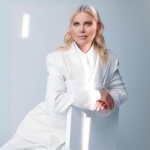
Honolulu Museum of Art Director David Odo On Centering Hawaiʻi in the Institution’s Mission
Honolulu and the broader Hawaiian archipelago are not places we hear much about when it comes to art. It may be that the perception of the islands as a paradisiacal vacation destination overshadows everything else—films and other media have long reinforced the cliché, despite also foregrounding certain traditional aspects of Hawaiian culture and drawing attention to the lived realities of the islands’ residents. Hawaiʻi has a rich Native culture that developed over more than eight centuries, following the settlement of the islands by Polynesian voyagers around A.D. 1000-1200. For many centuries, it embraced a comprehensive epistemological system connecting genealogy, land, ocean, spirituality, political authority and communal responsibility, through which Hawaiians understood who they were, where they belonged and how society should be organized. Western contact, Christian conversion, the plantation economy, U.S. military control and the islands’ eventual absorption into the United States not only disrupted this system but also progressively erased much of this rich ancestral heritage.
Last month, the Honolulu Museum of Art (HoMA) announced the appointment of David Odo as its next director and CEO, beginning September 1. The appointment comes with specific responsibilities, including revitalizing and protecting this Native cultural heritage while fostering, empowering and promoting its contemporary expressions, so that Hawaiʻi can begin to be seen as a vibrant contemporary center of cultural and artistic production rather than simply an exotic tourist destination.
Odo was deeply aware of all these challenges and priorities when Observer spoke with him following the announcement, particularly as his appointment comes just as HoMA prepares for its centennial in 2027 and is implementing a long-term vision to expand access, deepen community engagement and become an anchor for Hawaiʻi’s cultural ecosystem.
For Odo, being appointed director of the Honolulu Museum of Art is a deeply personal homecoming. Raised in Kailua and Honolulu after spending part of his childhood in Southern California, he recalls visiting the museum as a child. “I actually grew up going to the Honolulu Museum of Art, so it is like a hometown museum,” he tells Observer. “I never could have imagined that one day I would be the director. It is really emotional for me, and I am just thrilled to be going back.”
Odo remembers the institution under its former name, the Honolulu Academy of Arts. “It had a little bit more of a distant feeling,” he acknowledges, but, coming from an arts-engaged and academic family, he was accustomed to visiting with his parents. Its Buddhist sculpture collection, in particular, had a lasting impact on him. The serenity of the carvings sparked an interest in world religions and led him to take a college-level course in the subject while still in high school. In retrospect, he sees that experience as an early lesson in how museums can change people’s lives, sparking new interests, opening new opportunities and broadening their understanding of the world.

Aware of the context and its evolution over the years, Odo’s principal priority will now be to center the arts of Hawaiʻi and the Pacific. “That is one of the strengths of art museums: obviously working with collections, but also thinking about how a focus on the arts of the local culture can bring that conversation into national and international contexts,” he argues.
Rather than presenting Honolulu as culturally remote from New York or interpreting Hawaiʻi primarily through a colonial lens, and its culture as something lost and erased that must be “recovered,” he wants the museum to affirm the islands as a center of artistic and cultural production in their own right, demonstrating that Hawaiian culture remained alive outside, and often despite, the structures that failed to recognize it.
Odo emphasizes that colonialism and tourism have not completely erased Hawaiian culture. “There is a resilient and strong culture and history—especially a history of artistic production—that has survived and thrived throughout centuries of colonial encounter, capitalism and all these things. The task is to focus on those strengths,” he acknowledges.
While he admits that an art museum cannot solve every problem created by colonialism, he believes HoMA can nurture visual artists and strengthen Honolulu’s wider cultural ecosystem. Odo also wants to counter the exoticizing image of Hawaiʻi as little more than paradise and beaches, a narrative that often obscures the presence of serious cultural thinkers and artists of the first rank. “We are part of a great cultural ecosystem in Honolulu, and being one player in that ecosystem is a really important role for the museum,” Odo states.
The goal, according to Odo, is both to bring the world to Hawaiʻi and to present Hawaiian culture to its own communities and then to audiences beyond the islands. The limited international visibility of contemporary Hawaiian artists, he argues, is partly a structural problem shared by any place outside the main centers, such as New York and Los Angeles: “You are already at a disadvantage from a market perspective, and the market drives so much of our understanding.”

What he envisions is HoMA serving as an armature for local and regional talent, giving artists greater exposure and organizing ambitious exhibitions that can travel. “My job as the next director will be to help promote and provide exposure to the great work being done, and to make sure the museum serves as support and an armature for local talent and for talent from throughout the region to be showcased,” he says, noting that major exhibitions on Hawaiʻi in London suggest national and international interest already exists. “I would love for us to start organizing exhibitions that can then travel. There is interest.”
Odo identifies financial support as one of the most urgent needs for artists, whose careers are difficult to pursue both economically and emotionally in the absence of a properly developed art ecosystem. Although the museum cannot solve the funding problem on its own, it can focus attention on significant local artists, helping them gain recognition and potentially build a market. And there is a growing local collecting community in Hawaiʻi, but it also needs to be nurtured. “It is probably more significant than we realize. When you constantly compare yourself with New York, everyone fails because the scale is simply different,” Odo argues.
His vision of a healthy arts ecosystem extends beyond artists and collectors, too. He wants cultural workers, art historians and museum professionals to be able to remain in Hawaiʻi or return there to build careers. He himself had to leave the islands to gain experience at institutions elsewhere, he acknowledges, not because those opportunities were inherently better but because they were more plentiful. Expanding professional pathways within Hawaiʻi will therefore be a central part of the museum’s role. “I want to expand those opportunities, not just for artists but also for people interested in history, art history and what it takes to run a successful museum,” he says. “All of these things are really important. That is part of the ecosystem.”
In terms of programming, Odo plans to deepen collaborations across the Asia-Pacific region and with other island cultures, contextualizing Hawaiian culture within a broader framework while fostering partnerships across different contexts and institutions. His years in New Haven and Boston oriented him toward New York, London and Los Angeles, while his experience in Athens, Georgia, revealed the importance of regional networks. Drawing on his scholarly background in Japanese photography, he sees strong possibilities for exchange with Japan, East Asia, Southeast Asia, South Asia, the Pacific Islands, Aotearoa New Zealand, Australia and Tahiti. “There are connections among different parts of Asia, Southeast Asia, South Asia and, of course, all the Pacific Islands. There is a real kinship with Hawaiʻi,” he says. Comparisons with the Caribbean and other island societies could also inform a longer-term project.

Odo rejects the familiar description of Hawaiʻi as merely a crossroads. “We are not just there for other people to travel over us. We are a center, and we want to become more and more of a center of cultural production.” During his first year, Odo intends to listen closely to local perspectives and collaborate across both the institution and the island. He emphasizes that returning with experience gained on the continent does not mean arriving with all the answers. He will also invest in staff, ensure that HoMA remains a strong workplace and improve the visitor experience so that Hawaiian hospitality is genuinely reflected inside the museum. “I want to make sure that the stereotype of Hawaiian hospitality extends to the museum in a very real way.”
While his mission is very much people-focused, Odo acknowledges that his academic training was object-centered and that the museum’s collection remains its greatest asset. “The museum is about the people who are there and the people who come, look at the art and make meaning from it. But if there is nothing to look at, why do we exist? You need both. So it is a multipronged system of priorities.”
His long-term goal is for HoMA to produce exhibitions that can travel internationally. While the museum has strong American and European holdings, he says that the “Hawaiian, Pacific and Asian art collection can fill a need in the market in a way that only HoMA can… That is our unique value proposition.”

More in Museums