
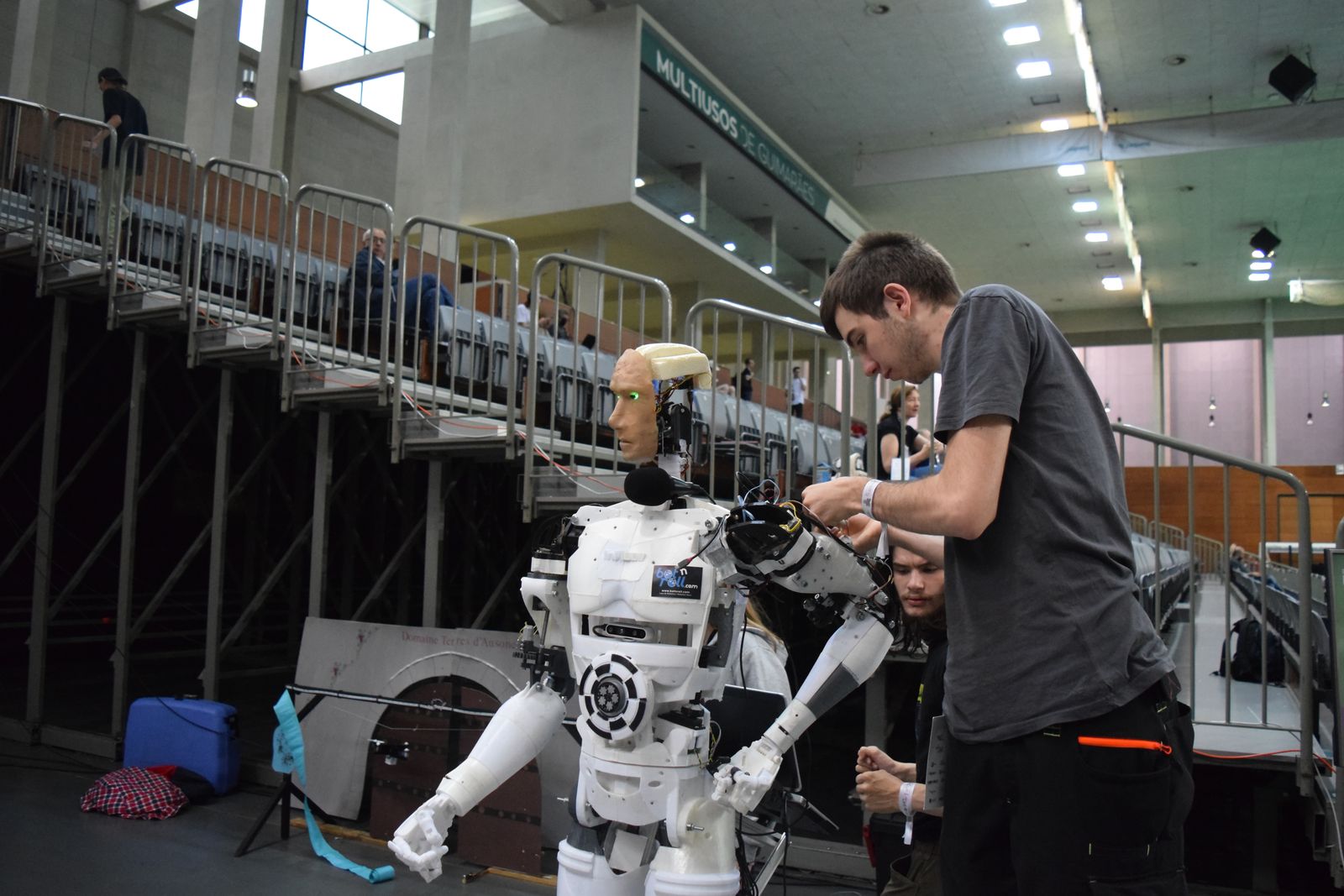
Humanoid Robot Market Reality: 5 Lessons for Founders
Reuters obtained the first humanoid tally ever compiled by the International Federation of Robotics, and the 2025 total came to about 7,000 machines. That count covers factories and professional services. After two years of viral demo clips, 7,000 is the whole commercial market.
I have chased enough shiny technology to know what this number is worth. It is a reality check you can build a plan around, and it tells you roughly how long the humanoid robot market needs before it touches your operation.
1. Size the Humanoid Robot Market Honestly
Put that figure beside the categories that already earn their keep and the scale problem jumps out. The table below uses IFR counts, and the ratio does the arguing for me.
| Category | Units | Period |
|---|---|---|
| Humanoids | ~7,000 | 2025 |
| Service robots, professional use | ~199,000 | 2024 |
| Industrial arms and cells | ~542,000 | 2024 |
So humanoids represent a rounding error against machines that already do real work. That gap between visibility and deployment is the pattern worth learning, because you will see it again in every emerging category you evaluate.
2. Ask Who Is Actually Buying
Here is the detail most coverage skipped. Labs and companies gathering training footage for AI models took a large share of these machines. They did not go to firms running them in production.
That means much of the demand is upstream of any productivity gain. Buyers are funding learning, and the machines generate the training data rather than the output.
Whenever a new category posts surprising sales, run the same check. Ask whether customers bought a solution or bought an experiment, because the answer changes how durable that revenue is. Founders building on emerging platforms should apply this filter to every partner pitch, the way careful teams already vet AI agents for business before wiring them into finance systems.
3. Separate a Pilot From a Rollout
Carmakers lead the early adopters, yet Susanne Bieller, who runs the federation as its secretary general, put the typical plant deployment in the single digits or low double digits. A dozen machines inside a factory staffed by thousands is not a rollout. It is an evaluation with a budget line.
Pilots get announced. Rollouts get budgeted, staffed and repeated. Learn to tell them apart before you build a product or a pitch around someone else’s press release.
Apply the same discipline internally. When your team wants to test a new tool, decide in advance what result would move it from pilot to standard practice.
The vocabulary gap causes real damage in fundraising too. Founders sometimes cite a pilot as proof of market demand, then struggle when a diligence call asks how many units the customer actually bought. Say what you have, and say it precisely.
4. Sell Into the Gap Instead of Waiting
A market this early is full of unmet needs that have nothing to do with building the robot. Data labeling, safety documentation, integration services, insurance, operator training and maintenance all sit downstream of every unit sold.
Those adjacent businesses can reach revenue years before the core category matures. They also require far less capital, which matters when you compare them to the funding loads that hardware startups carry to reach their first shipment.
Look at the IFR definition for openings. The federation counts a robot as humanoid when it has a human-like form and operates autonomously in spaces built for people, and notably, legs are not required. Definitions that loose usually signal a category still sorting out what it sells.
Services businesses tend to win first in markets like this one. Early buyers need help more than they need another vendor, and they pay for it because nobody on staff has done the work before. Start there, learn the customer, then decide whether a product is worth building.
5. Set Your Own Adoption Trigger
Do not decide today whether humanoids belong in your business. Decide now what evidence would make the answer yes, then stop thinking about it until that evidence arrives.
Useful triggers include a published cost per hour that beats your labor cost, a supplier willing to guarantee uptime, or three references in your industry running more than fifty units continuously. Write yours down and revisit it once a year.
That habit protects cash and attention, which are the two resources most young companies run out of first. Plenty of teams in the why startups fail column spent both chasing a technology curve that arrived later than promised.
One caveat on the number itself. Household, defense and clinical machines sit outside this count entirely, so the real total runs somewhat higher than 7,000, just not by an order of magnitude. The federation plans an annual humanoid tally from here, and you can follow that work at ifr.org.
Humanoid robots will matter eventually. Right now, the smartest move is to watch the unit counts, sell into the gap and keep your capital pointed at problems your customers already pay to solve.
