ICE could deploy robot dogs: How would they be used
U.S. Immigration and Customs Enforcement (ICE) is planning a potential purchase of robotic dogs that could be used to inspect hazardous environments, assess dangerous situations remotely, and support law enforcement operations, according to a newly published Department of Homeland Security acquisition forecast.
The document, published August 27, outlines a possible procurement of Boston Dynamics SPOT robots and accessories valued at between $1 million and $2 million. ICE expects to release a solicitation on September 4, according to the document.
“This capability helps improve officer safety, supports informed operational decision-making, and enhances DHS’s ability to respond to incidents involving dangerous, confined, unstable, or difficult-to-access areas,” the document reads.
According to the procurement forecast, the robots would provide “a remotely operated robotic capability for inspection, situational awareness, and hazard assessment” in environments that may pose risks to personnel. ICE said the technology would support public safety and law enforcement operations by allowing officers to assess dangerous, confined, unstable, or difficult-to-access areas.
Newsweek has contacted ICE as well as its parent agency, the Department of Homeland Security, for comment.
How Would They Be Used?
The procurement notice suggests the robots would primarily be used to reduce risks to officers by entering potentially hazardous locations before personnel do.
The forecast says the systems could be used for inspection, situational awareness, and hazard assessment while helping improve officer safety and operational decision-making. It also states the technology could enhance DHS’s response to incidents involving dangerous environments.
The document does not specify whether the robots would be used in immigration enforcement operations, nor does it describe particular deployment scenarios.
Boston Dynamics said in its ethics statement that it “will not authorize nor partner with those who wish to use our robots as weapons or autonomous targeting systems.”
The company adds that, “If our products are being used for harm, we will take appropriate measures to mitigate that misuse.”
What Can Robot Dogs Do?
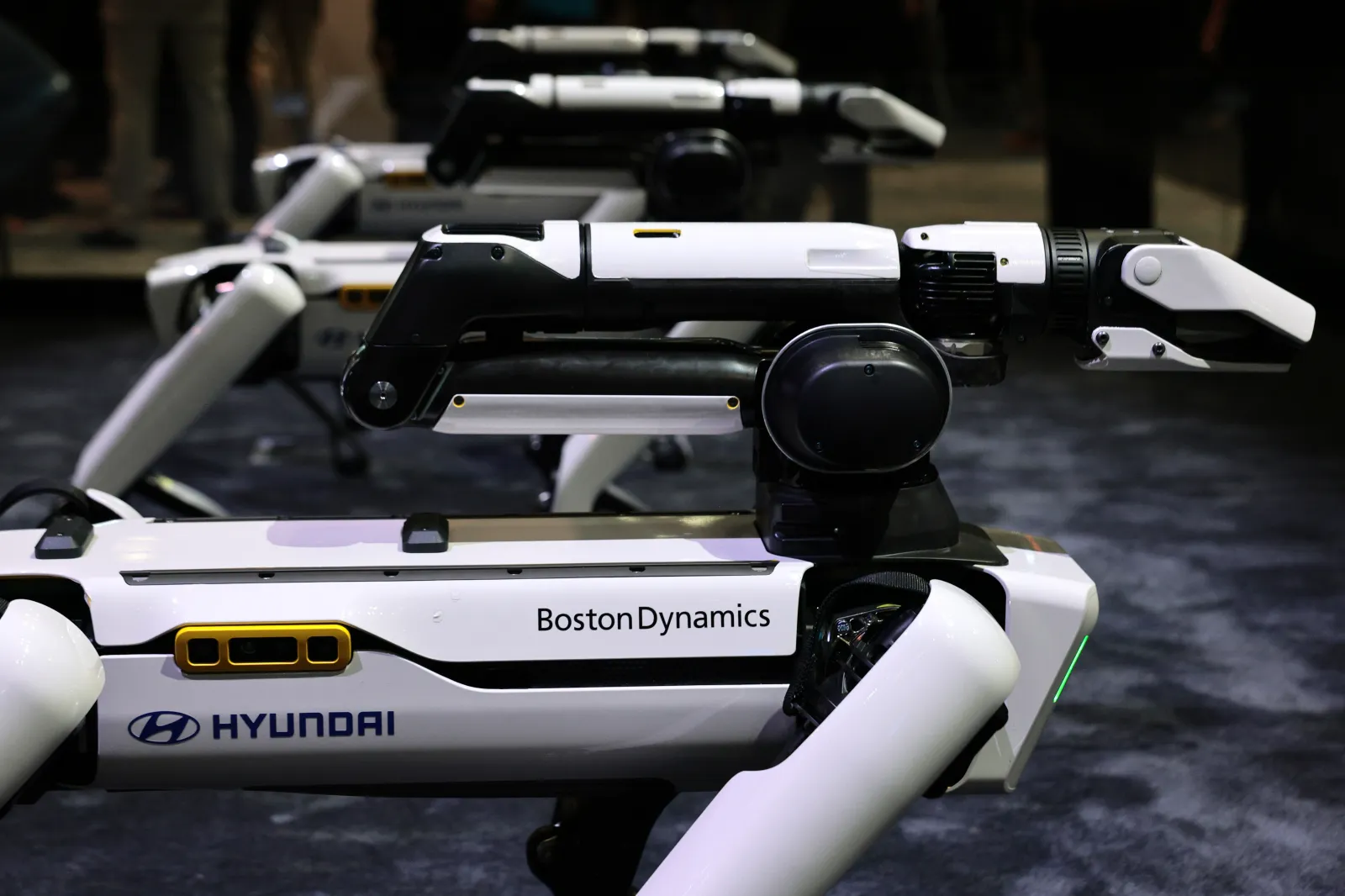
Boston Dynamics, the U.S. robotics company behind Spot, describes the roughly 75-pound, four-legged robot as “easy to use,” with “360° perception and athletic intelligence.”
The robot can traverse uneven terrain, climb stairs and operate remotely while transmitting data to operators. It can also be equipped with cameras, thermal imaging systems and mapping sensors. The DHS forecast does not specify which accessories ICE may purchase, how many units it could acquire or whether any specialized equipment would be included.
Where Have Robot Dogs Been Used Before?
Quadruped robotic systems have been tested and deployed by police departments, military organizations and emergency response agencies in the U.S. and abroad.
Police agencies have used them to inspect potentially dangerous locations and gather information before officers enter. Emergency responders have used them in environments affected by hazards or structural instability. Military organizations have also experimented with robotic systems for reconnaissance and surveillance-related tasks.
ICE is investing in a growing range of surveillance, identification and enforcement technologies, from facial-recognition systems, automated license-plate readers and commercial data-broker databases to GPS ankle monitors, smartphone-based monitoring, voice recognition and body-worn cameras.
ICE recently awarded a $16.7 million no-bid contract for 6,000 pairs of G.L.O.V.E. electric-shock gloves, which allow officers to deliver an electrical shock through contact with a person’s skin.
A group of Democratic senators urged ICE Acting Director David Venturella in a Thursday letter to cancel the contract and “instead invest in de-escalation tools, training, and accountability.”
The Trump administration has turbo-charged funding for its mass deportations agenda after President Donald Trump signed the “One Big Beautiful Bill Act” into law last summer. The legislation, which passed Congress without a single Democratic vote, provided $165 billion for DHS.
Contact Newsweek editors on this story: Tobias Meyjes and Trevor Davies