

Lenovo’s 3D scans were made for the Fifa World Cup, but value may lie in video games
Its AI chatbot will launch with an empty playbook, but 3D scans could yield a multibillion-dollar IP pipeline
[ZURICH] Lenovo’s new ChatGPT-style tactical chatbot has been touted as the centrepiece of its technology pitch for this month’s Fifa World Cup, which kicks off in Mexico City on Thursday (Jun 11).
However, a true commercial goldmine may lie elsewhere: some 1,200 hyper-realistic digital avatars of players that could give football’s world governing body Fifa an edge in the multibillion-dollar global video game market.
After Electronic Arts (EA) dropped the “Fifa” naming licence from its flagship video game in a bitter dispute back in 2022, football’s world governing body has lost out on hundreds of millions of dollars in licensing revenues.
Now, it has become something of an arms race for digital assets. While EA acquired optical tracking company Tracab to build its own volumetric data for the newly rebranded EA Sports FC, Fifa president Gianni Infantino has since vowed to launch a rival video game franchise.
Industry insiders theorised Lenovo’s data-gathering operation on the pitch could provide the necessary asset library – or at least, the technical scaffolding – to help deliver on that promise.
Led by artificial intelligence senior manager and solution architect Valerio Rizzo, the tech giant is using a machine-learning approach to scan the more than 1,200 players in the 48 teams competing at the World Cup.
Using a fleet of 28 scanners deployed directly to the teams’ base camps, the computationally heavy pipeline takes about three hours to render a single avatar – capturing specific body mass, muscular structure and even individual hair strands.
These new 3D scans will replace the generic grey avatars that are currently used in semi-automated offside reviews.
In an April interview with The Business Times in Zurich, Lenovo’s senior product manager Alvaro Perez confirmed that the company will evaluate post-tournament virtual reality and video gaming integrations by September this year.
SEE ALSO

But Lenovo is acting strictly as the end-to-end solutions provider and will not own the underlying intellectual property (IP). During a virtual briefing in May, Dr Rizzo said the company holds no claim over the lucrative 3D meshes or cloud-point data it is generating.
“We don’t own anything. (All the) rights remain in the hands of the original owners,” he said. “We just deliver service and products… we don’t retain any data.”
Consequently, the ultimate hurdle to monetising that digital twin pipeline will likely be legal, not technological.
Because player image rights are fiercely guarded by global unions and commercial agencies – mirroring the complex OneTeam Partners negotiations that were required to launch EA’s blockbuster college football game – Fifa could be dealing with some tough boardroom battles in the future.
Limited day-one AI power
While the 3D scans will build a future commercial asset, the immediate on-pitch AI tools will face strict limitations.
Lenovo’s prized tactical chatbot called “Fifa AI Pro”, using the core generative AI engine from an undisclosed Fifa “business partner”, is designed to democratise data for team analysts, but it will essentially fly blind when the tournament begins on Jun 11.
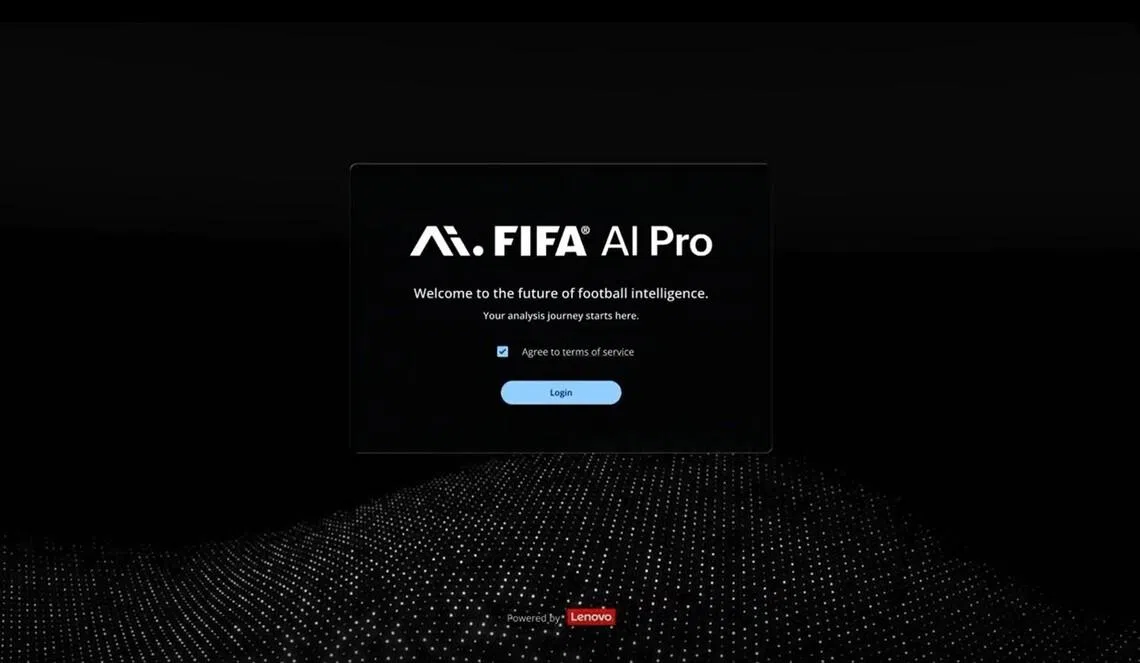
To prevent the AI from generating incorrect insights or “hallucinations”, the tool is walled off from accessing historical data sets outside the World Cup itself, said Perez.
This means the tool will have little utility for teams preparing for their crucial opening matches without access to data from regional qualifiers or the Uefa Nations League.
Furthermore, tech and sports executives agree the high-fidelity 3D avatars will not fully automate refereeing.
Andy Marston, head of corporate venture at athlete-backed venture firm The Players Fund, noted AI excels at objective decisions such as offsides, but might struggle with subjective calls like the force of a tackle.
Lenovo’s director of sports and entertainment, Santiago Manso, agreed that humans must remain the ultimate decision-makers – effectively acting as a lightning rod to absorb the liability of multimillion-dollar prize money swings.
Ultimately, the AI’s short-term impact will be measured by how well it assists those referees on the pitch. But with Lenovo preparing for post-tournament evaluations in September, Marston said the true financial payoff could be seen in other uses such as video games long after the World Cup’s final whistle is blown.
Decoding Asia newsletter: your guide to navigating Asia in a new global order. Sign up here to get Decoding Asia newsletter. Delivered to your inbox. Free.
