Maps show states at risk as US monsoon arrives
A major shifting weather pattern is set to bring the first widespread monsoon storms of the summer to the parched Southwest, offering relief from weeks of triple-digit heat but introducing severe risks of flash flooding and lightning-sparked wildfires.
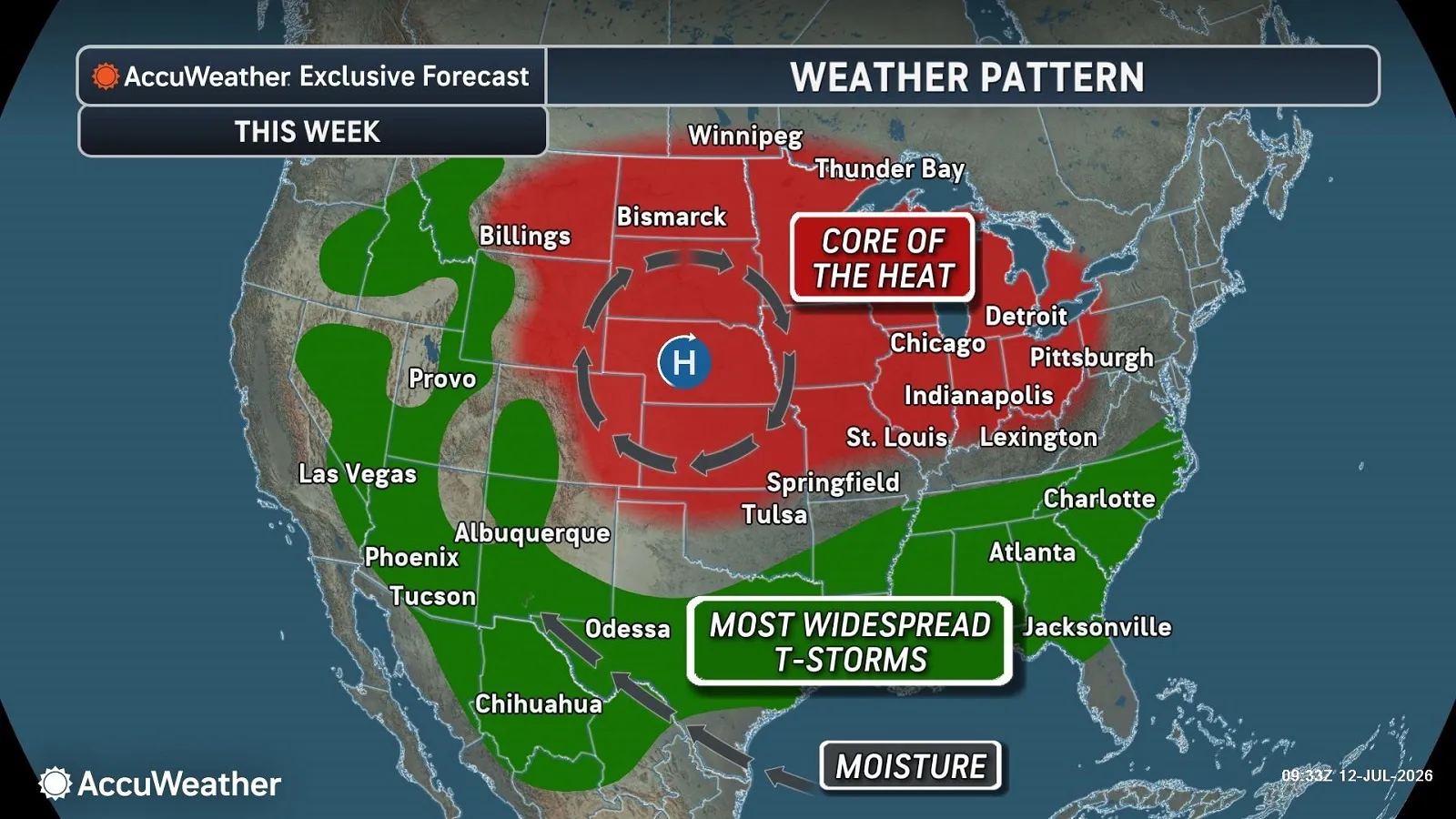
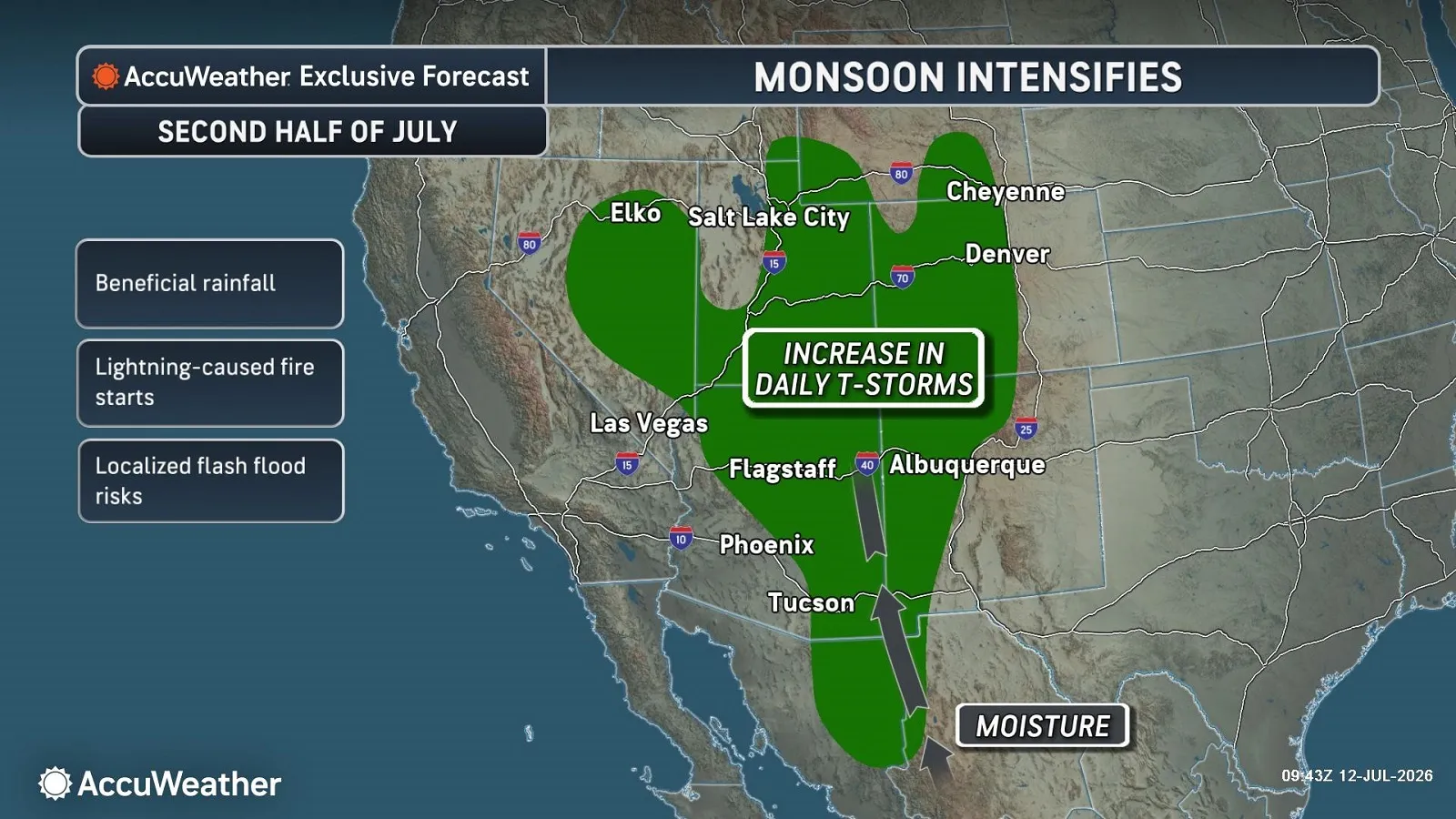
Forecasters track the arrival of the annual North American monsoon as a massive high-pressure system alters regional wind directions, drawing deep tropical moisture northward into the interior West. Thunderstorm activity is expected to intensify across Arizona, New Mexico, Nevada, Utah, Colorado, and Texas, threatening major metro areas including Phoenix, Tucson, Albuquerque, and Las Vegas.
While the storms will break a prolonged stretch of extreme heat that routinely pushed temperatures above 100 degrees Fahrenheit, meteorologists warn the precipitation will be highly uneven, bringing torrential downpours to some communities and dangerous “dry” thunderstorms to others.
“The North American Monsoon typically starts in most areas in the U.S. in early July but can start as early as the middle of June. This year the monsoon is starting close to on time for many areas,” Alex DaSilva, lead hurricane expert and meteorologist with AccuWeather, told Newsweek on Sunday. “The monsoon is starting now due to a large area of high pressure that is parked over the center of the U.S. The clockwise flow around the high pressure helps to direct moisture of from Mexico and from the western Gulf into the southwestern U.S.”
Elevated Flood and Wildfire Hazards
The transition brings a dangerous mix of competing weather hazards. While moisture is desperately needed in a region largely gripped by moderate to severe drought, the initial wave of storms carries the threat of dry lightning—strikes that occur with little to no rainfall—capable of igniting volatile desert vegetation. Furthermore, powerful thunderstorm downdrafts can trigger blinding dust storms, known as haboobs, and whip up damaging straight-line winds.
“As far as the current monsoon goes, the areas of greatest risk will be across portions of Arizona and western New Mexico where a few inches of rain can occur over the next week under locally heavy downpours,” DaSilva said.
He added: “People that are hiking and spending time outdoors will want to pay attention to the weather forecast as there will be a risk of flash flooding through the week. The heavy rain risk can also extend north into portions of Utah, Nevada and Colorado as well. Most of these areas in the Southwest average less than an inch of rain for the whole month of July, so any heavy rain can cause flooding risks.
DaSilva said there will also be a risk of strong winds as well as dust storms
“Some of the winds in the strongest storms can reach 60 mph. Most of the Southwest is in at least a moderate or severe drought. While the rain will be beneficial for many areas that are dealing with drought, lightning could potentially spark new wildfires.”
Public safety officials are urging residents and tourists to exercise extreme caution, particularly in slot canyons, dry washes, and low-lying desert roads that can transform into raging torrents in a matter of minutes.
A Wetter Long-Range Outlook
Despite the immediate localized hazards, meteorologists are projecting a robust monsoon season that could ultimately chip away at long-term water deficits across the West as the summer progresses.
“This year we are forecasting the monsoon itself to be near average overall, however the monsoon can be enhanced by tropical moisture from tropical storms and hurricanes that move up from the Eastern Pacific basin,” DaSilva said. “As a result, we do expect to see a wetter pattern overall in the Southwest this summer and into the fall months. We will have to watch the moisture from tropical storms and hurricanes as it streams north. Even if a storm moves into Mexico, the moisture can still be carried north, bringing flooding to the Southwest. This happened a few times last year.”
Contact Newsweek editors for this story: Daniel Orton and Anthony Murray.