Meaning behind “X” gesture players can use to stop matches at the World Cup
Players competing at the 2026 World Cup will have a new tool to report racist abuse during matches: crossing their arms to form an “X”—a signal that can immediately trigger FIFA‘s anti-discrimination protocol and potentially stop play.
The crossed-arms “No Racism” gesture was first introduced during the 2024 Under-20 Women’s World Cup in Colombia and is now being rolled out across FIFA competitions.
Soccer‘s governing body faces continued pressure to respond more quickly and visibly to racist incidents that have repeatedly overshadowed major international tournaments.
The signal gives players, referees and team officials a standardized way to report discriminatory abuse and immediately activate FIFA’s existing anti-racism procedures during a match.
What Happens When a Player Makes the ‘X’ Gesture?
Under FIFA rules, the gesture can be used by players, referees or team officials who witness racist or discriminatory behavior.
Once made, the “X” serves as a clear signal for officials to begin soccer’s three-step anti-discrimination protocol.
The first step requires the referee to stop play and order a stadium announcement warning that discriminatory behavior must end.
If the abuse continues, players can be taken off the field and the match suspended. If the situation still fails to improve, the referee has the authority to abandon the game entirely.
FIFA says the gesture does not replace the existing process but provides a clear and visible trigger for it.
How Is This Different From Previous Approaches?
While FIFA’s anti-discrimination procedure has existed for years, its implementation has often depended on referees identifying abuse themselves or players reporting incidents verbally during the game.
The new signal is intended to remove that ambiguity. By giving players a universally recognized gesture, FIFA hopes incidents can be identified more quickly and addressed more consistently.
The move also reflects years of criticism from players and anti-racism campaigners who argue that governing bodies have not always acted decisively when abuse occurs.
FIFA has positioned the gesture as part of a broader effort to standardize anti-racism enforcement ahead of the expanded 2026 World Cup, which will be played across the United States, Canada and Mexico.
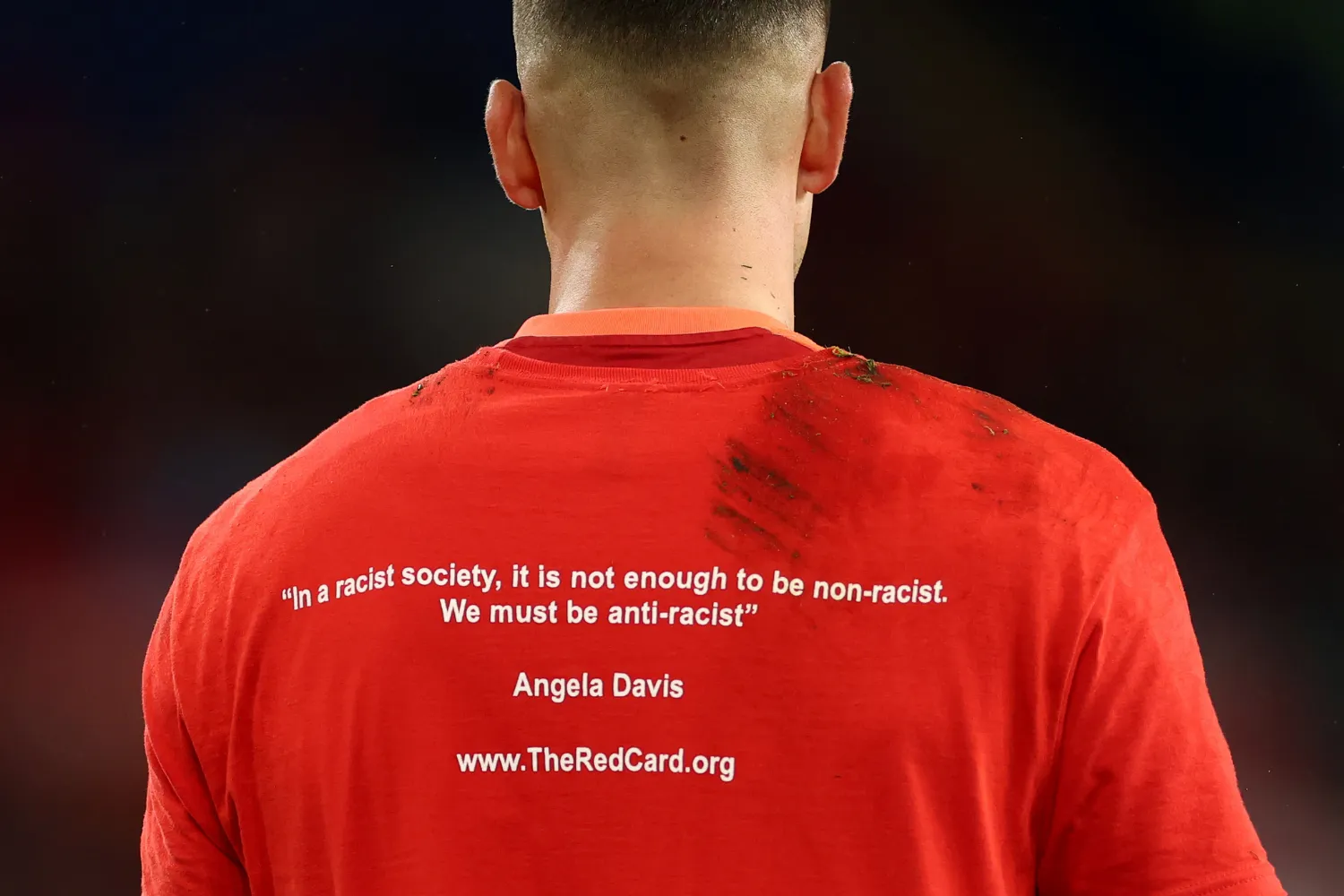
The Racism Incidents Behind the Move
Racist abuse has repeatedly surfaced at major international tournaments and high-profile matches in recent years.
One of the most notable cases came during a Euro 2020 qualifier between England and Bulgaria national football teams in 2019, when play was halted twice after England players were targeted with racist chants and gestures.
The referee followed UEFA’s anti-racism protocol by stopping play and issuing stadium warnings, with the game coming close to abandonment.
At the most recent men’s World Cup in Qatar in 2022, FIFA again took disciplinary action over discriminatory behavior. This included sanctions against federations following incidents involving offensive or discriminatory chanting by supporters during matches.
Abuse has increasingly extended beyond stadiums. Bukayo Saka, Marcus Rashford and Jadon Sancho were subjected to racist abuse online after England’s penalty shootout loss to Italy in the Euro 2020 final. It prompted police investigations and widespread condemnation.