

Northern Lights Could Light Up 22 US States Tonight As NOAA Watches for a G2 Solar Storm
The northern lights could become visible across parts of the northern United States on the night of Friday, Aug. 28, into Saturday, Aug. 29, 2026, as Earth is expected to encounter a burst of solar activity.
NOAA’s Space Weather Prediction Center (SWPC) has an active G2, or moderate, geomagnetic storm watch for Aug. 28-29, following coronal mass ejections (CMEs) that left the Sun on Aug. 25. If the storm becomes strong enough, the aurora could reach farther south than usual.
The forecast creates a chance for skywatchers in as many as 22 U.S. states to see the northern lights, particularly those in the northern tier near the Canadian border. However, an aurora alert does not guarantee that the lights will be visible from every location. Cloud cover, local light pollution, the strength of the storm, and the bright Moon can all affect what observers see.
Why the Northern Lights could appear tonight
The potential display is being driven by activity on the Sun.
According to NOAA’s Aug. 26 space-weather notice, CMEs that departed the Sun on Aug. 25 are expected to influence Earth’s magnetic environment through Aug. 29.
NOAA wrote that “geomagnetic activity in response to CMEs that departed the Sun on 25 Aug is now anticipated to extend into 29 Aug.”
A CME is a huge release of magnetized, electrically charged material from the Sun. When one of these clouds reaches Earth, it can disturb the planet’s magnetic field.
Those disturbances can send energetic particles toward Earth’s upper atmosphere. When the particles interact with gases there, energy is released as light. That glowing interaction creates the aurora.
What does a G2 geomagnetic storm mean?
NOAA’s G2 classification represents a moderate geomagnetic storm.
For aurora watchers, the important part is that stronger geomagnetic activity can push the northern lights farther away from the Arctic and toward lower latitudes.
Wikimedia Commons
That is why the current forecast has attracted attention beyond the usual aurora-viewing regions.
The strongest viewing opportunities are expected to favor the northernmost parts of the United States, especially locations with an unobstructed view toward the north. If geomagnetic activity becomes stronger than forecast, the aurora could potentially be seen farther south, including areas such as Oregon and New York, according to the Forbes forecast.
But the southern extent of the display cannot be known with certainty in advance.
The moon could make the show harder to see
There is another unusual factor for Friday night’s sky: the full Sturgeon Moon has just passed through a deep partial lunar eclipse.
The eclipse occurred overnight on Aug. 27-28, when about 96.2% of the Moon’s disk entered Earth’s darkest shadow.
Although the eclipse itself is over, the Moon remains bright enough to create a problem for aurora watchers.
A bright Moon can wash out faint auroral colors, making a relatively weak display difficult to see with the naked eye. Stronger auroral activity, however, can still produce a noticeable show.
This means a location with dark skies and little artificial light could make a significant difference.
When should you look?
NOAA’s watch covers both dates, while the Forbes forecast indicates that the storm could begin affecting the night sky as darkness arrives Friday.
Because auroral activity can change quickly, checking real-time space-weather updates is more useful than relying only on a forecast issued hours earlier.
For viewers, the best strategy is to get away from city lights, find a location with a clear view of the northern horizon, and remain outside long enough to account for changes in auroral activity.
Why the Northern Lights can move so far south
The northern lights are normally concentrated around the polar regions because Earth’s magnetic field guides charged particles toward the Arctic.
During a geomagnetic storm, however, Earth’s magnetic environment becomes more disturbed. The region where auroras occur can expand toward lower latitudes.
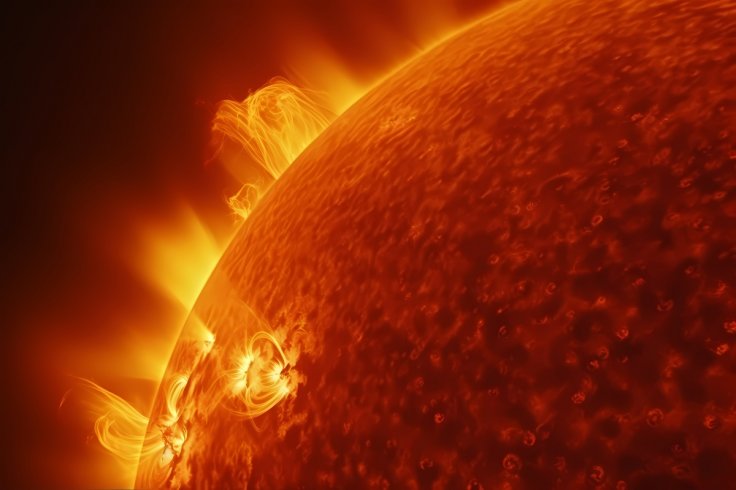
Freepix
That is what creates the possibility of seeing the aurora from states that normally have little chance of witnessing it.
The current event follows several days of notable activity on the Sun, with NOAA also maintaining a G1, or minor, geomagnetic storm watch for August 27 because of high-speed solar wind associated with a coronal hole high-speed stream.
How to improve your chances of seeing the aurora
The forecast is a chance, not a guarantee
The key uncertainty is that a geomagnetic storm watch does not mean the northern lights will definitely appear over every location included in the forecast.
The actual visibility depends on how Earth’s magnetic field responds when the solar material arrives and how strong the resulting geomagnetic activity becomes.
For people in the northern United States, though, Friday night into Saturday morning offers a potentially favorable window.
NOAA’s current watch runs through Aug. 29, meaning the opportunity could continue beyond Friday night if geomagnetic activity remains elevated.
