SEGELHORST, ALIAKBARI: Carbon tax could push investment out of Alberta
Not only will the country with more punitive policies lose economic activity as production and investment move elsewhere, but the environmental benefits will also be offset, undermined or reversed by increased emissions elsewhere.
Article content
Back in 2021, Mark Carney spoke before a parliamentary committee in the U.K. about how countries can reduce their carbon emissions without harming economic competitiveness. He said “the most effective policy is a price on carbon,” but cautioned that if one country moves ahead of the pack and adopts stricter emissions policies, this “creates the risk of carbon leakage.”
Advertisement 2

Article content
Carbon leakage happens when government policies (environmental regulation, taxes, etc.) in one country drive companies to relocate production to jurisdictions to countries with less punitive policies. Not only will the country with more punitive policies lose economic activity as production and investment move elsewhere, but the environmental benefits will also be offset, undermined or reversed by increased emissions elsewhere.
Article content
Recommended Videos
Article content
Questions for Alberta
This raises a key question for Albertans.
Will the industrial carbon tax — codified in the Alberta-Ottawa memorandum of understanding (MOU) — produce a lose-lose scenario where Alberta loses the investment for no environmental benefit?
According to a recent study by economist Jack Mintz, the $140 (per tonne of emissions) industrial carbon tax included in the MOU will increase the cost of producing energy in Alberta, and as a result, make the province less attractive to investment than energy-producing U.S. states.
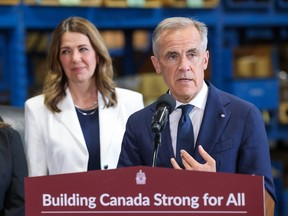
More specifically, by 2040 the industrial carbon tax, combined with Alberta’s business taxes and carbon capture requirements (also recently codified in the MOU), will raise the cost of oilsands production by 19.6%, conventional oil production by 25.6%, natural gas production by 39.1% and electricity production by 35.9%.

Calgary Sun Headline News
Article content
Advertisement 3
Article content
In theory, some companies in Alberta could respond to these added costs by finding lower-carbon methods to run a factory, operate a mine or produce a barrel of oil, while others may choose to pay the tax and continue operating much as before. But in practise, investors and companies may instead seek out lower-cost locations where taxes and regulations are less onerous — again, taking their emissions with them and negating the promised climate benefits from lower emissions.
Less attractive to investment
Crucially, Canada’s industrial carbon tax makes us less attractive to investment compared to other major oil- and gas-producing countries including the U.S., which doesn’t have a carbon tax. A tax that reduces Canada’s emissions might seem like a success on paper, but a tonne of carbon emissions originating in Alberta has the same effect on the climate as a tonne of emissions from Texas.
And it gets worse if we extend this analysis to developing countries whose environmental standards are lower than Canada and the U.S. If investment and production moves to a country with lower environmental standards and more emissions (per barrel of oil drilled), global emissions could rise even if Canada’s tally falls.
Advertisement 4
Article content
Read More


Carbon taxes can lower emissions because they make emissions more expensive for producers. But for carbon taxes to provide environmental benefits, emissions must fall globally, not just relocate. If the Carney government wants to incentivize lower-emission oil and gas production in Alberta through a higher price on carbon emissions, we should understand the effects. Alberta may lose investment, production, economic activity, royalties for government, and the well-paying jobs that have sustained a high standard of living for decades. And global emissions may actually increase.
Annika Segelhorst and Elmira Aliakbari are policy analysts at the Fraser Institute.
Article content