The Founding Director of Mathaf Returns to Doha for Art Basel Qatar’s Second Edition
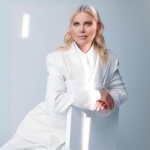
Earlier this summer, Art Basel named Wassan Al-Khudhairi artistic director of the 2027 edition of Art Basel Qatar, the fair’s second outing in Doha. She succeeds the Egyptian artist Wael Shawky, who put together a well received inaugural edition of the fair earlier this year. Al-Khudhairi served as founding director of Qatar’s Mathaf: Arab Museum of Modern Art, overseeing its 2010 opening. She has since served as chief curator at the Contemporary Art Museum St. Louis, co-artistic director of the ninth Gwangju Biennial, and part of the curatorial team for the 2025 Hawaii Triennial. We caught up with her to hear about how Doha has changed since she left, whether a curated fair is still supposed to sell anything and what to eat when you get there.
Congratulations on the new gig! You lived and worked in Doha from 2007 to 2012. What does the city’s art ecosystem look like to you now versus then?
When I first came to Doha, there was already significant cultural ambition, but many of the institutions and networks that are so visible today were still taking shape. What feels different to me now is the depth and layering of the ecosystem. Institutions have matured, new initiatives have emerged, and artists and audiences have developed alongside them.
There is also now a generation that has grown up with museums and cultural institutions as part of the landscape of the city, and I think that matters. I’m interested not simply in the scale of the growth, but in what that accumulated experience makes possible: the conversations, expectations, relationships and forms of knowledge that build over time.
For me, returning to Qatar in this new capacity is also an opportunity to listen. I have a history here through my time as founding director of Mathaf, but the city has changed, the cultural landscape has changed, and I’m coming back with a different role within that wider ecology. So I don’t want to assume I already know it. Part of the work is understanding Doha as it is now.
Mathaf’s opening shows, “Told Untold Retold” among them, are now treated as a turning point for contemporary Arab art. How do you see this material consumed around the world since then?
One of the most important shifts is that artists from the region are increasingly being encountered through multiple histories and conversations rather than through a single category. The work was never one coherent aesthetic, identity or narrative, and there is now greater space internationally to understand individual practices through different lenses. Geography can be part of how we understand a practice without becoming the total explanation for it.
When Mathaf opened, “Told Untold Retold,” curated by Sam Bardaouil and Till Fellrath, was a very ambitious exhibition for which major works of contemporary art were commissioned. It opened alongside “Sajil: A Century of Modern Art,” which I co-curated with Dr. Nada Shabout and Deena Chalabi. Sajil brought together an expansive collection of modern art from the Arab world, and it was important to us that the modern and contemporary were presented alongside one another.
Part of the intention was to resist the idea that contemporary practice had somehow appeared from nowhere. There were histories, debates, experiments, ruptures and continuities that preceded it. Making the collection accessible through exhibitions created opportunities for further research, scholarship and exhibitions that could continue to deepen and complicate those histories.
A great deal of work has taken place since then, at Mathaf and elsewhere. There is still much more to do, but I think the conversation has become more expansive and more nuanced.
You’re stepping into shoes last filled by the great Wael Shawky, the fair’s very first artistic director. What do you think he did right? Where do you see room for growth from his iteration?
Wael established an important foundation for Art Basel Qatar as a curated fair, and the artist-centered nature of that approach is something very important to retain. The emphasis on solo presentations, in particular, created the possibility for audiences to spend sustained time with an artist’s practice rather than encountering individual works in isolation.

I see my role as building on that foundation rather than beginning again. Each edition has the opportunity to develop the format and respond to its particular moment. For 2027, I’m interested in deepening the connections between galleries and artists, between different artistic practices, between the fair and the city, and between the specificity of this place and wider international conversations. That is where I see the possibility for the format to continue evolving while holding onto the clarity of its artist-centered approach.
You’ve said a rigorous curatorial vision and a thriving market aren’t in tension, but this fair seems much more focused on artistic presentation than sales. How important are sales to this fair?
Sales matter because they are part of how galleries sustain their programs and support artists over time. I don’t think we need to pretend that the market is somehow separate from an art fair, nor do I think curatorial rigor and the market have to be treated as opposing forces.
A strong presentation can give a collector a deeper understanding of an artist’s practice. It can create a relationship that extends beyond the purchase of a single work and develops over time between the collector, the gallery and the artist. That kind of sustained engagement can be meaningful artistically and commercially.
So the ambition is not to make the market invisible. It is to make sure that the encounter begins with the art, that there is enough depth and context for people to understand what an artist is doing and why the work matters. I think that can ultimately support the kinds of relationships on which a healthy art ecosystem depends.
Over 600 galleries applied for the first edition, and 87 were selected, with 16 showing with Art Basel for the first time. What are your thoughts around size for this fair? Are you going to try to encourage more first-timers?
I wouldn’t define the right size through a number alone. For me, the starting point is the strength of the proposals and what each gallery and artist can contribute to the edition. At the same time, one of the qualities of this format is its scale. We want visitors to be able to spend real time with presentations rather than feeling that they have to rush through them, so there is no ambition simply to become larger for the sake of growth.
Discovery is very important, and that can absolutely include galleries entering the Art Basel ecosystem for the first time. But I don’t think of being new as a category in itself. What interests me is the practice being presented, the strength of the proposal, and the kinds of relationships that participation might allow to develop over time. The aim is to create an edition in which every presentation feels intentional and where audiences have the time and space to engage with it.
The theme for your edition is “between / بين,” and you’ve said you didn’t want the Arabic to be read as a translation. What’s the distinction for you? How are you talking about this theme with galleries?
When I was developing the title, I was thinking in both Arabic and English rather than arriving at the idea in one language and then simply translating it into the other. That distinction is important to me because “between / بين” is itself concerned with what happens in relation: between languages, meanings, positions and ways of understanding.
I see “between / بين” as an open framework rather than a theme that artists or galleries have to illustrate. “Between” captures something unfixed. It can be understood quite conceptually, as a space of possibility, but it can also be very literal: being between places, languages, generations, identities, histories, media or materials, traditions, or moments of transition.
And I’m interested in the possibility that the space between things does not always have to be resolved. It can be somewhere we inhabit, a space for uncertainty, encounter, exchange, even hope.
So in speaking with galleries, I’m not offering a checklist of what “between” should mean. The point is precisely that different artists and practices can enter that conversation in very different ways.
The Special Projects sector is being expanded for 2027. What kind of work do you want in the public spaces of Msheireb for your iteration?
Public space creates a different relationship with an audience because people may encounter a work without having chosen to enter an art fair, or even expecting to encounter art.
In Msheireb, I’m interested in work that responds to the particular spaces and rhythms of the site, rather than simply taking a fair presentation and placing it outdoors. For me, the interesting question is what becomes possible because a work is encountered in that particular place and in relation to the people moving through it.
What’s your favorite thing to eat in Qatar?
Al-Reef Bakery’s zaatar manakeesh.
More interviews