Their Son Died. Months Later, Woman, 54, Has Baby From 22-Year-Old Embryo
A couple from Greece made headlines across the globe after they welcomed a healthy baby girl from the same batch of embryos they’d frozen 22 years earlier to have their son, who recently passed away.
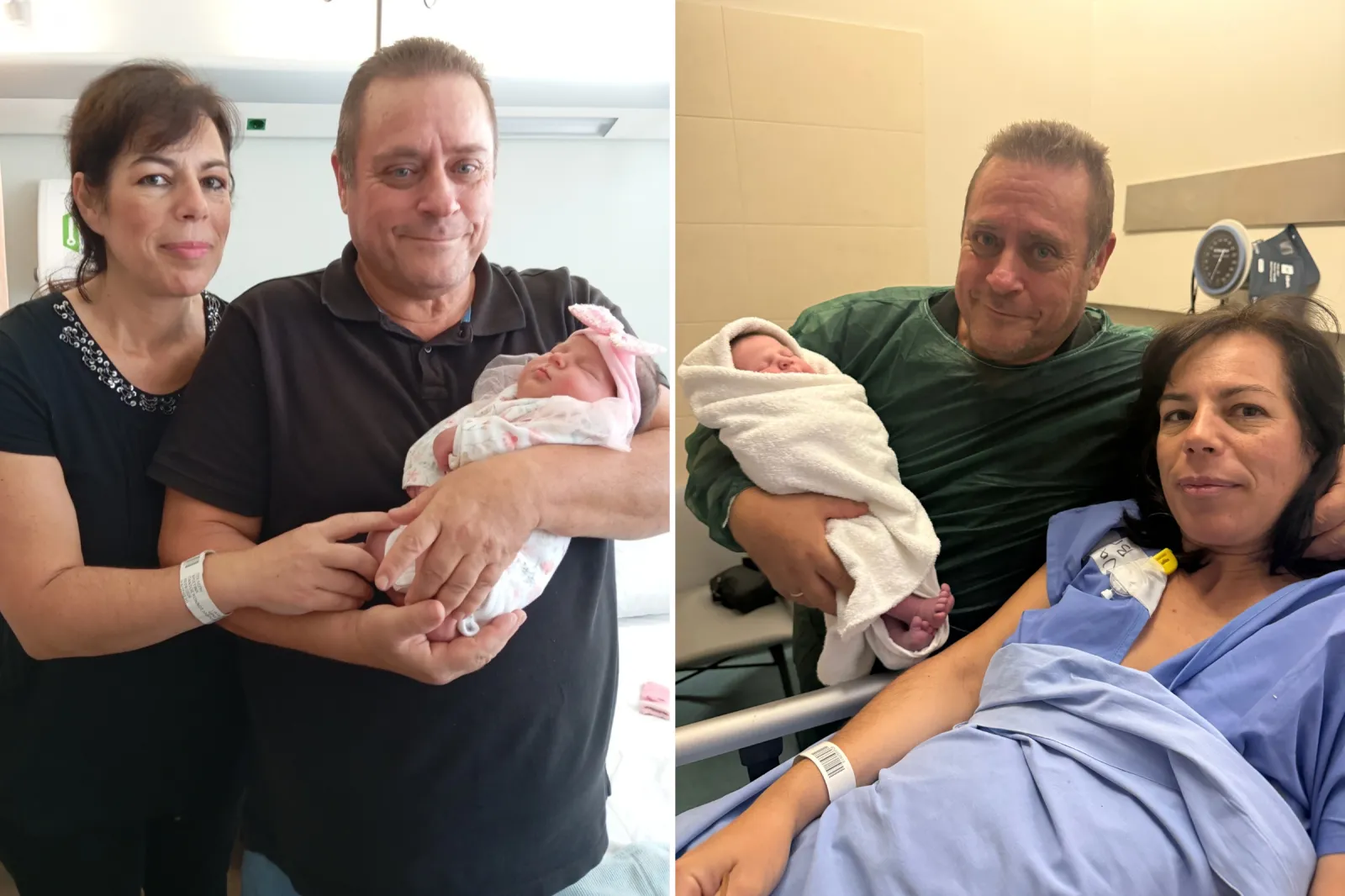
At 54 years old, Christina Rapti-Tzelepi gave birth to her daughter earlier this month following in vitro fertilization (IVF) in December 2025 at Genesis Athens Clinic using embryos that were frozen on March 17, 2004.
Christina and her husband Konstantinos decided to have another child after they lost their son and only child at the time, George, in October 2025.
However, in Greece there’s a maximum age limit of 54 for women to undergo IVF treatment meaning the Rapti-Tzelepis were pushed for time and had to start the process while still struggling with the grief of losing their son. According to Newlife IVF Greece, the reason behind the age cap is because of the severe medical risks that a pregnancy can have on a woman who is at an advanced maternal age as well as the natural limit of the female reproductive system.
Now, the Rapti-Tzelepis are calling for the legislation to be changed.
The couple spoke to Newsweek about the journey they’ve been through over the last year, from immeasurable grief to newfound joy and why they believe Greece’s laws around IVF need to be changed. One of the clinic’s nurses and their gynecologist, Dr. Konstantinos Pantos, who is also Secretary General of the Greek Society of Reproductive Medicine, translated what they said.
A Race Against Time
The Rapti-Tzelepis met around 30 years ago through friends. They always knew they wanted a family, but after trying for three years, they discovered they needed to undergo IVF treatment to have a child.
On the first attempt of the procedure, which was carried out at Genesis Athens Clinic, Christina became pregnant with their son George.
However, due to difficulties with the birth, George was born via a cesarean section. The doctor who delivered him told the couple that it might be dangerous for them to have another child, because of concerns relating to the anatomy of Christina’s uterus, and encouraged them not to.
His words frightened them and so even though they wanted to have another child, they didn’t, but kept their 12 remaining embryos frozen at the clinic.
In October 2025, George was killed in a tragic car accident. It “left a void no words can describe,” his father said.
Despite being in the throes of grief, the couple knew they wanted to have another child even though they’d been warned of the dangers of doing so. They said that, after losing their son, they just weren’t thinking about those warnings as much.
They just thought that if they went ahead and had another child, “it might close this chapter of our lives and allow us to feel complete,” Christina said. “It was a very difficult time. The grief was extreme.”
Konstantinos said that they also felt that their son would have wanted them to have another child so they could continue with their lives and be happy again as a family and not grieve every day.
It was around December 2025 when they made the decision to have another child, but because of the laws in Greece, time was against them.
As Christina was nearing her 55th birthday, after which she would not be allowed to undergo IVF in the country, the couple had to begin the process quickly.
Pantos told Newsweek “it was the first time in my professional life that I saw a couple feeling so much sadness during a pregnancy.”
He described how Konstantinos initially couldn’t bring himself to come to the appointments with Christina, because he was still so torn apart by the loss of his son. It took time for him to eventually start coming with her to see the doctor, but even then “he was always very sad,” Pantos said.
He added that the first time he saw Konstantinos smile was when his daughter was born, and that he feels “saddened” to see that both parents are still having to process their grief as they welcome their daughter to the family.
They Saw ‘the Light’ After the Birth of Their Daughter
While they knew they wanted another child, Christina and Konstantinos had many concerns about Christina’s wellbeing during the pregnancy and birth, given the advice they’d received years before.
However, the couple said that Pantos took the proper measures to ensure Christina’s safety throughout the process and worked closely with the surgeon who would be performing the cesarean.
Christina said that she felt “very secure and safe” with Pantos and those helping her in the clinic and trusted them. She said that her clinical team “treated us like family,” and “we thank God that we managed to have another baby and, of course, Dr. Pantos.”
They conceived their daughter following one transfer of three of the embryos from the 2004 batch, Pantos told Newsweek, adding that overall, the pregnancy and birth actually went smoother than they thought it would. The baby girl was born at 39 weeks and two days and weighed approximately 7.6 pounds.
Christina said that seeing their baby daughter for the first time made them feel as though they had “seen the light,” and they now feel “hopeful for the future” again.
Konstantinos said their daughter has given them a “restart in life, a second chance,” and that she’s made them want to “continue living.”
Just like they told their son he was conceived through IVF, they plan to tell the whole story to their daughter when she’s older too.
They told Newsweek that the experience has taught them to “be strong, not to lose faith and not to give up if something harsh like this ever happens.”
Calls for Greece’s IVF Age Limit to Be Changed
The couple’s challenges are still not over, despite their wonderful news. Christina is now not able to have more children in Greece, given the age limit, even though the couple would like to make their family bigger.
Christina said she realizes she is older now and is concerned about their daughter being alone later in life, and so they want to have another child so that she can have a sibling.
She also said she felt she was being treated “unfairly” by the law, seeing as both the pregnancy and birth of her daughter went well, and she feels healthy enough to have more children.
“We might go abroad if the law does not change,” Christina said.
Like the couple, Pantos also feels the law needs to be changed. He said that as a doctor, he feels the couple “should have been left to mourn,” but because of the rule, they had to go through “this tremendously emotional time, while having to go through an IVF process as well.”
He said “nothing would have changed” in regard to Christina’s health and ability to have a child if they had been left for a few more months to grieve. He added that because of this, the current legislation has “angered me as a professional.”
“The age limit should be flexible,” he said. “It should take into account cases like this.”
Pantos said it should also take into account cases where women give birth later in life and want to have a second child so that their first child has a sibling. “In Greece now, there are plenty of women who postpone having a baby to later ages,” he added.
The average age of first-time mothers in Greece has reached 31.2 years in 2024, according to recent data from Eurostat, which places the country above the European Union average of 29.9 years.
Pantos said that while there does need to be an age limit for IVF, it shouldn’t be “as harsh as looking at IDs and date of births.” Instead, it should “take into account various aspects of their lives.”
Contact Newsweek editors for this story: Kara Dolman and Anthony Murray.