

US Port Bets on Nuclear-Powered Shipping and Floating Reactors in New Maritime Study
The Port of Corpus Christi in Texas is taking an early look at what it would take to bring nuclear technology into commercial maritime operations. On Aug. 19, 2026, CORE POWER and the Port of Corpus Christi Authority signed a Memorandum of Collaboration to study whether the major energy and trade hub could eventually host a floating nuclear power plant and accommodate nuclear-powered commercial ships.
The study is significant because it moves the discussion around maritime nuclear technology from broad concepts toward the practical questions a U.S. port would face.
Researchers will examine issues such as where a floating reactor could operate, how it could connect to the grid, and how nuclear-powered ships could safely enter, berth, and operate at the port. The work is only an assessment, not an approval to build or deploy nuclear facilities.
Why Corpus Christi is looking at nuclear power
The Port of Corpus Christi is one of the major energy gateways in the United States, making it a useful setting for testing how nuclear technology could fit into an existing industrial port.
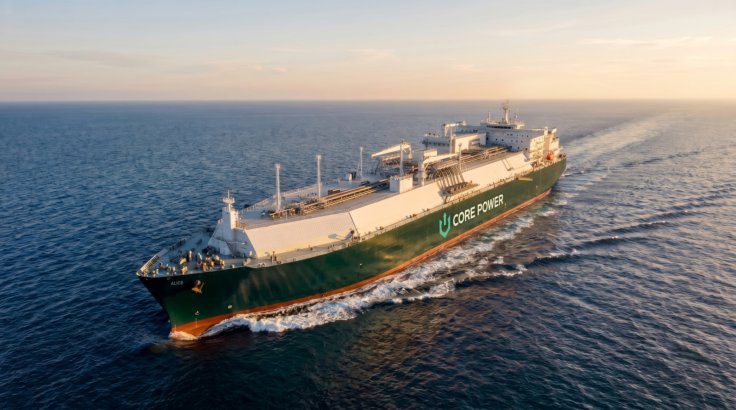
CORE POWER and the port will examine two separate possibilities. The first is a floating nuclear power plant, or FNPP, that could provide steady electricity to the port and surrounding region. The second is preparing the port for future visits by commercial ships powered by nuclear energy.
Unlike intermittent power sources, a nuclear plant can provide electricity continuously. For a large port handling energy and industrial activity, that could make reliable power an important part of future planning.
But putting a nuclear facility in or near a working port would require much more than finding a suitable location. The study will consider potential grid connections, customers for the electricity, operating arrangements, environmental and regulatory requirements, and long-term service needs.
For nuclear-powered ships, the questions are different. The port would need predictable procedures for vessels traveling through its waters, arriving at berths and carrying out routine operations.
corepower.energy
Jeff Pollack, chief strategy and innovation officer of the Port of Corpus Christi Authority, said the collaboration is intended to establish what would be needed “technically, environmentally, operationally and commercially” before either option could be considered in the real-world setting of the port.
He said the effort is also about “gathering evidence and keeping our region competitive for future investment, industry, and high-value jobs.”
The port is also working with a federal maritime agency
The Corpus Christi project is not happening in isolation. Port commissioners have agreed to enter a separate Memorandum of Cooperation with the U.S. Department of Transportation’s Maritime Administration.
The work will examine what U.S. seaports would need to support floating nuclear power plants and provide safe harbor for civilian nuclear-powered vessels. The federal agreement complements the port’s work with CORE POWER by addressing the broader technical, regulatory, and operational requirements.
Together, the two efforts could give the port a clearer picture of what nuclear-powered maritime operations would require before any deployment decision is made.
For CORE POWER, the Corpus Christi study also provides a chance to test its proposed technologies against the realities of an operating commercial port.
“Ports are where energy systems and global trade meet,” Mikal Bøe, CEO of CORE POWER, said. He explained that the company needs to understand everything from potential sites and grid connections for floating reactors to safe transit and berthing arrangements for nuclear-powered ships.
Bøe said Corpus Christi provides a “real operating environment” where the two possibilities can be assessed separately while also examining the infrastructure, safety, regulatory and commercial issues they share.
What the study does not mean yet
Despite the focus on nuclear technology, the agreement does not mean Corpus Christi is about to receive a floating reactor or nuclear-powered ships.
CORE POWER and the port describe the proposed work as a preliminary, fact-finding study. It does not choose a reactor design, technology provider or site. It also does not begin licensing or permitting, approve construction, commit investment or authorize the operation of an FNPP.
The distinction is important because the study is designed to determine what would be required before any of those steps could even be considered.
The potential floating reactor would also serve a different purpose from a nuclear-powered vessel. An FNPP would be designed to supply electricity from a floating platform, while a nuclear-powered commercial ship would carry its own reactor and need procedures for operating safely within the port.
That means Corpus Christi is effectively examining two possible changes to the way ports handle energy: bringing nuclear-generated electricity closer to industrial demand and preparing infrastructure for ships that generate their own power through nuclear technology.
Why this could matter for U.S. ports
The study could become useful beyond Corpus Christi if the United States moves further toward commercial maritime nuclear technology.
corepower.energy
Ports would be a critical link between nuclear-powered vessels and the wider transportation system. They would need rules and infrastructure that allow such ships to enter and leave safely, while regulators and operators would need clear responsibilities for routine port activities.
Floating nuclear plants would present another infrastructure challenge because they would need an appropriate location, a connection to customers and the electricity grid, and regulatory and environmental pathways.
The Corpus Christi study is therefore less about putting a reactor in a port today and more about identifying the conditions that would have to exist for such a system to work.
Pollack described the effort as a way to understand the requirements in the context of the actual port rather than treating the technology as a theoretical concept.
For Bøe, that practical step is what could help turn maritime nuclear technology into an operating system. “This is how we move from promising technology to products and infrastructure capable of supporting U.S. energy and maritime competitiveness,” he said.
For now, Corpus Christi remains at the study stage. But by examining both floating nuclear power and nuclear-powered shipping before either technology reaches the port, officials are trying to determine whether the infrastructure, regulations and commercial conditions could eventually support a new nuclear role in one of America’s major energy hubs.
