What the Art World Can Learn From Luxury’s Return to Intimacy and Cultural Depth
The global luxury customer base has declined from around 400 million consumers in 2022 to 340 million in 2025, according to the BCG-Altagamma True-Luxury Global Consumer Insights survey, as aggressive price increases, combined with shifting perceptions of value, have pushed many aspirational shoppers away. The luxury industry’s significant contraction has been further accelerated by the slowdown in consumption in the Gulf amid the war—the region’s luxury consumer base shrank by 15 percent in the first half of 2026. Meanwhile, the art world has spent the past two years confronting a stream of gallery closures, and even megagalleries such as Gagosian and Pace have recently scaled back, with Marc Glimcher describing the gallery model as “broken” and “unfixable.”
Something is clearly not working, even as auction houses have recovered, recently reporting record half-year results, led by dynamism at the very top end of the market and the scalability of their expansion into luxury collectibles. If we look beyond the restricted and often short-sighted hortus conclusus of the art world, we might notice that the luxury industry has already begun adapting, restructuring its business model to suit the current context and shifting buyer behavior—something the art world has done many times.
Recent luxury-market analyses broadly agree that what the wealthiest clients are seeking today is access, now understood in terms of intimacy and cultural depth. According to the BCG-Altagamma report, intimacy and product excellence are now driving demand: 80 percent of buyers prefer exclusive, dedicated spaces that offer privacy, calm and high-touch service over overcrowded, impersonal environments, while 89 percent rate craftsmanship and product quality as top drivers of value. Buyers also want to be known and recognized. According to the data, brands are missing 70 percent of potential top-tier clients because they fall outside static definitions or spending thresholds.
Since 2000, the luxury industry has expanded through ready-to-wear, beauty, global flagships and social media, scaling rapidly by targeting aspirational consumers. In the process, it traded exclusivity for scale and stability for volatility, eventually losing some of the qualities that had originally defined luxury. That growth model is now revealing its fragility: aspirational consumers have lost 13 percentage points of market share since 2013, while around 35 percent reduced or paused luxury spending in the past year, redirecting money toward savings, investments, wellness and secondhand purchases. As a result, brands whose client bases are more than 50 percent aspirational have experienced the sharpest declines over the past 12 months, while those that remained focused on core top-tier clients have proved significantly more resilient. After years of global expansion, luxury brands are realizing that they need to connect with their core clients through human-led clienteling, private experiences and deeper knowledge of the individual, rather than relying on scale and relentless brand communication.

The art market, in some ways, shares a similar fragility. During the ultra-contemporary and NFT booms, a wave of new buyers expanded demand much as aspirational consumers once fueled luxury’s growth. But once pandemic enthusiasm and speculative momentum receded, many of those buyers disappeared. The art market’s performance is again increasingly reliant on a smaller group of serious collectors, whose spending is concentrated largely at the top end, while lower price tiers have struggled to retain and cultivate first-time buyers or engage a broader generation of younger collectors.
The same buying trends identified in the luxury sector appear to apply especially to younger art buyers, millennials and Gen Z in particular, who are now much more informed and better equipped to make considered purchases: not only do they have more choices, but they also have greater access to the information needed to make informed decisions. Many have begun adopting strong moral principles to navigate this constant overexposure and saturation, prioritizing cultural significance, sustainability and discretion above all else in what has been described as “quiet” luxury.
Once again, this could also apply to an art world in which the real problem is not only over-financialization and accelerated global expansion but also how these forces have often led to a loss of purpose and of the true center that once gave the system meaning.
In a recent article on Jing Daily, Jane Li wrote about the rise of so-called “unplugged luxury,” which is not simply about quiet aesthetics or logo-free dressing but instead centers on a notion of absolute exclusivity pushed to the point of being out of the spotlight and inaccessible to the social media grid, defined by privacy and secrecy. The article describes how leading luxury houses, from haute couture to jewelry, are rebuilding around experiences that cannot be bought off the shelf: private, slow, controlled and difficult to reproduce, emulate or simulate online, and increasingly centered on the person rather than a “target client.”
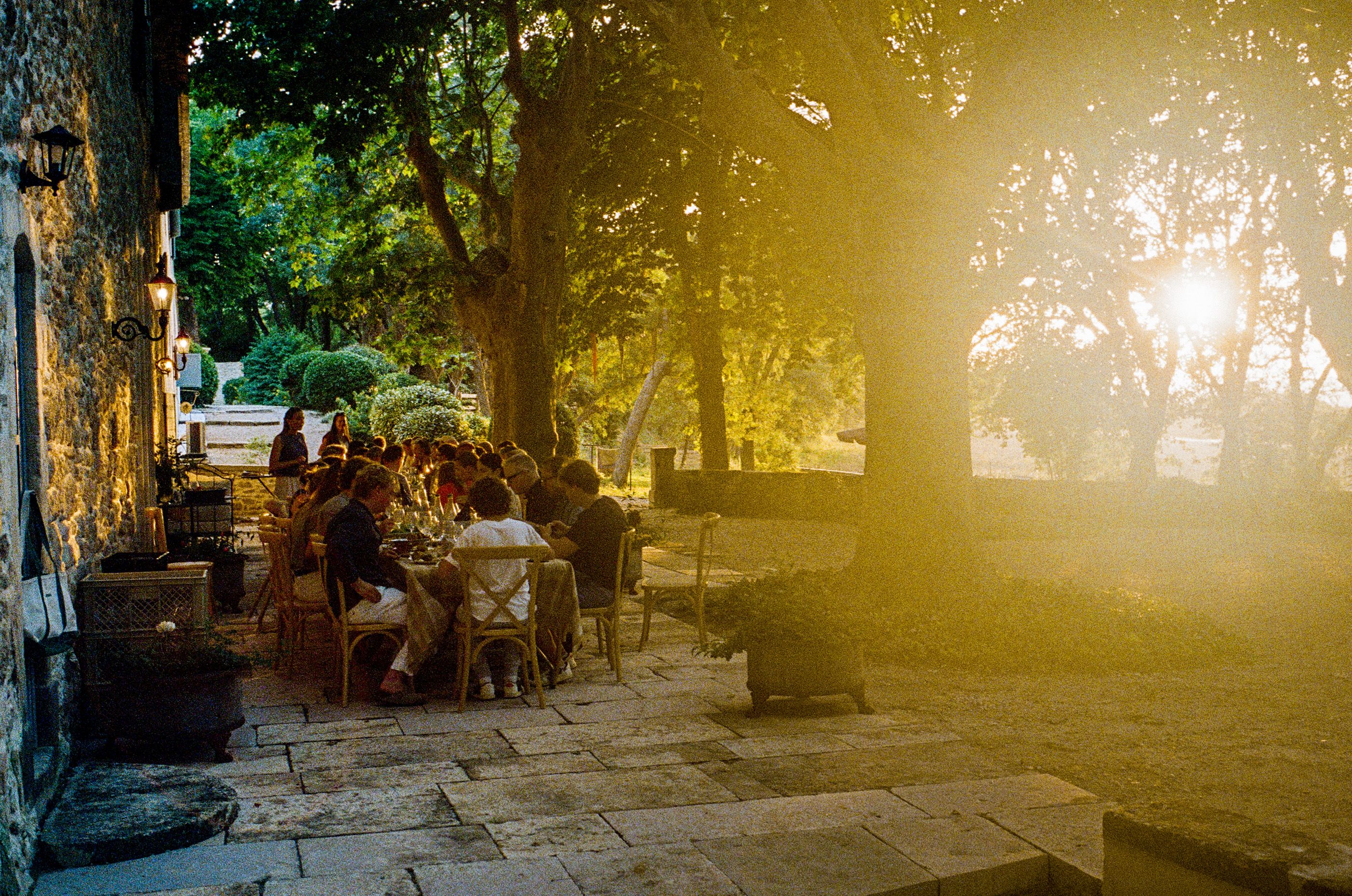
Earlier this year, Hermès transformed the Grand Palais into an equestrian arena for the Saut Hermès, where the privilege offered to top clients was access to one of the few dedicated seats for a unique experience. Louis Vuitton invited clients to Marrakech for a private high-jewelry presentation and to the Frick Collection for a more intimate and exclusive fashion show, while Brunello Cucinelli welcomed guests to the restored Umbrian village of Solomeo for an immersion in craftsmanship and heritage.
“Private events allow us to cultivate intimate, meaningful connections with our clients, offering them a space to engage with our designs in a setting that reflects the essence of our brand,” said Nigora Tokhtabayeva, Tabayer’s founder and creative director, following a two-day event in Beverly Hills. These gatherings, she argues, are more than just showcases. “They are immersive experiences that foster genuine relationships.”