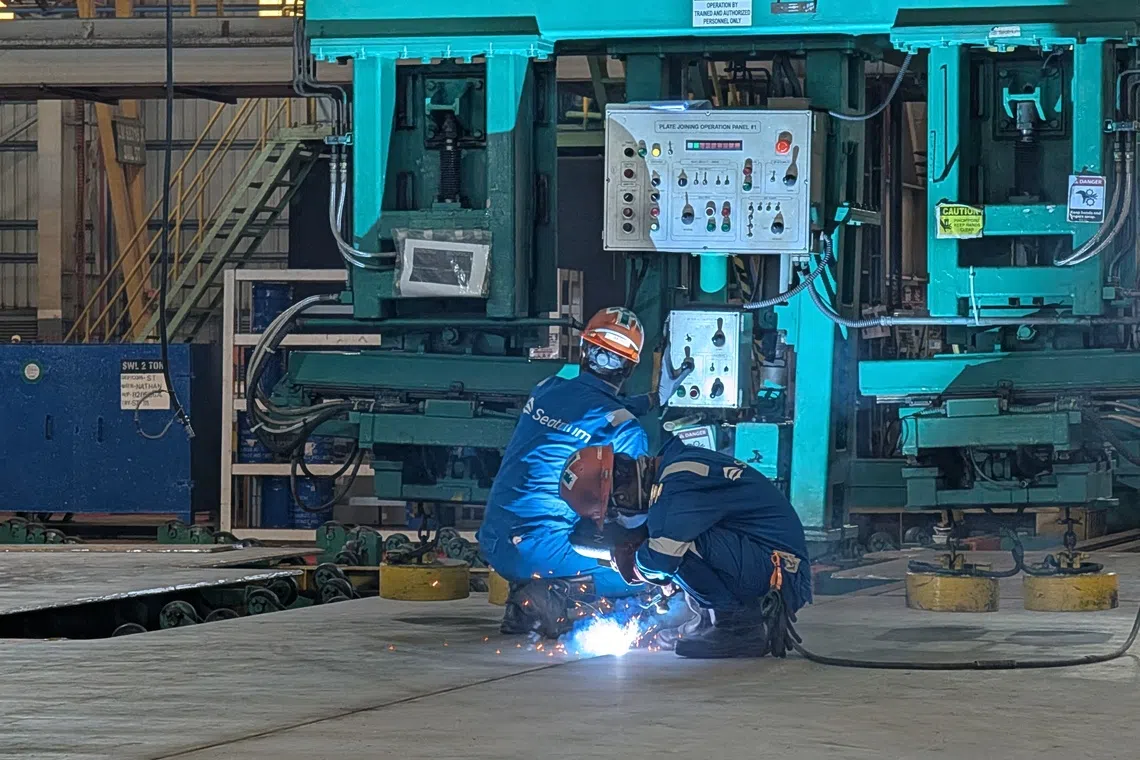
World’s largest offshore wind platform by Seatrium consortium on track to be completed by 2028
Once operational, the 2 GW platform will weigh more than 30,000 tonnes with a base area of close to 8,200 sq m
[SINGAPORE] The world’s largest 2 gigawatt (GW) offshore wind platform is on track to set sail in 2028, despite challenges caused by the Iran war.
The platform is the first of four high-voltage direct-current electrical transmission systems that a consortium comprising offshore and marine giant Seatrium and energy services company GE Vernova is contracted to supply to Tennet, the Netherlands’ national grid operator.
Seatrium’s chief executive officer Chris Ong said in a recent press conference that the first platform, known as Beta, is “quite advanced”, and that he does not see the Iran war having “too much of an impact” on its delivery.
“It’s a lot about how do we handle supply chain, other than trying to build it well and on time in the yard. Now, the partners have all locked in. They have a schedule to produce… (For) the four projects that we are building, we have quite a safe visibility on how we’re going to execute them.”
The consortium inked an agreement with Tennet in March 2023, before Seatrium was formed from the merger of Sembcorp Marine and Keppel Offshore and Marine, to supply three such 2 GW platforms for offshore wind projects in the Netherlands. Each of these contracts is valued at about two billion euros (US$2.3 billion).
It secured another contract in late 2025 for a fourth platform, with a higher transmission capacity of 2.2 GW. Analysts have estimated this fourth project, which is scheduled for delivery in 2032, to be worth about S$2 billion.
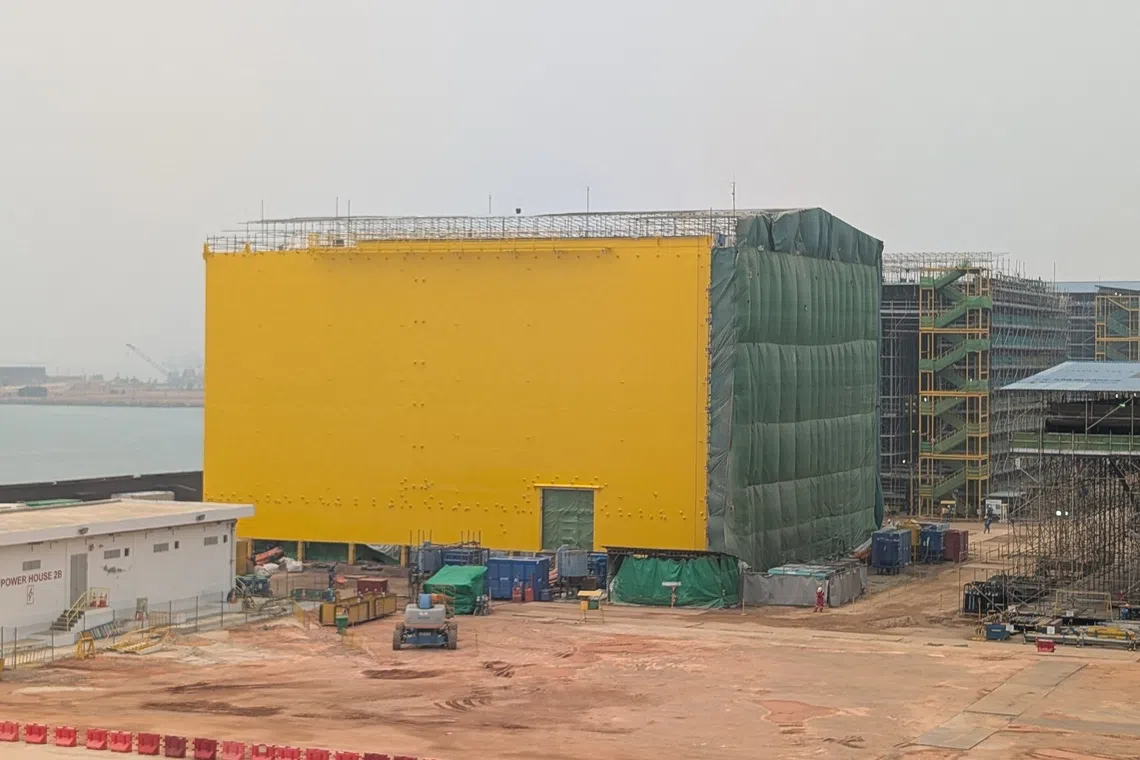
While the first platform remains on schedule to be delivered to the Netherlands in 2028, Ong said, the consortium would not rule out supply chain challenges arising as a result of ongoing military conflict in the Middle East.
The conflict began in February when the US and Israel jointly struck Iran. It has led to supply chain disruptions and energy price shocks due to the closure of the Strait of Hormuz, a major shipping route.
Said Ong: “None of these mega projects will always go in a straight line to the finishing line. But (with) the ability of the partners to be transparent and the ability to project manage this across different geographies, different suppliers, different commitment from all the different partners that we have on the project to deliver… on time, we do not foresee to be an issue at this present moment.”
SEE ALSO
Once operational, the 2 GW platform will be the world’s largest, weighing more than 30,000 tonnes. It has a base area of close to 8,200 square metres, larger than the size of a football field, and is about 10 storeys high.
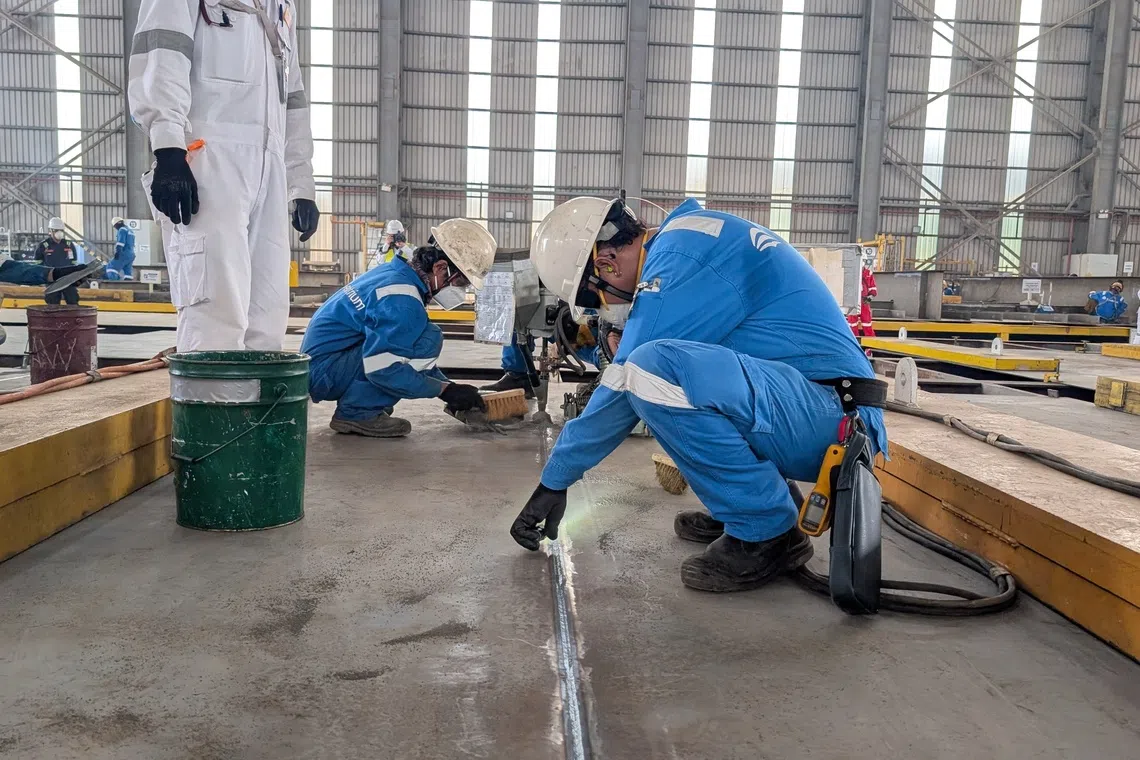
Tennet chief operating officer Maarten Abbenhuis said costs for large offshore infrastructure projects typically fluctuate over the course of development. He added that the partners would manage these fluctuations as they normally would.
What is more important is “the secondary impact of these price instabilities, especially also in the gas market”, he said.
“(The Iran war) provides an additional drive for… moving into the next phase of the energy transition… So the business case behind our infrastructure for the developers… also for the consumers, where the real electrification will take place, is even stronger. But it’s of importance that we have a long-term policy stability… to unlock these two values.”
These four platforms are part of a total of 14 that Tennet has commissioned as part of a wider nationwide plan to scale the Netherlands’ offshore wind capacity to 23 GW by 2032, up from 4.7 GW now. The Dutch government has plans to further increase the capacity to between 30 GW and 40 GW after 2040.
Without going into details, Ong said that Seatrium wants to be involved in Tennet’s future expansion plans.
“It is about long-term energy resilience that’s very important for any country that have their resources. So these are… very long-term projects. I think that from source to end, all these projects will add a lot of strength within not only the grid but the nation energy demand,” he added.
Meanwhile, Romain Chambault, chief operating officer of grid systems integration at GE Vernova, said that it is looking at offshore wind opportunities in South-east Asia, including Vietnam and Indonesia, as well as the larger Asia-Pacific region. He did not confirm whether these potential future projects would be with Seatrium. GE Vernova is listed in New York, and was spun off from General Electric in 2024.