

CSE Global’s board clash: Who are Eugene Lai and Tan Chian Khong?
[SINGAPORE] A board dispute at CSE Global has piqued investors’ interest in the protagonists involved.
Chairman Eugene Lai and lead independent director Tan Chian Khong – who resigned following the clash – are both veteran corporate and management leaders.
The Business Times puts together the backgrounds of these two board members, whose clash has sent ripples through corporate circles.
Who are Lai and Tan?
Lai is the chairman of CSE Global, and also chairs its controlling shareholder, Temasek subsidiary Heliconia Capital Management.
He sits on the board of Temasek’s 65 Equity Partners and CapitaLand Investment, and has held managing director and leadership roles at Southern Capital Group, JPMorgan, The Carlyle Group and The Ascott.
His background in private equity and investment banking, along with his management and leadership experience, make him a much sought-after corporate leader.
A lawyer by training, Lai holds a degree with first-class honours from the London School of Economics and a masters from Harvard Law School. Interestingly, he also graduated cum laude with a master’s degree from Biblical Graduate School of Theology.
Across the battle line is Tan, a veteran independent director and seasoned audit professional.
He spent 35 years in the audit industry, including two decades as a partner at Ernst & Young until his retirement in 2016.
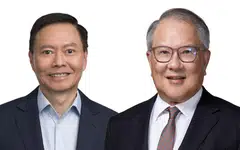
He sits on the boards of various high-profile organisations, including Hong Leong Asia, The Straits Trading Company, Banyan Tree, SMRT Corporation and the Gambling Regulatory Authority of Singapore.
Until his resignation on Jun 2, he was CSE Global’s lead independent director, audit committee chairman and nominating committee chairman.
What happened between them?
The differences in views between the two men appeared to have come to a head during a May 19 telephone conversation, with both men later offering differing accounts of what transpired.
Tan said that Lai had requested his resignation as lead independent director and from his roles in CSE Global’s committees.
He refused to step down as he had been elected by shareholders and was answerable only to them. “Chairman said he does not agree, and wanted me to step aside sooner. I believe this is a breach of good governance.”
He also cited increasingly divergent views with Lai over the group’s operational direction and the handling of a member of senior management.
But Lai disputed several of Tan’s assertions.
He said that he had merely shared his view, and that of Heliconia, that the company would benefit from a board refresh as it entered its next phase of growth, including the appointment of a lead independent director with experience in mergers and acquisitions.
Lai said this was not a direction for Tan to resign and that he would have respected his decision to serve out his full term. Tan eventually resigned as he felt his board position on the board had become untenable.
What’s behind the boardroom clash?
Market watchers have speculated that the boardroom conflict may have its roots in CSE Global’s strategic review started in March.
The review – advised by investment bank Jefferies – could lead to outcomes such as a privatisation, a sale of shares, a disposal of a major part of the business, or a merger.
While the company does not own physical data centres, its business and shares have soared on the boom enjoyed by its primary engineering and systems integration partnerships with hyperscalers, including Amazon.
It posted a 29.1 per cent rise in revenue to S$265.2 million for the three months ended Mar 31, boosted by fresh demand from the data centre industry.
Late last year, CSE Global issued 63 million warrants to an Amazon unit, tied to a US$1.5 billion spending target. The deal drove the company’s shares to a 10-year high.
With each warrant convertible to a CSE share at an exercise price of S$0.7671, Amazon is sitting on enviable paper gains. So is Heliconia.
According The Edge Singapore, the company’s stock surge may have presented an opportune time to cash out.
It postulated that an offer for Heliconia’s stake may have been on the table, but the board led by Tan could have disagreed and preferred that the same offer be extended to all shareholders through an outright privatisation.
What’s the story behind CSE Global?
CSE Global was founded in 1985 as the engineering projects division of Chartered Electronics Industries, the electronics arm of ST Engineering.
It gained independence through a management buyout in January 1997 and went public on the Singapore Exchange in 1999.
Over the decades, it has grown from a regional engineering unit into a global systems integrator specialising in automation, telecommunications and electrification.
Heliconia Capital holds a 23.79 per cent stake in the technology systems integrator, which has drawn significant market attention recently due to its booming data centre business.
