

Oil slumps as US pause of Iran strikes cools regional tensions
Published Mon, Jul 27, 2026 · 06:38 AM — Updated Mon, Jul 27, 2026 · 08:52 AM
[TOKYO] Oil tumbled at the week’s open after the US paused strikes against Iran over the weekend, easing energy supply risks in the Middle East even as the Houthis claimed attacks against targets in Saudi Arabia.
Brent retreated by more than 7 per cent in the initial few minutes of the session to dip below US$90 a barrel, before trading above US$92. US oil marker West Texas Intermediate also declined, along with European natural gas.
After striking the Islamic Republic for 13 days, the US has held off since late on Friday (Jul 24), raising questions over US President Donald Trump’s next move. Iran’s army said that Teheran had suspended its responses.
Still, Teheran-backed Houthis in Yemen said they had struck facilities linked to Saudi Aramco in the Red Sea port towns of Jizan and Yanbu on Saturday, though neither Riyadh nor the state-owned producer confirmed the claim.
Global benchmark Brent has still surged by more than a quarter in July, as the US-Iran conflict spread beyond the Strait of Hormuz to the Red Sea, with the Houthis threatening to impose a blockade of Saudi ports.
The conflict – now nearing the end of its fifth month – has stoked concerns of a global inflationary shock as stockpiles sink and product prices jump.
During the weekend, Saudi authorities issued emergency warnings for two provinces, before lifting them.
Yanbu, the western terminus of Saudi Arabia’s East-West pipeline, has become the kingdom’s key crude export outlet, handling millions of barrels a day since the Strait of Hormuz became effectively shut. Jizan is home to an Aramco refinery and export terminal.
Asked on NBC’s Meet the Press on Sunday whether Trump had decided against escalation, US ambassador to the United Nations Mike Waltz said that the US leader was “giving the talks some space”.
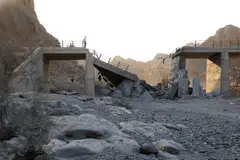
Still, Washington – which began the war on Feb 28 in a joint strike with Israel – and Teheran appear to remain far apart on key issues. These include Iran’s nuclear program, as well as the status of Hormuz.
“The pause in strikes and reports of progress in talks has raised expectations of a de-escalatory pathway emerging again, which could lead to a rebound in flows through the Strait of Hormuz and the Red Sea,” said Saul Kavonic, senior energy analyst at MST Marquee.
“However, all of the key issues, including Iran’s control over the strait, and its missile and nuclear programs, remain intractable, and there is a high risk any ceasefire proves merely temporary,” Kavonic added.
Disruptions to flows have persisted elsewhere. The largest Russian oil port in the Black Sea has halted loadings for several days amid a surge in Ukrainian drone attacks.
The Sheskharis terminal at Novorossiysk has not been loading since early on Jul 21, according to a Bloomberg News report on Jul 25.
The gains in energy and their impact on economic growth, consumer spending and inflation will be among the talking points for central bankers this week. In the US, Federal Reserve officials will meet from Jul 28 to Jul 29 to assess policy. BLOOMBERG
